
Jodhpur’s monuments are most rewarding for travellers who want more than landmark photography and are willing to slow down for atmosphere, architecture, and old-city context. While Mehrangarh Fort and Jaswant Thada are essential even on short stays, several other heritage sites in Jodhpur work better as selective additions depending on your interests — photography, stepwell architecture, memorials, lakeside heritage, or slower old-city exploration. This guide helps prioritise which monuments genuinely deserve time, how long they need, and how to combine them into realistic sightseeing circuits.
Which Monuments in Jodhpur Deserve Your Time?
| If You Want… | Best Choice |
|---|---|
| The strongest overall heritage experience | Mehrangarh Fort |
| The best architectural contrast to Mehrangarh | Jaswant Thada |
| The best old-city photography stop | Toorji Ka Jhalra |
| A heritage + market atmosphere | Ghanta Ghar |
| A quieter memorial and garden complex | Mandore |
| A relaxed heritage-lake stop | Balsamand Lake |
| A sunset-focused scenic monument layer | Kailana Lake |
| Limited time in Jodhpur | Mehrangarh + Jaswant Thada only |
Mehrangarh Fort
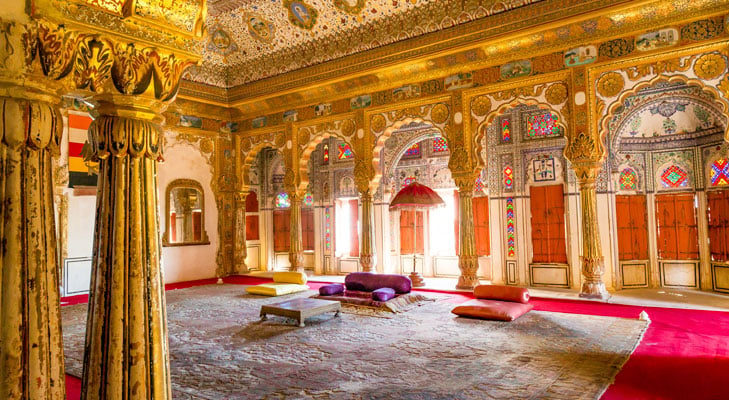
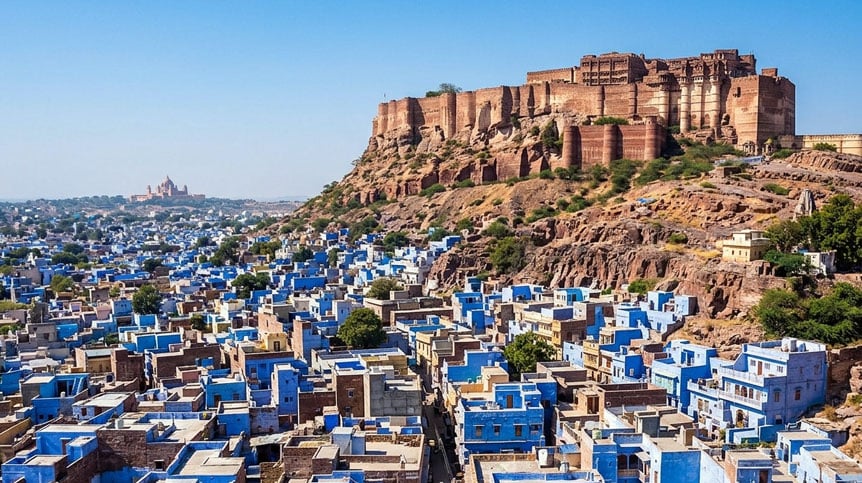
The defining landmark of Jodhpur, Mehrangarh Fort is a massive red sandstone fort on a rocky hill towering hundreds of feet above the city. One of India’s greatest forts, with palace museums, the Moti Mahal, Phool Mahal, Sheesh Mahal, armoury, ramparts, and sweeping views over the blue-washed old city. A full morning is the minimum — allow 2.5–4 hours.
Who should prioritise it: Non-negotiable for first-time visitors and comfortably the city’s strongest monument experience.
Timings: 9 AM–5 PM.
Comfort note: Expect substantial walking, uneven stone pathways, and stair climbing despite elevator access.
Jaswant Thada
An immaculate white marble mausoleum built in 1899 by Maharaja Sardar Singh to commemorate his father, Maharaja Jaswant Singh II. Located a 10-minute walk from Mehrangarh Fort, Jaswant Thada sits above a small lake and offers a serene counterpoint to the imposing fort nearby.
Often called the “Taj Mahal of Marwar,” Jaswant Thada is built from finely polished Makrana marble sheets so thin that they glow softly when sunlight passes through them.
The milky white marble construction is understated yet intricate — carved marble lattice screens adorned with portraits of Rathore rulers dating back to the 13th century. The structure glows translucent in certain light conditions, giving it a quality unlike any other monument in Jodhpur. Views of the cityscape and Umaid Bhawan Palace from the site are strong. The lake, birds, and manicured garden surrounding the cenotaph create an atmosphere of genuine calm.
The cenotaph complex also includes smaller royal memorials, carved gazebos, terraced gardens, and a small lake that creates reflective views around the marble structure.
Best for: Travellers who enjoy quieter heritage atmospheres, memorial architecture, photography, and reflective stops after the intensity of Mehrangarh Fort.
Comfort note: The site involves moderate walking but is considerably calmer and less physically demanding than Mehrangarh Fort.
Timings: 9 AM–5 PM.
Umaid Bhawan Palace
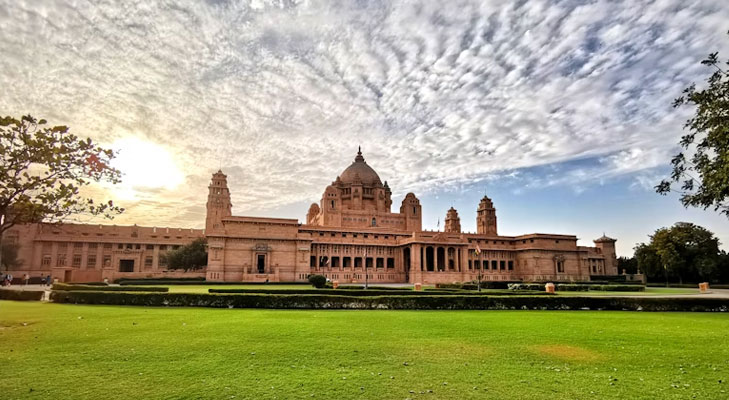
Built between 1929 and 1943 by Maharaja Umaid Singh. Umaid Bhawan Palace features 347 rooms, a museum, vintage car collection, Art Deco interiors, a throne room with Ramayana murals, a billiards room, and an indoor swimming pool. Designed by Henry Vaughan Lanchester. The museum is open to the public — but the royal family still resides in one wing.
Best for: Travellers interested in royal lifestyle, architecture, Art Deco interiors, and photography rather than deep historical interpretation.
Timings: 10 AM–4:30 PM. Closed on public holidays. Entry fee: Adults INR 30, children INR 10.
The museum itself is relatively compact, and many visitors spend more time exploring the palace grounds and vintage car display than the interior galleries.
The palace was partly commissioned as a famine-relief project to generate employment during severe drought conditions in Marwar.
Toorji Ka Jhalra Bavdi (Stepwell)
Built in the 1740s by Maharani Toorji, queen of Maharaja Abhay Singh, Toorji Ka Jhalra is one of Rajasthan’s finest restored stepwells and one of the strongest heritage-photography stops in Jodhpur’s old city.
Originally designed as a community water source in the desert city, the stepwell today functions as both a heritage monument and a living public space surrounded by cafés, boutique stays, and old blue-city lanes. The descending geometric staircases, carved sandstone detailing, and shifting light conditions make it far more rewarding than a quick photo stop.
Best for: Photography-focused travellers, heritage walkers, and visitors exploring the old city slowly rather than rushing between major landmarks.
Timings: Open through the day — morning and late afternoon give the strongest light.
Ghanta Ghar (Clock Tower)
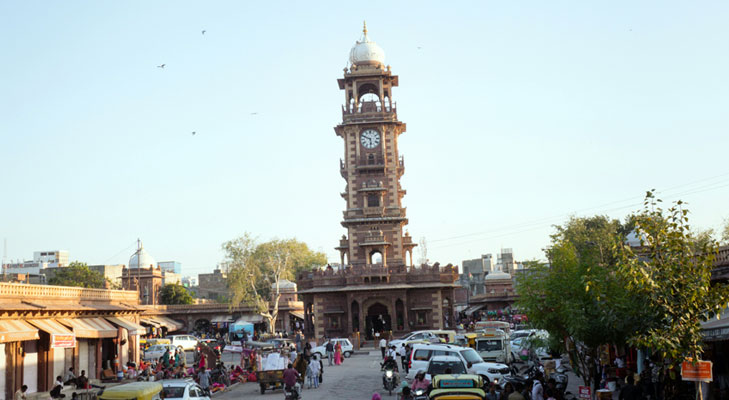
A prominent symbol of Jodhpur’s old city, the Clock Tower stands at the heart of the bustling Sadar Market area. Surrounded by a lively market offering goods, crafts, spices, and textiles, it creates a uniquely combined heritage and commercial experience — Jodhpur’s equivalent of a city centre landmark.
Best for: Travellers who enjoy combining heritage atmosphere with food, bazaars, and active street life rather than quiet monument exploration.
Timings: Visible at all hours. Market most active late afternoon and evening.
Crowd note: The surrounding market lanes become extremely congested during evenings and festival periods. Late afternoon is the strongest balance between atmosphere and walking comfort.
Worth dedicated time? Best treated as a slower heritage-lake add-on for travellers with an additional day in Jodhpur rather than a core monument priority.
Balsamand Lake
Built in 1159 AD as a water storage facility, Balsamand Lake on Jodhpur-Mandore Road is now a popular picnic and birdwatching destination. Lush greenery and the adjacent Balsamand Garden with vibrant flowers, well-maintained lawns, and a peaceful atmosphere. The heritage palace at the lake is a hotel. Peacock sightings are common.
Timings: Open during daylight hours. Entry fee: Confirm locally.
Kailana Lake
While not a monument in the traditional architectural sense, Kailana Lake functions as part of Jodhpur’s wider heritage-landscape layer through its historical reservoir origins and scenic western-city setting.
Built in 1872 by Pratap Singh as a water supply reservoir, Kailana Lake is now one of Jodhpur’s most popular leisure destinations for sailing, birdwatching, and sunset photography. The hills and greenery surrounding the lake make it one of the more scenic viewpoints near the city.
Best for: Sunset-focused travellers, birdwatchers, and slower-paced itineraries rather than history-first visitors.
Timings: Open during daylight hours.
Mandore
The former capital of the Rajputana Kingdom, 10 km north of Jodhpur. Cenotaphs of former Jodhpur rulers built in a four-storey red sandstone, the Hall of Heroes with 16 rock-carved statues, the Temple of 330 Million Gods, and a government museum. One of the strongest heritage garden complexes in Rajasthan.
Mandore was the original capital of Marwar before Rao Jodha founded Jodhpur in 1459, making the site historically more significant than many travellers initially expect.
Timings: 8 AM–8 PM. Government Museum: Saturday–Thursday 9 AM–6 PM.
Sardar Samand Lake Palace
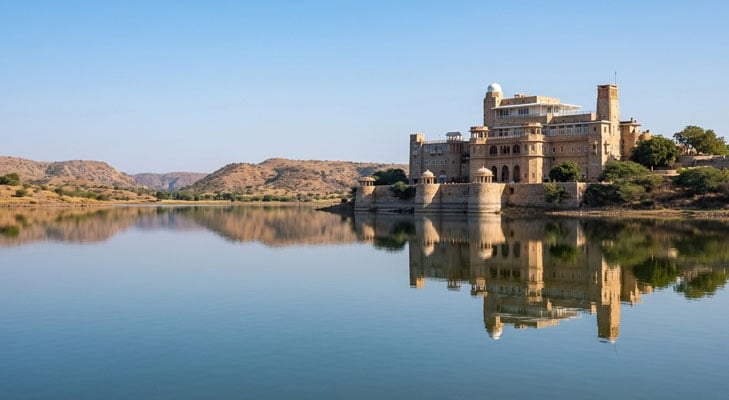
Located near Sardar Samand Lake, this former royal hunting lodge is now a luxury heritage hotel. The architectural charm — traditional Rajasthani design with modern amenities — and the scenic lake setting make it a strong option for travellers who want a peaceful overnight outside Jodhpur city.
Timings: Heritage hotel — open to guests and confirmed day visitors.
Worth visiting? More rewarding as a heritage overnight experience than as a standalone sightseeing stop from Jodhpur city.
Rai Ka Bagh Palace
Best for: Travellers with a deeper interest in royal domestic life and lesser-visited heritage structures rather than short-stay visitors.
Built in 1663 in an octagonal shape, now a museum displaying paintings, artefacts, textiles, and historical relics. Rajputana architectural design with regal aesthetic.
Timings: Confirm locally. Entry fee: Confirm locally.
Gulab Sagar
Located near the Clock Tower and old-city market lanes, Gulab Sagar is a historic lakefront heritage zone known for its reflective city views and surrounding old architecture. While not a standalone monument stop, it works well as part of a slower heritage walk connecting Toorji Ka Jhalra, Ghanta Ghar, and the blue-city neighbourhoods.
Best for: Old-city walkers and photography-focused travellers.
How to Plan Jodhpur’s Monument Circuits
Core Heritage Circuit (Best for First-Time Visitors)
Mehrangarh Fort at opening time → Jaswant Thada → Toorji Ka Jhalra → Ghanta Ghar and Sardar Market evening.
Old City Heritage Walk
Toorji Ka Jhalra → Gulab Sagar → blue-city lanes → Clock Tower → local food circuit.
North Heritage Circuit
Mandore → Balsamand Lake → optional Rai Ka Bagh Palace stop.
Sunset & Landscape Circuit
Kailana Lake → Masuriya Hill Garden → optional Sardar Samand overnight extension.
Planning Notes
October to March is the strongest window across all monuments.
Jaswant Thada and Mehrangarh Fort are adjacent — never visit one without the other.
Toorji Ka Jhalra Bavdi restoration has made it one of Jodhpur’s most photogenic stops — don’t skip it.
Balsamand and Mandore both sit north of the city on the same road — combine efficiently.
Umaid Bhawan Palace Museum is closed on public holidays — confirm locally.
Continue Planning Your Jodhpur Heritage Trip
Travellers exploring Jodhpur’s monuments often combine them with the city’s museums, forts, blue-city walks, and wider heritage circuits. Beyond the main fort, the magnificent Umaid Bhawan Palace stands out as one of the premier Jodhpur tourist attractions, making it a popular highlight included in many Rajasthan tour packages.