
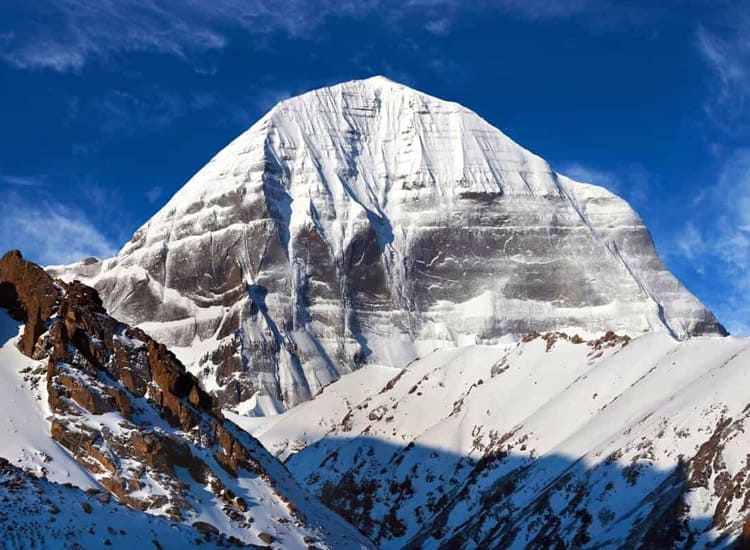
Spiritual Significance of Mount Kailash
The Holy Mountain of Four Religions
Mount Kailash stands as a powerful symbol of spiritual enlightenment, revered across multiple faiths:
- For Hindus: It is the sacred dwelling place of Lord Shiva and Goddess Parvati, representing the center of the universe
- For Buddhists: Known as Gangs Rinpoche (“Precious Jewel of Snow”), it’s considered the abode of Buddha Demchok
- For Jains: It is where their first Tirthankara, Rishabhadeva, attained liberation
- For Bon followers: It is their spiritual center and sacred nine-story Swastika Mountain
The Mystical Number Seven
In Indian culture, the number seven holds profound spiritual significance. It represents the cosmic rhythms that govern existence:
- Seven chakras (energy centers) in the body
- Seven pheras (rounds) in Hindu marriage ceremonies
- Seven saptarishis (sages) in ancient texts
- Seven swaras (notes) in classical music
This mystical numerology extends to Mount Kailash, which stands as the seventh mountain amidst its range, symbolizing completeness and spiritual perfection.
The Magnificent Forms of Mount Kailash
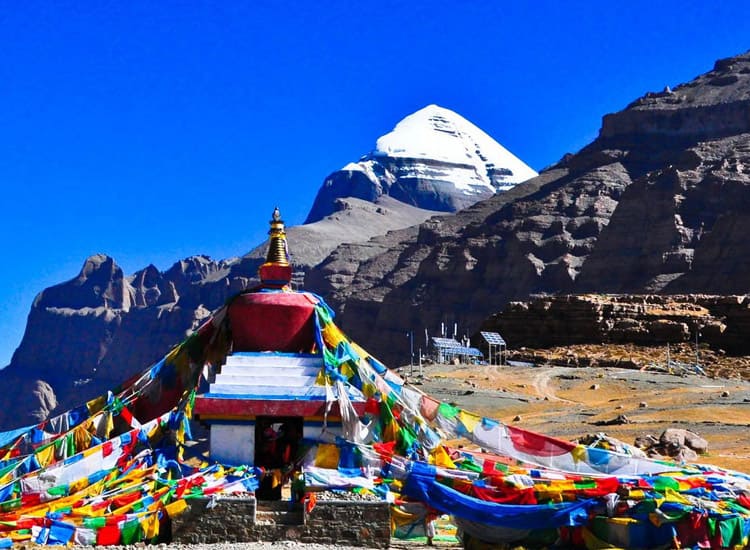
Mount Kailash presents different appearances depending on your vantage point, each with its own spiritual significance:
South Face: Lord Shiva’s Countenance
When viewed from the south, many pilgrims perceive the three-eyed face of Lord Shiva himself. This face is visible during the journey from Darchen to Lachhu Valley. Some devotees also visualise Lord Shiva riding his divine vehicle, Nandi.
West Face: Nagaraja Vasuki
Viewing Mount Kailash from the west reveals markings reminiscent of Nagaraja Vasuki, the serpent king who adorns Lord Shiva’s neck. According to Hindu mythology, these markings appeared during the Samudra Manthan (Churning of the Ocean of Milk).
North Face: Contemplative Shiva
The north face, visible during the journey from Driaphuk to Kailash, presents what many describe as the most majestic view of the mountain. From this perspective, the mountain resembles a contemplative Lord Shiva, with a silver-like sheen giving it an ethereal appearance.
Rare Perspective: Divine Couple
From certain vantage points along the pilgrimage route, devotees can glimpse what appears to be the faces of both Lord Shiva and Goddess Parvati together, symbolising the divine union that brought harmony to the universe.
The Legend of Mount Kailash
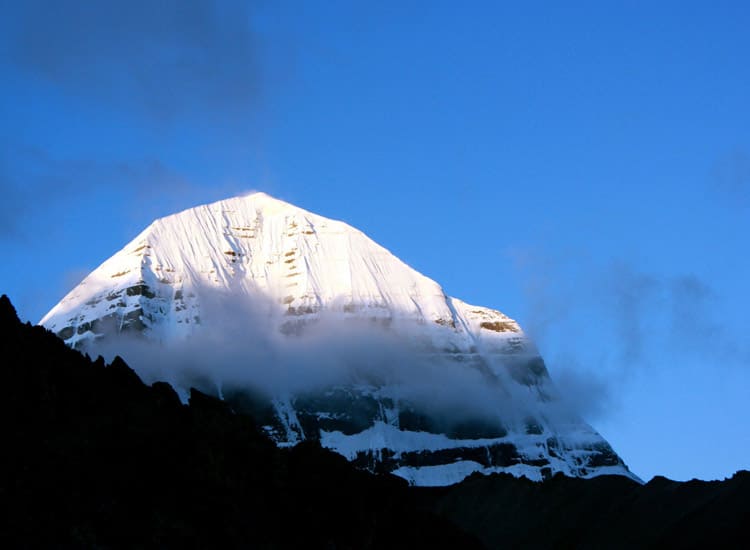
According to Hindu mythology, the story of Mount Kailash is deeply intertwined with Lord Shiva’s grief and subsequent solitude: After the tragic self-immolation of his first wife Sati (following her insult by her father Daksha), a devastated Lord Shiva retreated to Mount Kailash, abandoning his cosmic duties and entering deep meditation as an ascetic. This withdrawal threatened the cosmic balance.
The gods, concerned about universal harmony, facilitated the reincarnation of Sati as Goddess Parvati. Through her unwavering devotion and perseverance, Parvati eventually won Shiva’s heart at Mount Kailash. Their divine reunion resulted in the birth of Lord Ganesha and Lord Kartikeya, restoring cosmic order.
This narrative is chronicled in sacred texts including the Shiva Purana, Ramcharitmanas, and Shrimad Bhagavad Gita, underscoring Mount Kailash’s significance as not just a geographical location but a sacred space where cosmic drama unfolded.
Geographical Facts About Mount Kailash
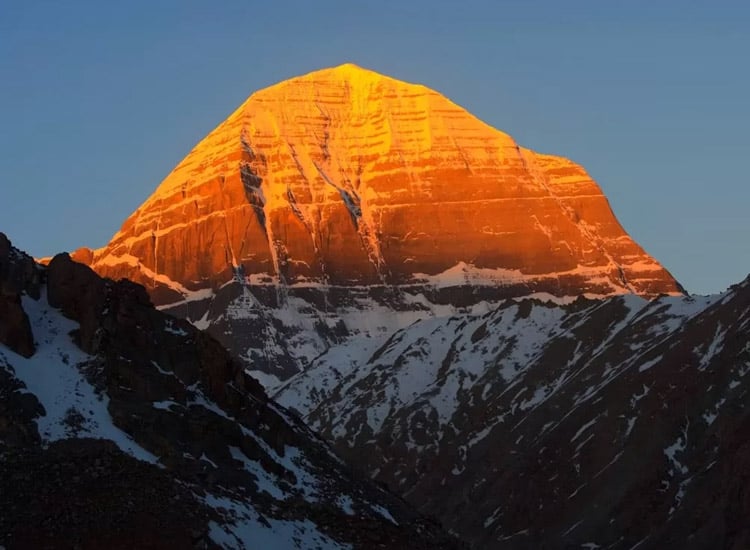
Mount Kailash is located in the Tibet Autonomous Region of China, in the Kailash Range (Gangdise Mountains) of the Transhimalaya. Here are the key geographical aspects:
- Elevation: 6,638 meters (21,778 feet) above sea level
- Location: Situated in western Tibet, near the borders of India and Nepal
- Span: The mountain and surrounding area cover approximately 48 kilometers
- Notable Feature: The eastern face is never visible to pilgrims
- Sacred Geography: Four major rivers originate near Mount Kailash: the Indus, Sutlej, Brahmaputra, and Karnali (a Ganges tributary)
- Access: Permission from the Chinese authorities is required for the journey
Kailash Mansarovar Yatra 2026: Registration Process
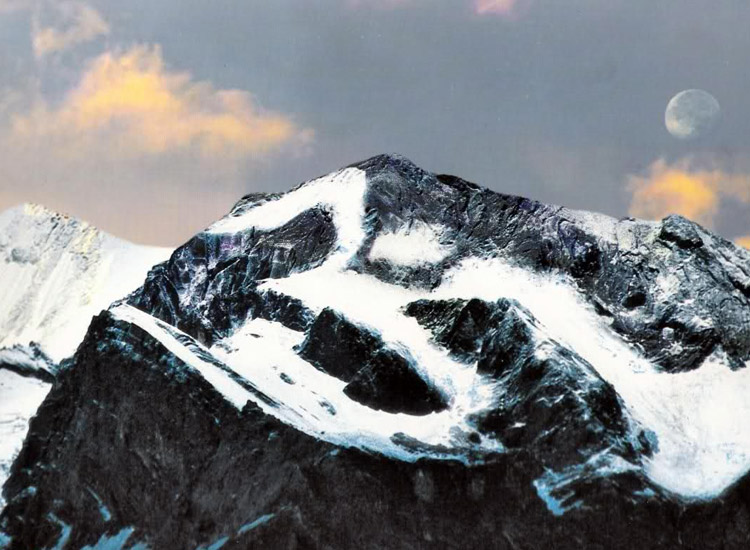
The 2026 Kailash Mansarovar Yatra marks the resumption of this sacred pilgrimage after a pause of several years. Early registration is essential due to limited availability and high demand.
Official Routes and Registration
For Indian pilgrims, there are two primary official routes organised by the Ministry of External Affairs:
- Via Lipulekh Pass (Uttarakhand): Involves some trekking, suitable for those in good physical condition
- Via Nathu La Pass (Sikkim): Mostly motorable, suitable for senior citizens and those unable to undertake arduous trekking
To register through the official channels:
- Visit the official Ministry of External Affairs website (kmy.gov.in)
- Complete the online application form with accurate personal information
- Upload required documents (valid passport, medical certificate, etc.)
- Wait for the selection process, which is typically done through a computerised draw.
- If selected, complete all necessary payments and attend the mandatory briefing sessions.
Private Tour Operators
Alternatively, several authorised tour operators offer packages for the Kailash Mansarovar Yatra through Nepal and Tibet. The registration process generally includes:
- Contacting the tour operator at least 1-2 months before your intended travel date
- Submitting the necessary documentation for the Chinese visa and Tibet Travel Permit
- Completing a medical examination to ensure fitness for high-altitude travel
- Making the required payments (typically in instalments)
- Attending pre-departure briefings
For 2026 bookings, it’s advisable to register by January-February to secure your place, as slots fill up quickly.
Different Routes to Kailash Mansarovar Yatra 2026
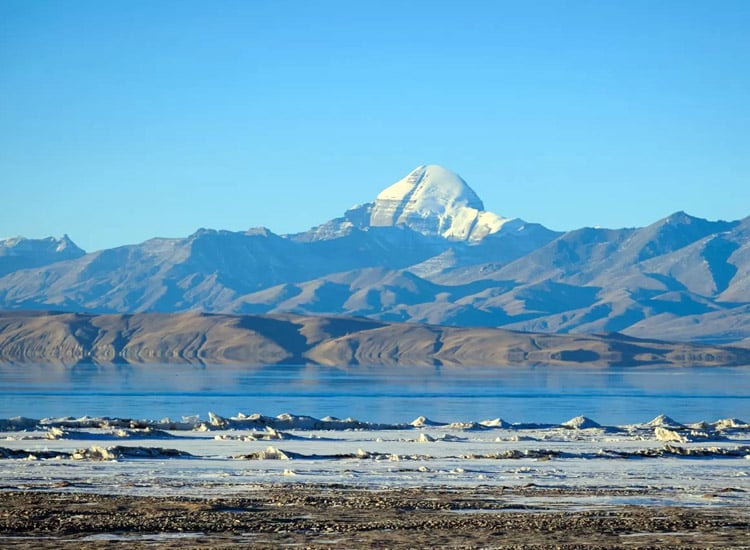
There are several routes to reach Mount Kailash and Lake Mansarovar, each offering unique experiences and varying in difficulty:
1. Nepal Overland Route (Via Kyirong)
Duration: 14 days Difficulty: Moderate Route: Kathmandu → Syabrubesi → Kyirong → Saga → Lake Mansarovar → Mount Kailash and back Best For: Those seeking a balance of comfort and authentic experience This is currently the most popular and accessible route. It combines road travel with short treks and offers stunning views of the Himalayas. The journey begins in Kathmandu, where pilgrims can visit the sacred Pashupatinath Temple before proceeding to Tibet.
2. Helicopter Route
Duration: 9-11 days Difficulty: Easy to Moderate Route Option 1: Kathmandu → Nepalgunj → Simikot → Hilsa → Lake Mansarovar → Mount Kailash and back Route Option 2: Lucknow → Nepalgunj → Simikot → Hilsa → Lake Mansarovar → Mount Kailash and back Best For: Elderly pilgrims, those with limited time, or individuals with health concerns This route significantly reduces travel time and physical exertion by using helicopters for the most challenging portions of the journey.
It’s especially suitable for those who cannot undertake long treks but still wish to experience the sacred pilgrimage.
3. Lhasa Route
Duration: 16 days Difficulty: Moderate Route: Kathmandu → Lhasa → Shigatse → Saga → Mansarovar → Mount Kailash → Saga → Shigatse → Lhasa → Kathmandu Best For: Those interested in Tibetan culture and history alongside the pilgrimage This route offers a comprehensive Tibetan cultural experience, including visits to historic sites in Lhasa such as the Potala Palace and Jokhang Temple. It provides better acclimatization but requires more time.
4. Inner Kora Route
Duration: 20 days Difficulty: Challenging Route: Kathmandu → Kyirong → Saga → Mansarovar Lake → Mt. Kailash → Ashtapad → Nandi Kora Best For: Experienced trekkers seeking a deeper spiritual connection This demanding route includes the inner circumambulation of Mount Kailash, considered especially sacred and believed to cleanse sins accumulated over multiple lifetimes.
5. Kailash Darshan Tour (Aerial)
Duration: 3 days Difficulty: Very Easy Route: Lucknow → Nepalgunj → Fly over Simikot and Humla → Mansarovar Lake & Mount Kailash Darshan Best For: Those unable to undertake a physical journey but seeking the blessing of darshan This quickest option allows pilgrims to view Mount Kailash and Mansarovar Lake from the air, providing darshan without the physical challenges of reaching the site by land. Grab the best deals on Kailash Mansarovar yatra packages with Indian Holiday today!
Health and Safety: Preparing for High Altitude
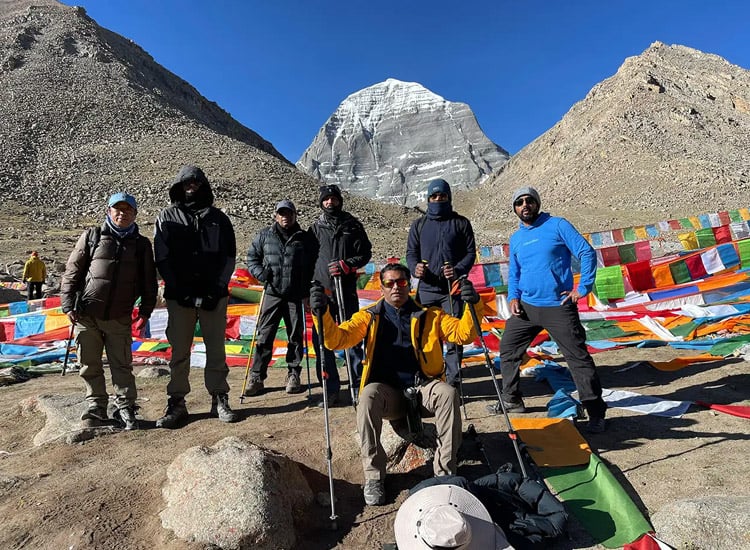
The Kailash Mansarovar Yatra takes place at high altitudes (over 15,000 feet), presenting unique challenges that require careful preparation:
Understanding Altitude Sickness
Altitude sickness (Acute Mountain Sickness or AMS) occurs when ascending too rapidly without proper acclimatisation.
- Headache
- Nausea and vomiting
- Dizziness
- Fatigue
- Loss of appetite
- Difficulty sleeping
In severe cases, it can progress to High Altitude Pulmonary Edema (HAPE) or High Altitude Cerebral Edema (HACE), which are life-threatening conditions requiring immediate descent.
Medical Requirements and Preparation
Pre-Journey Medical Examination
All pilgrims should undergo a comprehensive medical checkup at least 2-3 months before the journey, including:
- Complete blood count
- Blood pressure assessment
- ECG
- Lung function tests
- Blood sugar, cholesterol, triglyceride, urea, and creatinine levels
Individuals with respiratory diseases, cardiac conditions, or recent surgeries should avoid undertaking the yatra.
Physical Fitness Preparation
Begin physical conditioning 3-6 months before the journey:
- Cardiovascular Exercise: Daily brisk walking for at least 45-60 minutes
- Strength Training: Focus on legs and core to prepare for trekking
- Stairs Training: Climb several flights of stairs regularly to build stamina
- Practice Hikes: Undertake weekend hikes on increasingly challenging terrain
- Yoga and Pranayama: Practice breathing exercises to improve oxygen utilization
Essential Medical Supplies
Carry a personal medical kit containing:
- Acetazolamide (Diamox) for altitude sickness prevention
- Pain relievers (ibuprofen, acetaminophen)
- Anti-diarrheal medication
- Broad-spectrum antibiotics (consult your doctor)
- Antihistamines for allergies
- Bandages, antiseptic cream, and basic first aid supplies
- Personal medications with proper documentation
- Rehydration salts
- Digital oximeter to monitor oxygen saturation levels
Preventing Altitude Sickness
- Gradual Ascent: Allow for proper acclimatization days in your itinerary
- Hydration: Drink 4-5 liters of water daily
- Diet: Consume high-carbohydrate, low-fat meals for easier digestion
- Avoid Alcohol and Tobacco: These reduce the oxygen-carrying capacity
- Move Slowly: “Pole pole” (slowly, slowly) is the mantra for high-altitude trekking
- Listen to Your Body: If symptoms appear, rest and do not ascend further
- Medication: Consider prophylactic use of Acetazolamide (consult your doctor)
Remember: There is no shame in turning back if severe symptoms develop. Your health and safety are paramount.
Essential Packing for Kailash Mansarovar Yatra
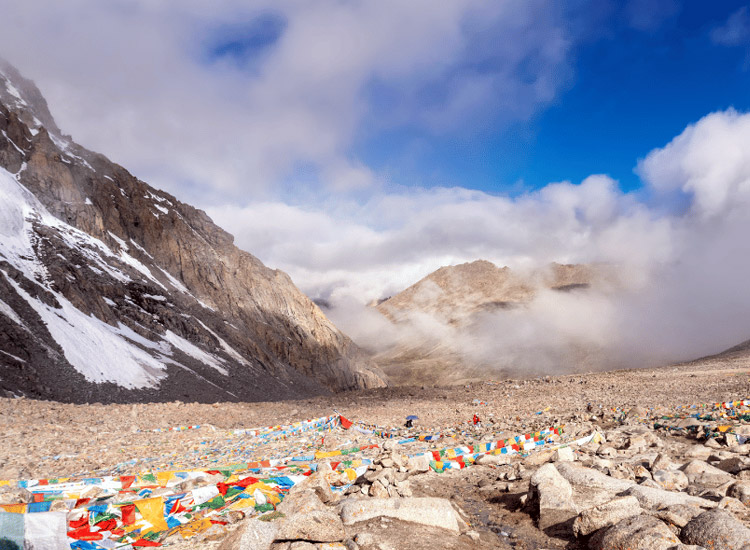
Clothing
- Thermal underwear (2-3 sets)
- Moisture-wicking t-shirts (4-5)
- Fleece jackets (2)
- Down jacket (1 heavy-duty)
- Waterproof jacket and pants
- Hiking pants (2-3 pairs)
- Warm hat, gloves, and socks
- Sturdy broken-in hiking boots
- Comfortable walking shoes for evenings
- Gaiters (for snow if traveling early or late in the season)
Equipment
- Backpack (30-40L) for daily essentials
- Duffel bag for main luggage
- Sleeping bag (rated for -10°C to -15°C)
- Trekking poles
- Headlamp with extra batteries
- Water bottles or hydration system (2L capacity)
- Sunglasses with UV protection
- Microfiber towel
- Toiletries in small containers
Health and Safety
- Personal medical kit (as detailed above)
- High SPF sunscreen and lip balm
- Hand sanitizer and wet wipes
- Face mask for dusty conditions
- Water purification tablets
- Energy bars and snacks
- Multivitamins
- Electrolyte powder
Documentation
- A passport with a minimum of six months’ validity
- Multiple photocopies of the passport and visa
- Travel insurance policy (covering high-altitude trekking and evacuation)
- Necessary permits and letters
- Emergency contact information
- Cash (both Indian rupees and Chinese yuan)
Circumambulating Mount Kailash: The Parikrama
The circumambulation (parikrama) of Mount Kailash is the spiritual centrepiece of the pilgrimage, believed to cleanse sins and bring good fortune:
Outer Kora (Traditional Parikrama)
Distance: Approximately 52 kilometers Duration: Typically completed in 3 days Starting Point: Darchen Highest Point: Dolma La Pass (5,630 metres/18,471 feet)
Day 1: Darchen to Diraphuk (20 km)
The journey begins at Darchen, heading northwest toward the western face of Mount Kailash. The trail follows the Lha Chu Valley, offering progressively closer views of the sacred mountain. The first day’s trek concludes at Diraphuk, where pilgrims are rewarded with a stunning north face view of Mount Kailash.
Day 2: Diraphuk to Zutulphuk via Dolma La Pass (18 km)
This is the most challenging day of the parikrama. After an early start, pilgrims ascend the steep trail to Dolma La Pass, the highest point of the journey. At the pass, many pilgrims offer prayers and leave tokens such as prayer flags or personal items as offerings. The descent from the pass leads to Gauri Kund, a sacred lake associated with Goddess Parvati. The day concludes at Zutulphuk, known for its meditation caves.
Day 3: Zutulphuk to Darchen (14 km)
The final day features a relatively gentle trek back to Darchen, completing the sacred circuit. This portion of the journey offers beautiful views of the Kailash range and the surrounding landscape.
Inner Kora (Advanced Pilgrimage)
Reserved for experienced pilgrims who have completed at least 13 outer koras, the inner kora is a more challenging route that brings devotees closer to the mountain itself. This route is physically demanding and requires special permission.
Lake Mansarovar: The Sacred Waters
Located at the foot of Mount Kailash at an altitude of 4,590 meters (15,060 feet), Lake Mansarovar is one of the world’s highest freshwater lakes and holds immense spiritual significance:
Spiritual Significance
- Etymology: The name derives from Sanskrit, combining “Manas” (mind) and “Sarovar” (lake), as it was first conceived in the mind of Lord Brahma
- Purification: A dip in its waters is believed to cleanse all sins accumulated over a hundred lifetimes
- Merit: Drinking the lake’s water is said to bring good karma and move one closer to Moksha (liberation)
Rituals at Lake Mansarovar
Pilgrims typically perform several traditional rituals at the lake:
- Snan (Bathing): A ritual immersion in the sacred waters
- Tarpan: Offering water to ancestors and deities
- Havan: A fire ritual performed on the shores
- Parikrama: Circumambulation of the lake (though most pilgrims only complete a partial circuit due to its size)
Practical Information
- Water temperature remains extremely cold year-round
- The lakeshore can be muddy, so appropriate footwear is advisable
- Respect the sanctity of the lake by avoiding soap or pollutants
- Morning hours are considered most auspicious for rituals
Conclusion
The Kailash Mansarovar Yatra is not just a journey; it is a transformative spiritual pilgrimage that tests the body and elevates the soul. Whether you are seeking spiritual purification, cultural exploration, or a deep connection with the magnificence of nature, the sacred routes to Mount Kailash and Lake Mansarovar provide a unique experience unlike any other. For detailed packages, route-specific information, and booking assistance for Kailash Mansarovar Yatra 2026, please contact our travel specialists.
Frequently Asked Questions
Q. When is the best time to undertake the Kailash Mansarovar Yatra?
Ans: The pilgrimage season runs from May to September, with June to August offering the most favourable weather conditions. During this period, temperatures range from 10-15°C during the day to below freezing at night.
Q. How physically demanding is the yatra?
Ans: The pilgrimage requires moderate to high physical fitness, particularly for the parikrama (circumambulation) of Mount Kailash, which involves trekking at high altitudes. The Dolma La Pass (5,630 meters) is particularly challenging. However, there are options like the helicopter route that reduce physical demands.
What type of food is available during the journey?
Ans: Vegetarian meals are standard on all Kailash Mansarovar tours. In major cities, various cuisines are available, while on remote parts of the route, simple vegetarian meals (rice, dal, chapati, and vegetables) are provided. It’s advisable to carry some energy bars and snacks.
How much does the Kailash Mansarovar Yatra cost?
For 2026, costs vary by route:
- Government-organized yatra (via Lipulekh or Nathu La): Approximately ₹1.5-2 lakh
- Nepal-Tibet helicopter route: ₹2.5-3.5 lakh
- Overland route via Nepal: ₹1.8-2.5 lakh
- Lhasa route: ₹3-4 lakh
These prices typically include accommodation, transportation, meals, guides, and permits.
Q. Can foreign nationals undertake the yatra?
Ans: Yes, foreign nationals can undertake the yatra through private tour operators. However, they cannot join the groups organised by the Indian government’s Ministry of External Affairs, which are exclusively for Indian citizens.
Q. What happens if someone falls ill during the journey?
Ans: Tour operators maintain oxygen supplies and first aid kits. For the government-organized yatra, medical officers accompany each batch. In case of severe altitude sickness, the affected person is immediately taken to a lower altitude. For serious medical emergencies, evacuation to Kathmandu or the nearest hospital is arranged.