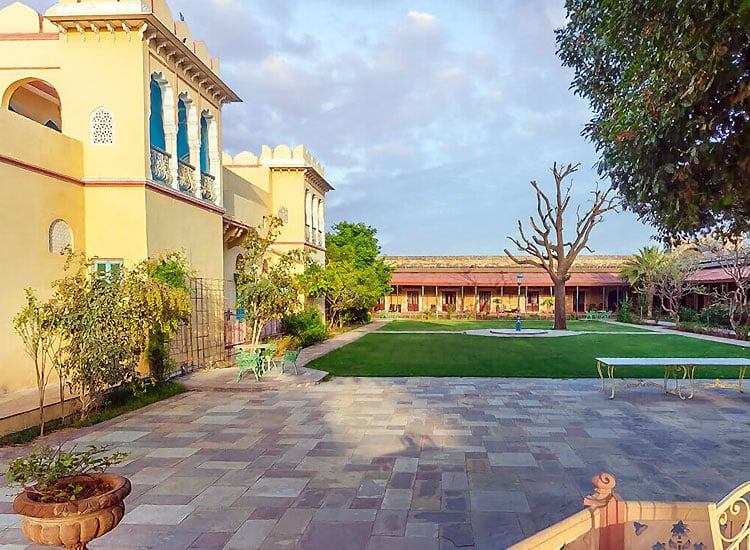
When we think of Rajasthan, images of towering forts, majestic palaces, and sweeping deserts usually come to mind. But tucked away from the spotlight are the hidden havelis in Rajasthan — quiet, artful spaces that reveal the lives of nobles, merchants, and artisans through intricate architecture and fading frescoes. These lesser-known gems offer a more personal, almost secret, window into the region’s rich heritage.
So, step beyond Rajasthan’s famous palaces into the world of hidden havelis with our curated Rajasthan tour packages, where heritage lovers and culture seekers discover authentic noble life. Yes, you heard that right! And trust me, living like a Rajasthani noble was nothing short of magical. Dine in 200-year-old banquet halls, wake up to peacocks calling from secret courtyards, and share evening chai with haveli caretakers who’ve guarded these treasures for generations.
Let me roll out the royal carpet for you through these architectural marvels where time slows down, traditions come alive, and the essence of Rajasthan’s regal past surrounds you. Spoiler alert: Indian Holiday made this experience so seamless that I felt like a noble myself!
Quick Planning Guide
Best for: Heritage lovers, cultural travellers, photographers and repeat visitors to Rajasthan
Best time: October to March for more comfortable walking weather
Main region: Shekhawati in northern Rajasthan
Key towns: Mandawa, Nawalgarh, Fatehpur, Dundlod and Bagar
Ideal experience: One or two towns with a knowledgeable local guide rather than rushing through a long list of havelis
First, What Exactly Is a Haveli?
A haveli is a traditional mansion built around one or more courtyards.
Historically, many havelis in Rajasthan belonged to wealthy trading families as they offered privacy and separate space for family life, business and visitors or guests.
You will find jharokha style windows, carved doors, internal courtyards and painted walls. In fact, haveli walls are famous for their frescoes as you can see in towns like Mandawa and Nawalgarh that feel like open air galleries. than conventional sightseeing destinations. Rajasthan Tourism highlights Nawalgarh for its havelis and some of the region’s finest fresco work.
A large fort impresses you from a distance. A haveli makes you slow down and look closely.
Havelis Worth Experiencing in Rajasthan
1. Le Prince Haveli, Fatehpur
Best for: Art and restoration
Why Visit: A restored Shekhawati mansion with an unusual conservation story
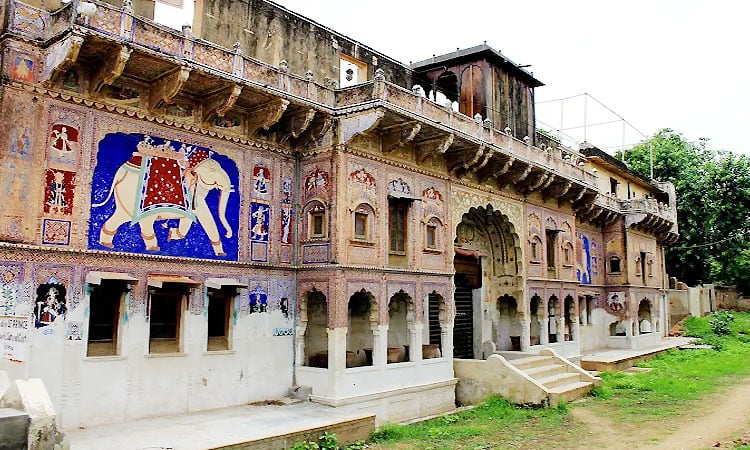
Le Prince Haveli began as a merchant residence in Fatehpur. French artist Nadine Le Prince later acquired and restored the building with the help of local artists.
Its painted courtyards give visitors a closer look at Shekhawati’s fresco tradition. The restoration story also makes it different from havelis that have survived only as monuments.
The original mansion dates to the early 19th century and was linked with the Devra merchant family. It was bought by Nadine Le Prince in 1998 and developed as a cultural space.
Traveller tip: Confirm current visitor access before adding this stop to your route. Access arrangements at privately managed heritage properties can change.
2. Piramal Haveli, Bagar
Best for: Travellers who want to stay in a heritage property
Why Visit: A quieter base for exploring Shekhawati
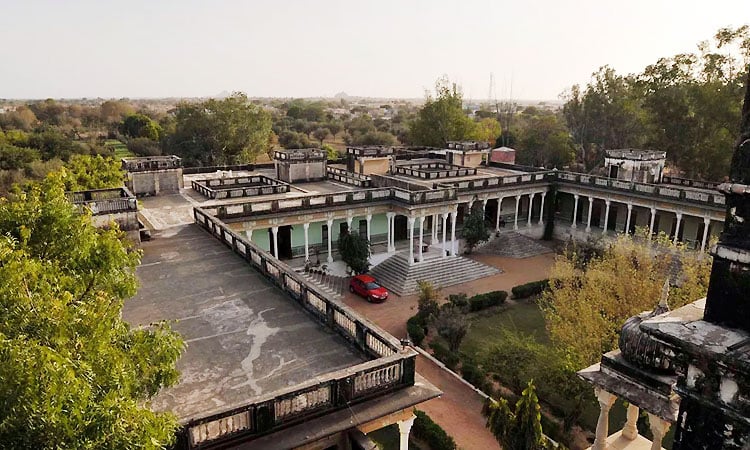
Piramal Haveli is different from many of the havelis you visit only for an hour.
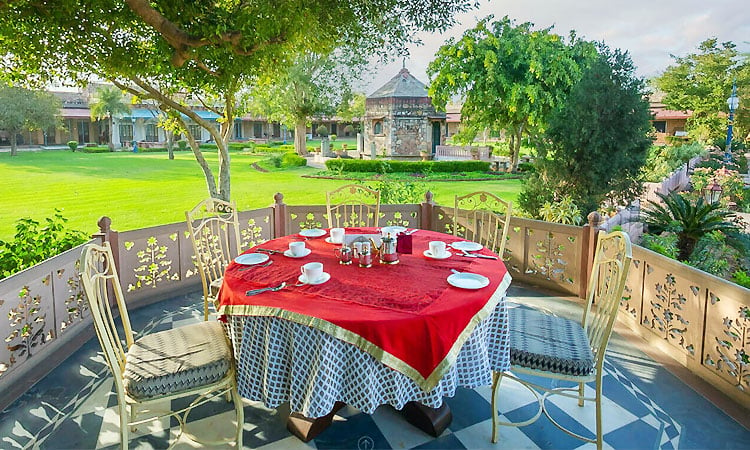
You can stay here.
The property was built in 1928 and has two pillared courtyards. Its frescoes include unusual images such as aeroplanes, flying angels and gods in motor cars.
That mixture of traditional subjects and early modern imagery is one of the things that makes Shekhawati’s painted homes fascinating.
Bagar is also quieter than some of the better-known Shekhawati towns.
For travellers who enjoy a slower pace, staying outside busy sightseeing centres can be part of the appeal.
Traveller tip: Use the haveli as a base for further exploration rather than treating the stay as the entire experience. Combine it with visits to nearby towns and painted mansions.
3. Morarka Haveli Museum, Nawalgarh
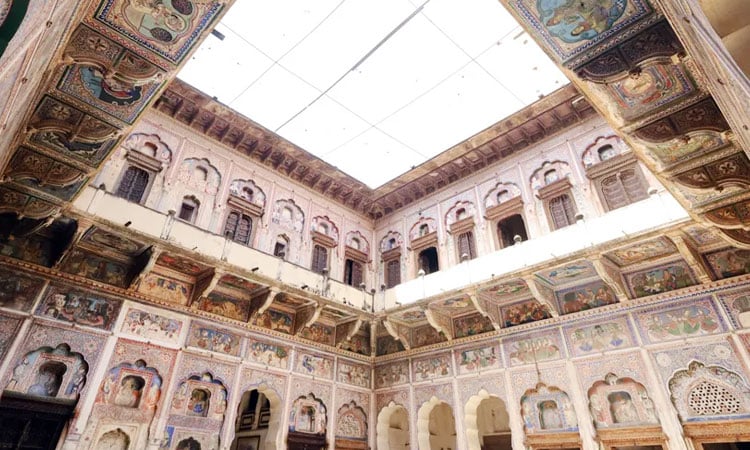
Best for: Fresco lovers and first-time Shekhawati visitors
Why Visit: Rich mural work in one of the region’s strongest haveli towns
Nawalgarh is one of the best places to understand Shekhawati’s painted architecture and Morarka Haveli is a good example.
The building comprises an inner courtyard, beautiful arches and extensive wall artwork. Now functioning as a museum, the building’s murals include court figures, scenes from mythology, and history.
What makes Nawalgarh useful is that you are not travelling there for a single mansion.
Several havelis can be explored within the town. Rajasthan Tourism lists Morarka Haveli along with Bhagato Ki Haveli, Grand Haveli and other notable properties in Nawalgarh.
Traveller tip: If you only have time for one Shekhawati town, Nawalgarh is definitely recommended. The concentration of painted buildings makes the visit easier to understand as a whole.
4. Seth Arjun Das Goenka Haveli, Dundlod
>Best for: Understanding how merchant families once lived
Why Visit: A restored haveli arranged as a heritage museum
This Dundlod haveli was built in 1875 by Seth Arjun Das Goenka, but today, it works as a museum. Its rooms and courtyards help explain domestic and business life in a wealthy merchant home.
You can see open spaces connected with kitchens, prayer, water storage and family life. The architecture also separates public areas from more private sections of the house.
That makes it particularly useful for travellers who want to experience something more than just pretty frescoes.
A guide can explain why different spaces existed and how a large household functioned.
Traveller tip: Combine Dundlod with Nawalgarh rather than treating it as a completely separate Rajasthan stop.
5. The Painted Havelis of Mandawa
Best for: First-time visitors and photographers
Why Visit: Several painted mansions within a compact heritage town
Mandawa is one of Shekhawati’s best-known towns. It is a useful starting point because several havelis sit within its old lanes.
Look for buildings such as Gulab Rai Ladia Haveli, Goenka Double Haveli and Murmuria Haveli. The paintings are often what surprise the visitors most.
Traditional religious scenes sit beside images of trains, cars and Europeans in formal dress. Murmuria Haveli, for example, is known for paintings that bring Indian and European influences together.
Do not race between every painted façade; instead, choose a few and give yourself time to explore.
Traveller tip: Guided context is recommended, as many of the stories are easy to miss without someone explaining the details.
6. Patwon Ki Haveli, Jaisalmer
Best for: Travellers already including Jaisalmer
Why Visit: One of Rajasthan’s finest merchant-haveli complexes
Patwon Ki Haveli is not exactly hidden, but it belongs in this list because it shows how Rajasthan’s merchant heritage changed from one region to another.
Unlike the painted havelis of Shekhawati, Jaisalmer’s havelis are famous for their intricate carving in golden sandstone.
Patwon Ki Haveli is actually a group of five mansions which Rajasthan Tourism describes as the cluster of one of Jaisalmer’s largest and most elaborately carved havelis.
Its narrow corridors, balconies and detailed stonework provide a different experience from the huge scale of Jaisalmer Fort.
Traveller tip: If Jaisalmer is already part of your route, it fits naturally into an old-city walk. There is no need to build a separate day around it.
What About Castle Kanota Near Jaipur?
Castle Kanota is not a haveli per se, but an important part of the list. This building is a fortified heritage residence near Jaipur rather than a Shekhawati-style haveli. It was built in 1872 by Thakur Zorawar Singh and now operates as a heritage hotel.
It can still be a good option for travellers who want a heritage stay outside central Jaipur.
But it does not offer the same type of experience as the merchant havelis of Mandawa, Nawalgarh or Fatehpur.
Why the Frescoes Are Worth Looking At
At first, a haveli wall may simply look colourful, but spend a little longer and the paintings become much more interesting.
You might see Hindu deities, historical royal figures, floral motifs, animals, and scenes from daily life in these frescoes, but the scenes and subjects change over time. The artwork progresses to Steam engines, cars, European textiles, and even Aeroplanes.
The merchant families who built these mansions travelled, traded and encountered a changing world, and the paintings often reflect that curiosity.
Planner Tip: This is a major reason why a local guide adds value to your experience. Without context, you see decoration, but with context, you begin to see the world of the families who lived here.
Can You Stay in a Haveli?
Yes, you can, but not every Haveli can be an accommodation. While we see several old havelis being converted to heritage hotels, there are others that operate as museums or visitor sites. Many remain privately owned.
Also, a haveli stay is different from staying at a large palace hotel. Rooms may vary in size; the layouts can be unusual, and old staircases and courtyards form a part of the character and charm of an old haveli.
Choose a haveli stay if you value atmosphere and heritage over the uniform layout of a modern hotel.
However, if you prefer larger rooms, elevators, extensive spa facilities or resort-style services, discuss this before choosing a heritage property. The oldest-looking hotel is not always the right hotel for your trip.
Guided Exploration
Shekhawati is one place where guided interpretation makes a clear difference to your experience.
Many mansions are known by family names, but some are privately managed. Access can vary.
The frescoes and artwork are full of detail, so a good guide can explain who built the house, what particular images mean and why European subjects began appearing alongside traditional scenes. This turns a walk through old buildings into a cultural experience.
For travellers who prefer depth over checklist sightseeing, that is time well spent.
Best Time to Explore Rajasthan’s Havelis
October to March is generally the easiest and most convenient period for walking through Rajasthan’s heritage towns.
Winter days are comfortable, though mornings and evenings can become cool in December and January.
If photography matters to you, morning and late-afternoon light can bring out the colour and texture of frescoed walls and sandstone façades.
Summer visits are possible, but long outdoor heritage walks can become tiring in the heat.
Whatever the season, comfortable footwear matters. Much of the experience involves walking through old lanes, courtyards and uneven surfaces.
How to Add Havelis to a Rajasthan Itinerary
You do not need to plan a holiday made entirely around havelis. They work best when they add depth to a route you already want to travel.
- If your route includes Jaipur: Consider adding Shekhawati if architecture and frescoes are a real interest.
- If you are travelling towards Bikaner: Mandawa or Nawalgarh can fit naturally into a northern Rajasthan journey.
- If you are visiting Jaisalmer: Explore Patwon Ki Haveli as part of the old city rather than creating another excursion.
- If heritage accommodation matters: Add one thoughtfully chosen haveli stay instead of changing properties every night.
Who Will Enjoy This Experience Most?
Shekhawati and Rajasthan’s smaller havelis work especially well for travellers who enjoy:
- Architecture and design
- Painting and photography
- Slow heritage walks
- Guided cultural experiences
- Small heritage hotels
- Local history
- Rajasthan beyond its major forts and palaces
Families can enjoy the region too, especially with older children who are interested in art and stories.
Travellers with very limited time on their first trip to India may prefer to focus on Rajasthan’s main cities first. There is no need to force Shekhawati into every itinerary.
Plan the Route, Not Just the Haveli List
Rajasthan’s hidden havelis are most rewarding when the route makes space for them.
A night in Shekhawati can bring a very different mood from larger cities. A guided morning among painted mansions can reveal merchant Rajasthan in a way that palace visits cannot. But pacing matters. Instead of trying to see ten havelis, choose a few that offer different experiences. Combine a museum with a painted street walk. Add a heritage stay if comfort and location work for you.
That creates a journey with more depth and fewer rushed stops.