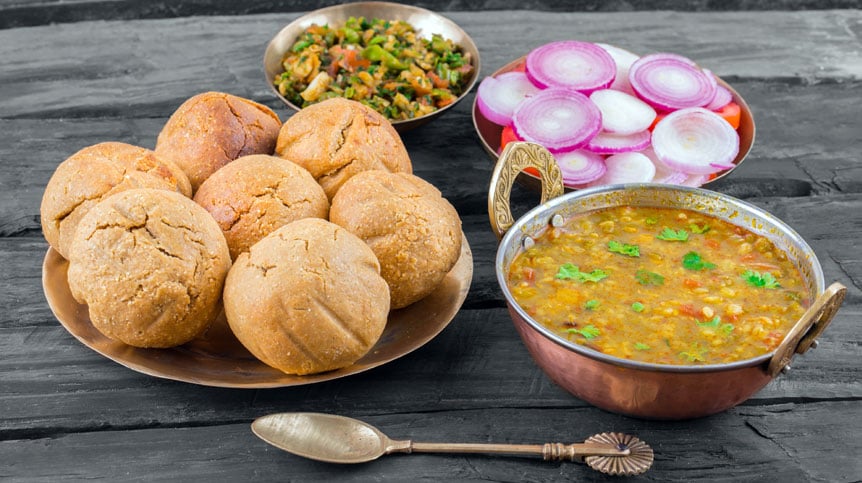
Traditional Rajasthani cuisine is built on bold flavours, desert ingenuity, and royal feasts. From smoky meat curries to ghee-soaked sweets, it’s one of India’s most distinctive regional cuisines. This guide will help you understand what the signature dishes are and how to build a food-focused itinerary around them.
Top Dishes of Rajasthan
What makes traditional Rajasthani cuisine unique for travellers?
Rajasthani food is shaped by two powerful forces: the harsh desert climate and the legacy of royal and warrior cultures. That’s why you’ll see so many dishes designed to last without refrigeration, travel well, and still feel luxurious, with rich meat curries and elaborate sweets. Key traits you’ll notice:
- Heavy use of ghee, buttermilk, yoghurt and clarified butter instead of fresh cream.
- Dependence on pulses, gram flour (besan), millets (bajra), and dried berries/beans instead of leafy vegetables.
- Dishes designed to be filling, long-lasting, and robust, ideal for travellers covering long distances.
- A strong veg tradition, with iconic meat dishes like Laal Maas, Safed Maas and Mohan Maas.
How do Dal Baati Churma and Churma Ladoo define the soul of Rajasthani food?
1. Dal Baati Churma

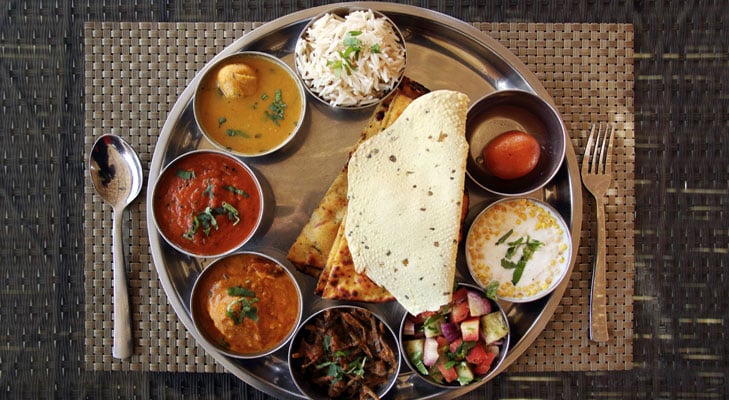
A classic trilogy: smoky baked wheat baatis drenched in ghee, served with spicy lentil dal and sweet, crumbly churma. Traditionally cooked in embers and sand, it’s now the star of most Rajasthani thalis.
Why you should try it: If you eat just one traditional Rajasthani dish, make it Dal Baati Churma. It captures the cuisine’s balance of smoky, savoury and sweet in a single plate.
Where to try it
- Jaipur: Chokhi Dhani, Laxmi Misthan Bhandar (LMB)
- Jodhpur: Gypsy, local thali joints near Nai Sarak
2. Churma Ladoo

Made from coarsely ground wheat, ghee and jaggery, rolled into rich laddoos and studded with nuts, this sweet often appears alongside Dal Baati in festive spreads.
Why you should try it: It’s the portable, dessert side of Dal Baati Churma – rich, nutty and perfect with hot chai.
Where to try it
- Jaipur: Laxmi Misthan Bhandar (LMB), Chokhi Dhani
- Jodhpur: Gypsy Dining Hall, traditional thali restaurants near Nai Sarak
Why are Laal Maas, Safed Maas and Mohan Maas the kings of Rajasthani meat dishes?
3. Laal Maas

A fiery mutton curry slow-cooked with Mathania red chillies, yoghurt and spices. Properly made, it’s smoky, spicy and deeply flavourful rather than just “hot”.
Why you should try it: It’s the signature non-veg Rajasthani dish – ideal if you enjoy bold flavours.
Where to try it
- Jaipur: Suvarna Mahal (Rambagh Palace), Niros
- Jodhpur: On The Rocks, Hanwant Mahal
4. Safed Maas

A royal-style mutton curry cooked in a pale, creamy gravy with yoghurt, cashews, poppy seeds and mild spices instead of red chillies.
Why you should try it: Perfect if you want a rich Rajasthani meat dish without too much heat – it’s gentle, nutty and luxurious.
Where to try it
- Heritage hotels and specialty restaurants in Jaipur and Udaipur
- Upscale restaurants offering royal Rajasthani thalis
5. Mohan Maas

Another royal meat curry, Mohan Maas is slow-cooked meat in a thick, lightly sweet, aromatic gravy, often mildly spiced and perfumed with cardamom and saffron.
Why you should try it: Think of it as the “festive” non-veg dish – subtle, rich and indulgent.
Where to try it
- Upscale restaurants and palace hotels in Jaipur and Udaipur
- Look for it on special festive or tasting menus
How do Gatte ki Sabzi, Rajasthani Kadhi and Ker Sangri showcase desert ingenuity?
6. Gatte ki Sabzi

Besan (gram flour) is rolled into firm dumplings (gatte), boiled, sliced and then simmered in a spicy yoghurt-based gravy. In older times, when fresh vegetables were scarce, gatte became the “vegetable”.
Why you should try it: The dish captures Rajasthan’s creativity with pantry ingredients and is extremely satisfying for vegetarians.
Where to try it
- Almost every traditional thali place in major cities
- Ask for it specifically if it isn’t on the day’s menu
7. Rajasthani Kadhi

Unlike the mild, sweetish Gujarati kadhi, Rajasthani kadhi is tangier and a bit spicier, made with besan and yoghurt tempered with chillies, hing and cumin.
Why you should try it: Comfort food at its best, especially on cooler evenings or with a simple rice plate.
Where to try it
- Local thali joints in the old city areas
- Traditional family-run restaurants and dhabas on tourist circuits
8. Ker Sangri

A classic desert dish made from dried wild berries (ker) and beans (sangri), slow-cooked in oil with spices, sometimes with a touch of yoghurt or amchur for tang.
Why you should try it: It’s the most “desert” of all Rajasthani dishes – nothing else tastes quite like it.
Where to try it
- Thali restaurants and dhanis in Jaisalmer, Bikaner and Jodhpur.
Why are Bajre ki Roti and Bajra ki Raab such important comfort foods?
9. Bajre ki Roti with Lehsun Chutney

Thick rotis made from bajra (pearl millet) are cooked on a hot griddle or open flame, then served with generous ghee and a fiery garlic chutney.
Why you should try it: It’s one of the most authentic rural Rajasthani meals – simple, filling and very “local” in feel.
Where to try it
- Highway dhabas on major routes
- Village-themed restaurants like Chokhi Dhani
- Local eateries in smaller towns
10. Bajra ki Raab
A warm, porridge-style drink made from bajra, ghee, ginger and spices, traditionally consumed in winter or when you’re feeling low on energy.
Why you should try it: Think of it as Rajasthani “grandma’s recipe” – comforting, nourishing and very different from restaurant fare.
Where to try it
- Highway dhabas
- Village-themed restaurants like Chokhi Dhani
- Local eateries in smaller towns
Which kachoris and vadas make the perfect breakfast or chai-time snack?
11. Pyaaz Kachori

Flaky, deep-fried pastry stuffed with spiced onion filling, served hot with tamarind and coriander chutneys.
Why you should try it: It’s Jaipur’s cult breakfast – rich, savoury and properly messy.
Where to try it
- Rawat Misthan Bhandar (Jaipur)
- Popular kachori shops near city markets
12. Mawa Kachori

A sweet version of kachori filled with mawa and dry fruits, fried and soaked in sugar syrup.
Why you should try it: It blurs the line between snack and dessert and is a must in Jodhpur.
Where to try it
- Janta Sweet Home (Jodhpur)
- Major mithai shops across the state
13. Kalmi Vada

Crispy lentil patties (usually chana dal) deep-fried twice and served with green chutney.
Why you should try it: Excellent tea-time snack – crunchy, filling and less greasy than it looks.
Where to try it
- Street stalls and small tea shops in Bikaner and Jaipur
Want to enjoy Rajasthani cuisine at its best? Explore the best time to visit Rajasthan.
Why are Mirchi Vada and Bikaneri Bhujia famous all over India?
14. Mirchi Vada

Large green chillies stuffed with spiced potato masala, dipped in gram flour batter and deep-fried.
Why you should try it: Spicy, crunchy and addictive – but definitely not for those who hate chillies.
Where to try it
- Jodhpur’s Sardar Market and old-city stalls
15. Bikaneri Bhujia

Thin, spicy snack made from besan and moth beans, originally from Bikaner and now sold all over India.
Why you should try it: You’ve probably eaten packaged “bhujia”; this is your chance to try the original in its hometown.
Where to try it
- Branded shops like Haldiram’s in Bikaner
- Local namkeen stores across major cities
Why are Ghewar, Malpua, Balushahi, Imarti and Badam ka Halwa so indulgent?
16. Ghewar

A disc-shaped, honeycomb-textured sweet made from flour, ghee and sugar syrup, often topped with rabri and nuts. Especially popular in the monsoon festive season.
Why you should try it: It’s Rajasthan’s most iconic festival sweet and unlike most other Indian desserts in texture.
Where to try it
- Traditional mithai shops in Jaipur, Udaipur and Jodhpur
- Especially around Teej and Raksha Bandhan
17. Malpua with Rabri

Thick, pancake-like sweets made from flour and milk, fried and soaked in syrup, then served with rich rabri.
Why you should try it: Best eaten piping hot in the evening – rich, soft and perfect for sharing.
Where to try it
- Sweet shops near main bazaars in Pushkar, Jaipur and other temple towns
18. Balushahi

A flaky, layered sweet somewhat similar to glazed doughnuts, but denser and richer.
Why you should try it: This is one of those old-school sweets that feels properly celebratory – buttery, slightly tangy and not as cloying as it looks.
Where to try it
- Classic mithai shops around Johari Bazaar and Bapu Bazaar in Jaipur
- Other established halwais across Rajasthan
19. Imarti

Flower-shaped deep-fried coils made from urad dal batter, soaked in saffron-scented syrup; often seen in Pushkar and smaller towns.
Why you should try it: If you like jalebi, Imarti is its richer cousin – chewy, beautifully shaped and great with a cup of evening chai.
Where to try it
- Stalls and mithai shops near the main ghats and bazaars
- Especially in the evenings when fresh batches are fried
Eat, explore, and shop! Find out the best places for shopping in Rajasthan.
20. Badam ka Halwa

A rich almond halwa cooked slowly in ghee with sugar and cardamom, served hot, especially in winter.
Why you should try it: Pure indulgence – best to share if you’re hopping between multiple sweets in one evening.
Where to try it
- Heritage hotels and better mithai shops during the cooler months
Where does Moong Dal Halwa fit into Rajasthan’s winter dessert culture?
21. Moong Dal Halwa

A slow-cooked dessert made from ground moong dal, ghee and sugar, finished with nuts and saffron, very popular at winter weddings.
Why you should try it: Intense, nutty and warming – ideal after a chilly evening walk back from a fort or lake.
Where to try it
- Sweet shops and stalls near the main ghats and bazaars
- Wedding season mithai counters and special winter menus
How do Kesar Lassi and Masala Chaas cool you down after spicy food?
22. Kesar Lassi

Thick yoghurt-based drink flavoured with saffron and cardamom, sweet but not cloyingly so, often topped with malai.
Where to try it
- Mishrilal Lassi in Jodhpur (near the clock tower) – legendary for its lassi
- Popular sweet shops in major cities
23. Masala Chaas / Chhach

Light buttermilk spiced with roasted cumin, coriander and other masalas, served chilled. In the desert heat, locals drink this all through the day.
Why you should try it: It’s the best antidote to heavy, spicy food and an excellent digestive.
Where to try it
- Sweet shops and stalls around the main cities
- Most thali restaurants as part of the meal
What is Jaljeera, and when should you order it?
24. Jaljeera

A tangy, spiced drink made with cumin, mint, tamarind and other cooling ingredients, often served when you feel bloated or sluggish after a big thali or street-food session.
Why you should try it: Jaljeera is one of the easiest ways to reset your palate after heavy, ghee-rich meals.
Where to try/buy it
- Local restaurants and thali places in Jaipur, Jodhpur and beyond
- Sometimes served as a welcome drink or part of a set meal
Planning a foodie trip? Here’s how to reach Rajasthan to start your culinary adventure.
Where can you eat authentic Rajasthani food in Jaipur, Jodhpur, Udaipur, and beyond?
You’ll find versions of these dishes almost everywhere, but a few cities are particularly rewarding for food-focused travellers.
Where should you eat in Jaipur for a classic thali and sweets?
- For immersive thalis & village-style experience:
- Chokhi Dhani – themed village resort with live performances and huge Rajasthani thalis.
- For iconic sweets & snacks:
- Laxmi Misthan Bhandar (LMB) – ghewar, kachoris, traditional mithai.
- Rawat Misthan Bhandar – Pyaaz Kachori and Mirchi Vada.
- For refined Rajasthani menus in a luxury setting:
- Suvarna Mahal (Rambagh Palace) – Laal Maas, Safed Maas and curated regional menus.
Where can you try legendary street food and lassi in Jodhpur and Bikaner?
- Jodhpur:
- Sardar Market & Clock Tower area – Mirchi Vada, kachoris, street chaas.
- Janta Sweet Home – Mawa Kachori, snacks and sweets.
- Mishrilal Lassi – thick Kesar Lassi.
- Bikaner:
- Local namkeen shops for Bikaneri Bhujia.
- Sweet shops for ghewar, Imarti and other mithai; smaller thali joints for Ker Sangri.
From palaces to thalis — check out the must-visit tourist attractions in Rajasthan.
Which Udaipur and Jaisalmer restaurants are worth planning around?
- Udaipur
- Lakeside restaurants in the old city and within heritage hotels for Safed Maas and Rajasthani thalis.
- Traditional mithai shops for ghewar, laddoos and seasonal sweets.
- Jaisalmer
- Desert dhanis and camp restaurants for Dal Baati, Ker Sangri and bajra roti under the stars.
- Old-city rooftop restaurants for mixed thalis with a view of Jaisalmer Fort.
How spicy and vegetarian-friendly is traditional Rajasthani food?
1. Is Rajasthani cuisine mostly vegetarian?
Yes. Historically, many communities in Rajasthan are vegetarian, so Rajasthani dishes like Dal Baati Churma, Gatte ki Sabzi, Ker Sangri, Rajasthani Kadhi, and most sweets are veg. Non-veg dishes like Laal Maas, Safed Maas and Mohan Maas appear more in Rajput and urban restaurant menus.
2. How can you handle the spice if you have a low tolerance or are travelling with kids?
- Tell the restaurant clearly: “Please make it less spicy” / “mirchi kam rakhiye”.
- Start with milder dishes: Safed Maas, Mohan Maas, kadhi, Gatte ki Sabzi, sweets and lassi.
- Pair spicy dishes with chaas, lassi, raita and rotis.
- Avoid big portions of Mirchi Vada or extra-hot Laal Maas if you’re not used to chillies.
3. What about vegans and gluten-sensitive travellers?
- Vegans: Many savoury dishes are plant-based but use ghee and yoghurt. Ask if they can cook with oil instead of ghee and avoid sweets heavy in milk, khoya and ghee.
- Gluten-free: Stick to bajra and makki rotis, rice, curries and sabzis that don’t use wheat or besan; check with the kitchen for cross-contamination.
What local tips, etiquette, and safety advice should you follow?
- Ask about spice level upfront if you’re not used to chillies.
- Street food: Go where it’s busy and turnover is high; avoid items that have been sitting out too long.
- Water: Prefer bottled water at small places; in upscale restaurants, ask if filtered water is safe to drink.
- Tipping: 5–10% is fine in sit-down restaurants; no tipping expectations at basic stalls.
- Dress & decorum: In family-run eateries and dhanis, modest clothing and calm behaviour are appreciated.
- Timing: Sweets and snacks are often freshest in the morning; heavy thalis sit better at lunch than late at night.
- Allergies: Many dishes use nuts, ghee and dairy. Inform the staff clearly if you’re allergic.
Why trust this guide?
- Curated by IndianHoliday, an Indian tour operator established in 1990.
- Our team has been planning South India holidays for 35+ years with vetted on-ground partners in and around Rajasthan.
- Information on safety, travel rules, destinations and festivals is checked against official sources and local inputs as of January 2026.
- We update this guide regularly so that you have realistic, on-the-ground advice – not outdated brochure copy.
How can IndianHoliday help you plan your journey?
Rajasthan’s food scene is easiest to enjoy when someone else is watching the clock and the bookings.
- Combine forts, palaces, bazaars and food walks in one seamless itinerary.
- Stay at handpicked hotels and heritage properties that serve authentic Rajasthani dishes, not just generic buffets.
- Add guided street-food tours, cooking demos and village dinners with safe, vetted partners.
- Get advice on spice levels, dietary needs and the best places to eat with kids.
Looking to explore food and forts? Check out our customized Rajasthan tour packages.