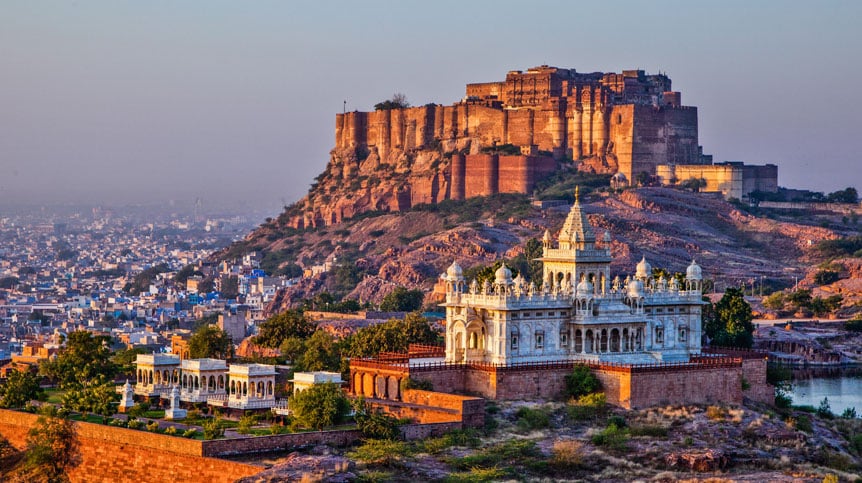

Jodhpur works best for travellers who enjoy layered heritage experiences rather than checklist-style sightseeing.
Mehrangarh Fort is the clear priority. Jaswant Thada adds a smaller marble memorial nearby, while Umaid Bhawan Palace introduces Jodhpur's 20th-century royal story. In the old city, Toorji Ka Jhalra and the Clock Tower–Sardar Market area offer a closer look at everyday heritage.
Travellers with more time can add Mandore Gardens, Rao Jodha Desert Rock Park or Kaylana Lake. Families looking for a nature-focused stop can consider Machia Biological Park.
For a first visit, focus on four to six well-chosen attractions rather than building the day around a long checklist.
Which Jodhpur Tourist Attractions Should You Prioritise?
| What You Want | Best Choice |
|---|---|
| One essential Jodhpur attraction | Mehrangarh Fort |
| Royal architecture and museum | Umaid Bhawan Palace Museum |
| Short heritage stop after Mehrangarh | Jaswant Thada |
| Old-city architecture | Toorji Ka Jhalra |
| Market and local atmosphere | Clock Tower & Sardar Market |
| Landscape and walking | Rao Jodha Desert Rock Park |
| Marwar history beyond the fort | Mandore Gardens |
| Relaxed outdoor stop | Kaylana Lake |
| Family nature attraction | Machia Biological Park |
| If you have only half a day | Mehrangarh Fort + Jaswant Thada |
| If you have one full sightseeing day | Mehrangarh + Jaswant Thada + Toorji Ka Jhalra + Clock Tower |
Jodhpur Tourist Attractions: Timings and Entry Fees
| Attraction | Current Visiting Hours | Entry Fee |
|---|---|---|
| Mehrangarh Fort & Museum | 9:00 AM–5:00 PM | ₹200 domestic adult; ₹800 international adult |
| Jaswant Thada | 9:00 AM–5:00 PM | ₹50 domestic; ₹100 international |
| Umaid Bhawan Palace Museum | Current Museum of India listing: 10:00 AM–4:30 PM | ₹30 Indian adult; ₹100 foreign visitor |
| Toorji Ka Jhalra | Open 24 hours; daylight visit recommended | Free |
| Clock Tower & Sardar Market | No controlled monument gate; most market activity is during daytime and evening | Free |
| Mandore Gardens | Around 9:00 AM–5:00 PM | Garden generally free; museum separately ticketed |
| Rao Jodha Desert Rock Park | Oct–Mar: 8:00 AM–5:30 PM; Apr–Sep: 7:00 AM–6:30 PM | ₹100 |
| Kaylana Lake | Around 9:00 AM–5:00 PM | Free |
| Machia Biological Park | 16 Oct–15 Mar: 8:30 AM–5:00 PM; 16 Mar–15 Oct: 8:00 AM–6:00 PM; Tuesday closed | ₹30 Indian; ₹300 foreign |
Mehrangarh Fort
The anchor of any Jodhpur visit and among the most popular Jodhpur tourist attractions. The fort, situated 123 metres above the city on a rocky outcrop, towers 400 feet above the old city with walls of burnished red sandstone. Seven grand entrances – Jai Pol and Fateh Pol bearing historic cannonball indentations – lead to a complex of palace galleries, armoury, palanquins, royal cradles, Phool Mahal, Sheesh Mahal, Moti Mahal, and Takhat Vilas. The museum is one of the best-curated in Rajasthan. Ramparts give unobstructed views over the blue-washed city toward the desert.
Who should prioritise it: Essential for first-time visitors and travellers with limited time in Jodhpur. Even rushed itineraries should reserve at least half a day for the fort and museum complex.
Comfort note: Expect substantial walking, uneven stone surfaces, and stair climbing despite elevator access. Morning visits are significantly more comfortable during warmer months.
Families with children usually find the cannon ramparts, hidden passages, royal cradles, and museum artefacts particularly engaging.
Flying Fox Zipline — Six ziplines across the fort’s moats and battlements. Children above the age 6 can participate with trained instructors.
Umaid Bhawan Palace Museum
Umaid Bhawan Palace gives Jodhpur a very different royal experience from Mehrangarh.
Construction began in the late 1920s, and the palace was completed in 1943. Part of the building remains associated with the Jodhpur royal family, part operates as a luxury hotel, and a separate museum is open to visitors. The museum covers the construction of the palace and 20th-century royal life through photographs, clocks, furniture, objects and other memorabilia.
Time needed: Around 45–60 minutes for the museum.
Current entry: ₹30 for Indian adults; ₹100 for foreign visitors.
Current Museum of India timing: 10:00 AM–4:30 PM, open all seven days.
Jaswant Thada
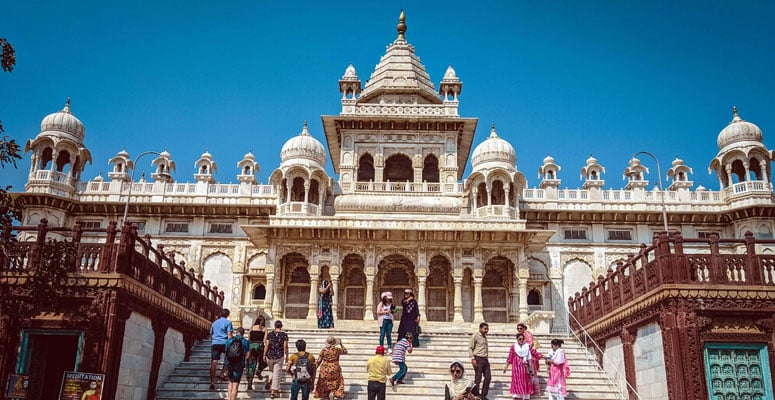
Jaswant Thada is a smaller and quieter heritage stop close to Mehrangarh Fort.
The marble memorial was built in memory of Maharaja Jaswant Singh II and completed in 1906 by his son Maharaja Sardar Singh. The main hall also contains portraits that help visitors follow the history of Marwar's rulers.
Time needed: Around 30–45 minutes.
Timings: 9:00 AM–5:00 PM.
Entry fee: ₹50 for domestic visitors; ₹100 for international visitors.
Toorji Ka Jhalra
Toorji Ka Jhalra is one of the easiest old-city attractions to add after Mehrangarh.
Built in the 18th century, the stepwell shows how water storage was built into the fabric of old Jodhpur. Its descending sandstone steps and geometric form make it worth seeing even if you are not visiting specifically for photography.
Time needed: Around 20–30 minutes.
Access: Open 24 hours, although daylight is better for sightseeing.
Entry fee: Free.
Clock Tower and Sardar Market
The Clock Tower and Sardar Market should remain because the market itself is part of the attraction.
The tower provides the visual landmark, while the surrounding market brings together spices, textiles, household goods and local street life. Rajasthan Tourism identifies Sardar Market and the Clock Tower as central landmarks of Jodhpur's old city.
Time needed: Around 45–90 minutes.
Entry fee: Free.
There is no single controlled opening and closing time for the whole market. Individual shops set their own hours.
Mandore Gardens
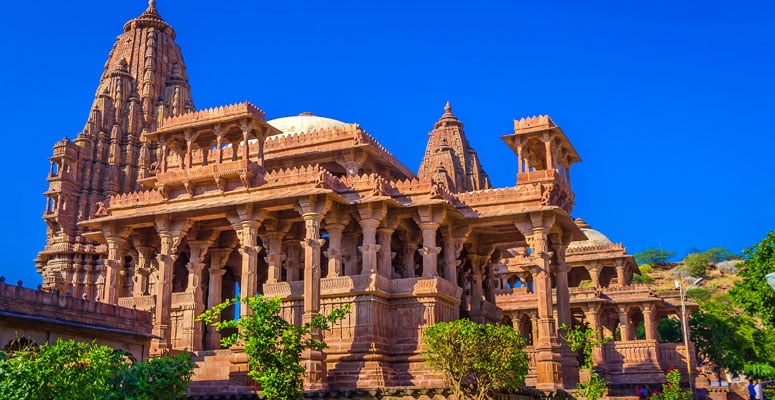
Mandore adds useful context because it predates the founding of Jodhpur around Mehrangarh.
The site includes royal cenotaphs, temples and remains connected with the older capital of Marwar. Rajasthan Tourism also points to Mandore as an important part of Jodhpur's earlier history.
Time needed: Around 1–2 hours.
Current general timing: Around 9:00 AM–5:00 PM.
Entry: Garden access is generally free. The museum is separately ticketed; current 2026 visitor information places the museum tariff at approximately ₹50.
For a short first visit to Jodhpur, Mehrangarh and Jaswant Thada remain higher priorities.
Rao Jodha Desert Rock Park
Rao Jodha Desert Rock Park gives visitors a closer look at the rocky landscape surrounding Mehrangarh.
The park was created in 2006 to restore native ecology across 70 hectares of degraded land beside the fort. Walking trails now pass through arid plants, rock formations and viewpoints around the Mehrangarh landscape.
Time needed: Around 1–2 hours.
Entry fee: ₹100.
Naturalist-guided walk: ₹200.
Timings:October–March: 8:00 AM–5:30 PM, April–September: 7:00 AM–6:30 PM, Open daily.
Kaylana Lake
Kaylana Lake works best as a lighter outdoor stop after Jodhpur's heavier heritage sightseeing.
The artificial lake lies west of the city and is visited for its water views, surrounding rocky landscape and seasonal birdlife. Rajasthan Tourism also lists boating among activities available around the lake.
Time needed: Around 45–60 minutes for a casual visit.
Current published timing: 9:00 AM–5:00 PM.
Entry fee: Free.
Plan it for late afternoons/ early evening for the best experience.
Machia Biological Park
Machia Biological Park is a useful optional attraction for families who want a nature stop in Jodhpur.
Located near Kaylana Lake, the park combines wildlife enclosures with a dry, rocky landscape typical of the region. Its current official website lists species including leopard, blackbuck, chinkara, crocodiles, gharial and other animals.
Current timings:
16 October–15 March: 8:30 AM–5:00 PM
16 March–15 October: 8:00 AM–6:00 PM
Closed Tuesday
Entry fee: ₹30 for Indian visitors; ₹300 for foreign visitors; children under five enter free.
Ghanta Ghar (Clock Tower) and Sardar Market
The Clock Tower is the starting point of all heritage walks in the old city. The adjacent Sardar Market sells spices, traditional jewellery, and textiles. Jodhpur’s street food circuit – pyaaz kachori, mawa kachori, shahi samosas, mirchi vada, and makhaniya lassi are the essential stops. Mohanlal Verhomal Spices shop is a rated shopping and tasting experience – spice variety, recipe lessons, and tasting sessions.
The market works particularly well for families because food tasting, shopping, and old-city atmosphere can all be combined into a single relaxed evening circuit.
Timings: The market is most active in the late afternoon and evening.
Tips: Best in the late afternoon and evening when the market is fully active. The street food circuit here is the strongest in Jodhpur – combine shopping and food rather than treating them separately.
Jodhpur Tourist Attractions That Pair Well Together
Mehrangarh Fort + Jaswant Thada
This is the strongest heritage pairing.
Give Mehrangarh most of the time, then continue to Jaswant Thada for a shorter marble memorial visit. If you enjoy nature walks, Rao Jodha Desert Rock Park can also be added, but doing all three requires more time and walking.
Toorji Ka Jhalra + Clock Tower and Sardar Market
These fit naturally into an old-city sightseeing block.
Visit the stepwell while there is good daylight, then continue towards the Clock Tower and market as the area becomes livelier later in the day.
Kaylana Lake + Machia Biological Park
These are on the same side of Jodhpur and work well for travellers who want a nature-focused half-day.
Visit Machia during its formal opening hours, then keep Kaylana as the lighter stop.
Mandore Gardens + North Jodhpur
Mandore works best as a dedicated northern Jodhpur heritage stop. Do not force it into the same morning as Mehrangarh if your stay is short.
Attraction – Led Experiences in Jodhpur
At Mehrangarh Fort, visitors can use the official museum/audio-guided route or continue along the Rampart Trail towards Chamunda Mata Temple. The standard museum ticket includes the Rampart Trail.
The Flying Fox zip-line also operates around the Mehrangarh landscape as a separately ticketed activity. It can remain as an optional add-on for travellers interested in adventure, but there is no need to build a separate adventure section around paragliding and camel rides.
At Rao Jodha Desert Rock Park, a naturalist-guided walk is the most relevant activity because it explains the restoration work and desert plants that are easy to miss independently.
Practical Tips for Visiting Jodhpur's Attractions
Continue Planning Your Jodhpur Sightseeing
For most first-time travellers, Mehrangarh Fort should come first.
Add Jaswant Thada because it sits naturally alongside the fort. Use Toorji Ka Jhalra and the Clock Tower–Sardar Market area for the old city, then decide whether your remaining time is better spent at Umaid Bhawan Palace, Mandore Gardens or a nature attraction.
A smaller group of well-chosen attractions will give you a clearer sense of Jodhpur than three days of moving continuously between unrelated stops.
Continue with the Jodhpur Travel Guide for food, shopping, transport and wider trip planning.