
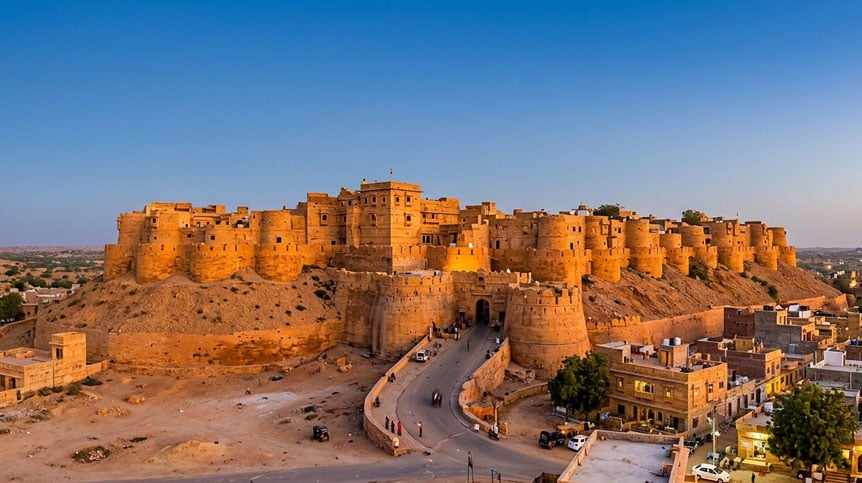

Jaisalmer’s fort layer is less about collecting multiple large forts and more about experiencing different forms of desert heritage — a living UNESCO fort city, abandoned desert strongholds, and sandstone towers that shape the skyline of the Golden City. For most travelers, Jaisalmer Fort is the non-negotiable anchor experience, while Khaba Fort, Pokhran Fort, and Tazia Tower work as optional extensions depending on whether you prefer atmospheric ruins, road-route heritage stops, or architectural photography.
Which Fort or Tower in Jaisalmer Deserves Your Time?
| If You Want… | Best Choice |
|---|---|
| The essential Jaisalmer heritage experience | Jaisalmer Fort |
| A living fort-city atmosphere | Jaisalmer Fort |
| Atmospheric abandoned-fort photography | Khaba Fort |
| A road-route heritage stop | Pokhran Fort |
| Distinctive skyline architecture | Tazia Tower |
| Limited time in Jaisalmer | Jaisalmer Fort only |
| Desert-history atmosphere | Khaba Fort + Kuldhara |
| Sunset and illuminated fort views | Jaisalmer Fort |
Jaisalmer Fort (Sonar Quila — Golden Fort)
Best for heritage walkers and first-time visitors.
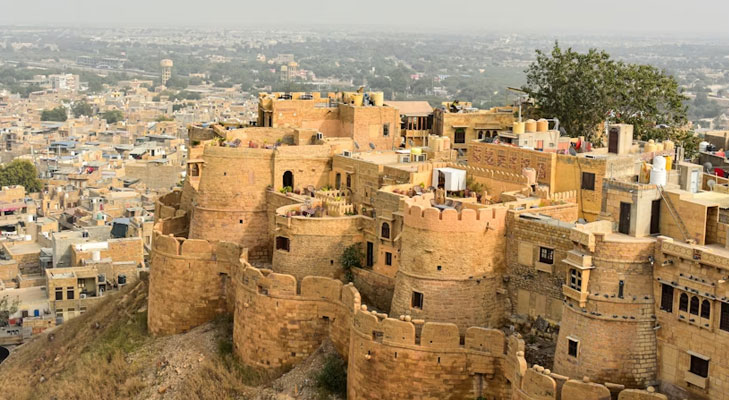
The defining landmark of Jaisalmer and one of the largest living forts in the world, approximately 3,000 people still reside within its walls. Built in 1156 AD by Rawal Jaisal of the Bhati clan on Trikuta Hill, the fort has witnessed battles between the Bhattis, Mughals, and Rathores across eight centuries. A UNESCO World Heritage Site as part of the Hill Forts of Rajasthan inscription.
Best for: First-time visitors, architecture lovers, photographers, heritage walkers, and travelers interested in living heritage environments rather than isolated monuments.
The fort is accessible through four enormous gates that lead to the citadel. Within its walls: seven interconnected Jain temples with extraordinary marble carving, Laxminath Temple, Raj Mahal, merchant havelis, shops, restaurants, and winding lanes. The yellow sandstone construction gives the fort its warm golden glow — the most vivid at sunrise and sunset, and when illuminated at night.
Guide value: Guided walks significantly improve understanding of the Jain temples, drainage systems, merchant quarters, and living-fort culture because the fort functions more like a historic city than a standalone monument.
Comfort note: Expect uneven stone slopes, narrow lanes, and moderate uphill walking throughout the fort complex. Comfortable footwear is essential.
Timings: 9 AM–5 PM. The fort is a living city — its lanes are accessible at all hours. Tips: Visit early morning for golden light and quiet lanes before tour groups arrive. The fort illuminated at night is one of the most memorable sights in Rajasthan — worth a second visit after dark even if you’ve done the daytime tour. Allow at least 2–3 hours for a thorough visit, including the Jain temples. Carry cash for the small shops and street food inside. Full coverage of temples and havelis within the fort under Jaisalmer Temples and Jaisalmer Havelis.
Within the fort walls, the main highlights include Raj Mahal (Royal Palace), seven interconnected Jain temples with intricate marble carving, Laxminath Temple, merchant havelis, and the sequence of defensive gates leading upward through the citadel.
Khaba Fort
Best for photographers and slower travelers.
Khaba Fort is one of the strongest atmospheric heritage stops near Jaisalmer, but it is best suited to slower travellers, photographers, and visitors interested in abandoned-settlement history rather than first-time visitors focused mainly on Jaisalmer city. Located around 32 km from Jaisalmer, the ruined fort overlooks the remains of a former Paliwal Brahmin settlement and carries a much quieter, more haunting atmosphere than the city fort.
A small museum within the fort displays Paliwal artefacts recovered from the ruins. Panoramic desert views from the fort walls give a strong sense of the landscape the community once inhabited.
Timings: 8 AM–6 PM. Tips: Combine with the Kuldhara abandoned village on the same excursion — both are in the same direction from Jaisalmer and together give a complete picture of the Paliwal Brahmin community’s presence and mysterious disappearance in this region. Allow 1–1.5 hours. The fort is best visited in the morning before the desert heat builds.
Guide value: Local storytelling about the Paliwal Brahmin community and the abandoned desert settlements adds significantly more value than visiting the ruins independently.
Comfort note: Shade is limited and the exposed desert environment becomes uncomfortable by late morning during warmer months.
Worth dedicated time? Optional for short Jaisalmer stays but highly rewarding for travelers interested in desert history, photography, and abandoned heritage landscapes.
Pokhran Fort (Balagarh Fort)
Best for road-trip travelers and heritage-stay visitors.
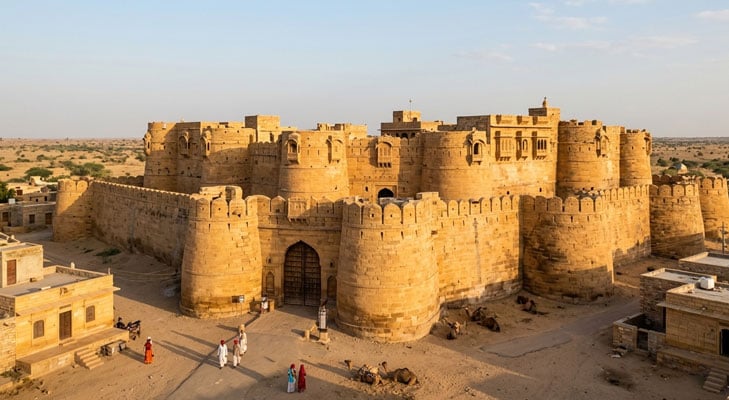
Pokhran Fort is best treated as a transit heritage stop between Jaisalmer and Jodhpur rather than a destination excursion from Jaisalmer itself. The 14th-century fort combines Rajput and Mughal architectural elements and today functions primarily as a heritage-hotel experience with a smaller sightseeing component.
Best for: Road-trip travelers, heritage-stay visitors, and travelers already moving between Jaisalmer and Jodhpur.
Timings: Open to guests and confirmed day visitors — confirm locally. Tips: Best treated as a heritage lunch and architecture stop en route between Jaisalmer and Jodhpur rather than a dedicated excursion from Jaisalmer city. The 110 km distance makes a return trip from Jaisalmer a significant half-day investment — plan accordingly.
Worth dedicated time? Not recommended as a standalone return excursion from Jaisalmer unless you have a strong interest in heritage hotels or regional fort architecture.
Tazia Tower and Badal Palace
Best for architecture-focused visitors.
Rising above the Badal Palace complex near Amar Sagar Gate, Tazia Tower is one of Jaisalmer’s most visually distinctive heritage structures and a major missing layer in many fort-focused itineraries. The five-storey tower was built by Muslim artisans for the Hindu royal family and reflects a rare blend of Rajput and Islamic architectural influence.
Inspired by the ornate tazias carried during Muharram processions, the tower features intricately carved balconies, decorative facades, and unusually delicate detailing compared with the heavier military architecture of Jaisalmer Fort.
The surrounding Badal Palace (“Cloud Palace”) was once part of the royal residential complex and adds another architectural layer to the old-city skyline through its elevated sandstone balconies and palace facades.
Best for: Architecture lovers, photographers, and travelers wanting a shorter heritage stop beyond the main fort circuit.
Worth dedicated time? Best visited as part of a broader old-city route rather than as a standalone attraction.
How to Plan Jaisalmer’s Fort and Tower Circuit
Core Heritage Circuit (Best for First-Time Visitors)
Jaisalmer Fort at opening time → Jain Temples → Raj Mahal → fort lanes → sunset fort viewpoints → illuminated night revisit.
Desert-History Route
Khaba Fort → Kuldhara abandoned village → desert-edge photography circuit.
Old-City Architectural Layer
Tazia Tower → Badal Palace → nearby old-city lanes → market circuit.
Road-Trip Heritage Stop
Pokhran Fort while traveling between Jaisalmer and Jodhpur.
Planning Notes
- The Jaisalmer Fort is the only essential fort experience for short stays.
- Khaba Fort is best for slower travelers and photography-focused itineraries.
- Pokhran Fort works better as a transit heritage stop than a return excursion.
- Tazia Tower is strongest as a short architectural stop within the old city.
- October to March offers the most comfortable fort exploration conditions.
- Early morning gives the best light inside Jaisalmer Fort.
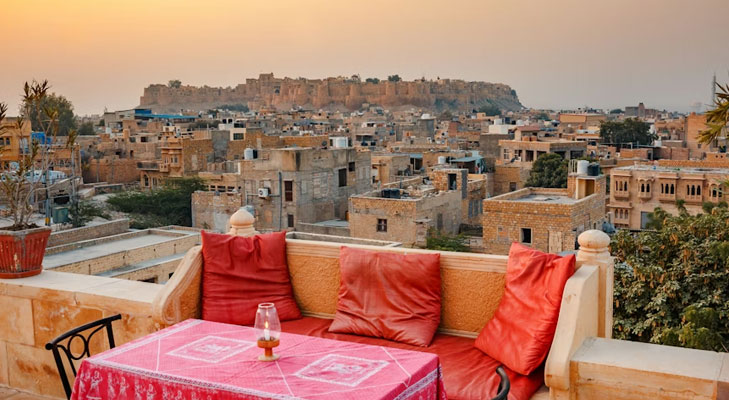
- Late evening provides the strongest illuminated-fort views across the city.
- Carry cash inside Jaisalmer Fort because smaller shops and cafés may not always accept cards.
Continue Planning Your Jaisalmer Heritage Trip
Travelers exploring Jaisalmer’s forts and towers often combine them with desert routes, haveli circuits, and old-city heritage walks.
Continue planning through:


