Kailash Mansarovar Yatra is highly revered among Hindu pilgrims. Devotees visit here to seek blessings from Lord Shiva. One of the most common questions every pilgrim faces is, “What is the best route to undertake the Kailash Mansarovar Yatra?” If you are seeking the answer to this question, you are not alone.
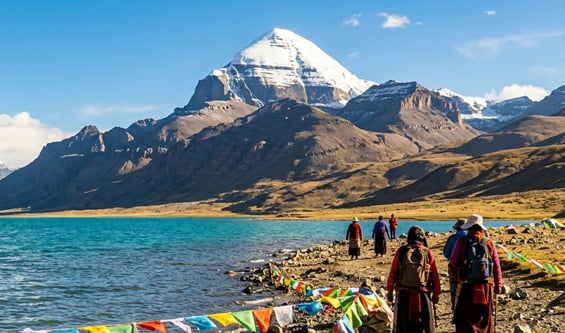
A complete understanding of the Yatra is crucial so you can choose a route that fits your physical abilities, time constraints, and spiritual goals. In this comprehensive guide, we explore the various routes for the Kailash Mansarovar Yatra, along with distances, challenges, permits, and other practical considerations.
Select any route for the Kailash Parvat Yatra that suits your preferences.
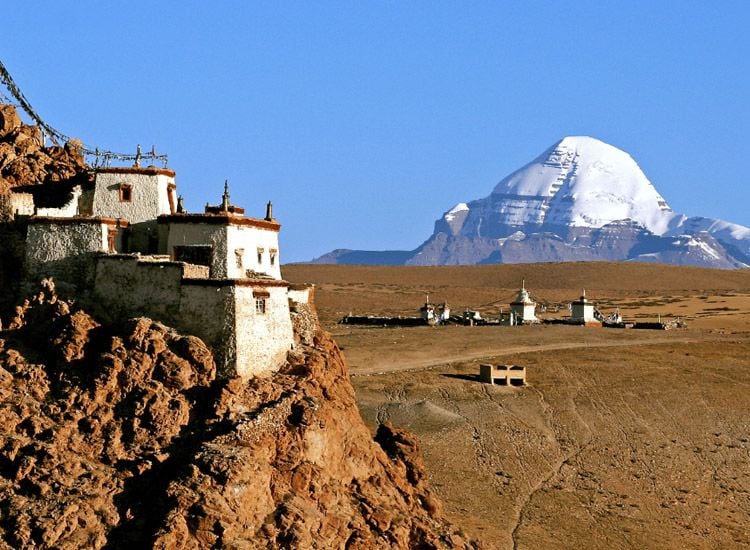
Quick Facts About Kailash Mansarovar Yatra
Before diving into the routes, here are some essential facts about the yatra:- Location: Western Tibet (Ngari Prefecture), China
- Altitude:
- Mount Kailash: 21,778 feet (6,638 meters)
- Lake Mansarovar: 15,060 feet (4,590 meters)
- Best time to visit: May to September
- Duration: 7-25 days (depending on the route)
- Permits required: Chinese visa, Tibet Travel Permit, Alien’s Travel Permit, Military Permit, and Foreign Affairs Permit
- Religious significance: Sacred to Hindus, Buddhists, Jains, and Bon followers
- Attractions: Mount Kailash and Lake Mansarovar
Check out our Kailash Mansarovar Yatra packages.
Major Routes to Kailash Mansarovar in 2025
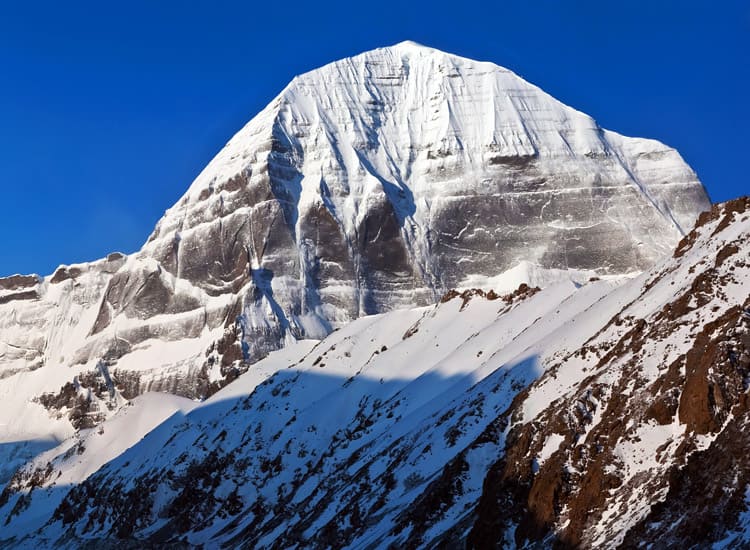 The journey to Kailash Mansarovar can be undertaken through several routes, each with its own characteristics, challenges, and experiences. Here’s a detailed breakdown:
1. Traditional Routes from India (Ministry of External Affairs Organized)
A. Lipulekh Pass Route (Uttarakhand)
This is one of the two official routes organized by the Ministry of External Affairs, Government of India. Route Overview:- Starting Point: Delhi, India
- Duration: 24 days
- Maximum Elevation: 5,334 meters (17,500 ft)
- Group Size: 60 people per batch (18 batches annually)
- Difficulty Level: Moderate to challenging (involves significant trekking)
- Delhi → Almora → Dharchula (by road)
- Dharchula → Narayan Ashram → Sirkha (trek begins)
- Sirkha → Gala → Budhi → Gunji (beautiful Himalayan treks)
- Gunji → Kalapani → Navidhang (view of Om Parvat)
- Cross Lipulekh Pass into Tibet → Taklakot
- Taklakot → Darchen (base for Kailash Parikrama)
- Complete 48 km Kailash Parikrama (circumambulation)
- Visit Lake Mansarovar
- Return journey
B. Nathu La Pass Route (Sikkim)
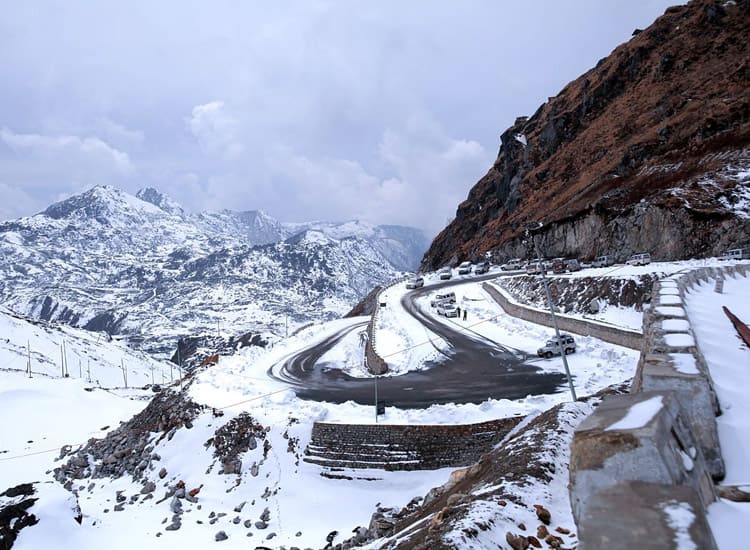 This newer route was opened in 2015 and is entirely motorable, making it suitable for elderly pilgrims.
Route Overview:
This newer route was opened in 2015 and is entirely motorable, making it suitable for elderly pilgrims.
Route Overview:
- Starting Point: Delhi/Gangtok, India
- Duration: 21 days
- Maximum Elevation: 4,310 meters (14,140 ft)
- Group Size: 50 people per batch (15 batches annually)
- Difficulty Level: Easy to moderate (fully motorable)
- Delhi → Gangtok (by flight or train)
- Acclimatization in Gangtok (2 nights)
- Gangtok → 17th Mile → Sherathang (acclimatization centers)
- Cross Nathu La Pass into Tibet → Kangma
- Kangma → Lazi → Darchen
- Complete Kailash Parikrama
- Visit Lake Mansarovar
- Return journey
2. Routes via Nepal
A. Overland Route via Kyirong (Kerung) Border
 The Kailash Mansarovar route from Nepal is becoming increasingly popular in recent years, especially for international pilgrims.
Route Overview:
The Kailash Mansarovar route from Nepal is becoming increasingly popular in recent years, especially for international pilgrims.
Route Overview:
- Starting Point: Kathmandu, Nepal
- Duration: 13-14 days
- Group Size: Flexible (private or group tours)
- Difficulty Level: Moderate (some trekking required)
- Kathmandu → Syabrubesi → Kyirong Border
- Enter Tibet → Saga → Mansarovar Lake
- Mansarovar Lake → Darchen
- Complete Kailash Parikrama (3 days)
- Return to Kathmandu
B. Helicopter Route (Via Nepalgunj-Simikot-Hilsa)
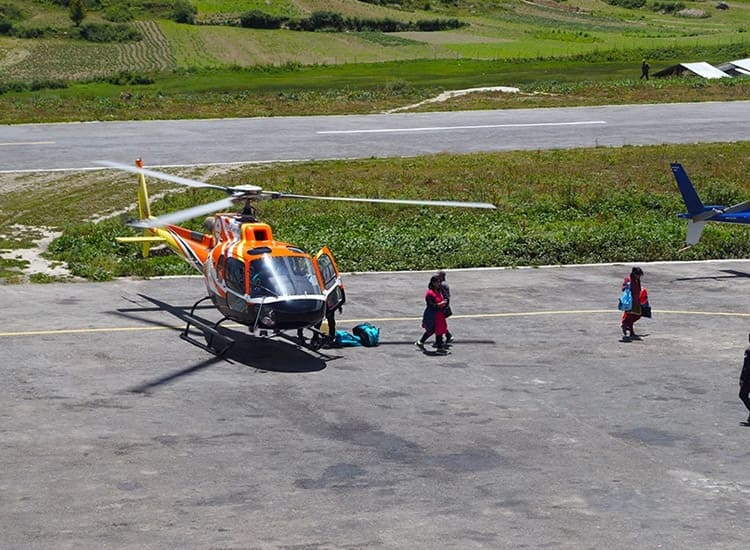 This expedited route combines flights and helicopter rides to reach Kailash Mansarovar more quickly.
Route Overview:
This expedited route combines flights and helicopter rides to reach Kailash Mansarovar more quickly.
Route Overview:
- Starting Points: Kathmandu or Lucknow
- Duration: 9-11 days
- Difficulty Level: Easy (minimal trekking)
- Kathmandu/Lucknow → Nepalgunj (by flight)
- Nepalgunj → Simikot (by flight)
- Simikot → Hilsa (by helicopter)
- Hilsa → Purang → Mansarovar Lake
- Mansarovar Lake → Darchen
- Complete Kailash Parikrama
- Return journey
3. Alternative and Emerging Routes
A. Aerial Darshan (Shortest Route)
For those with limited time or physical constraints, aerial darshan has emerged as a new option. Route Overview:- Starting Point: Lucknow, India
- Duration: 3-5 days
- Difficulty Level: Very easy (no trekking)
- Lucknow → Nepalgunj
- Aerial darshan of Mount Kailash and Lake Mansarovar
- Return to Lucknow
Book our Kailash Mansarovar Yatra Helicopter Package at best price.
B. Kailash Darshan from Lipulekh Peak (India)
Due to diplomatic challenges between India and China, this alternative has been developed to allow pilgrims to view Mount Kailash from Indian territory. Route Overview:- Starting Point: Delhi/Pithoragarh, India
- Duration: 4-5 days
- Difficulty Level: Moderate (short trek required)
- Delhi → Pithoragarh
- Helicopter from Pithoragarh to Gunji
- Drive and 3 km trek to the vantage point
- View Mount Kailash from Indian territory
- Return journey
C. Lhasa-Kailash Route
This route approaches Mount Kailash from eastern Tibet, offering a comprehensive Tibetan cultural experience. Route Overview:- Starting Point: Kathmandu, Nepal
- Duration: 15-16 days
- Difficulty Level: Easy to moderate (fully motorable with high altitude)
- Kathmandu → Lhasa (by flight)
- Explore Lhasa → Shigatse → Saga
- Saga → Mansarovar Lake → Darchen
- Complete Kailash Parikrama
- Return to Kathmandu
Comparing the Routes: Which One is Right for You?
Time Considerations
- Short Duration (3-5 days): Aerial Darshan, Lipulekh Peak Darshan
- Medium Duration (9-14 days): Nepal Helicopter Route, Overland via Kyirong
- Extended Journey (15-24 days): Traditional MEA Routes (Lipulekh, Nathu La), Lhasa-Kailash Route
Physical Exertion
- Minimal Physical Effort: Aerial Darshan, Helicopter Route
- Moderate Effort: Nathu La Route, Kailash Darshan from Lipulekh Peak, Lhasa-Kailash Route
- Significant Trekking Required: Lipulekh Pass Route, Overland via Kyirong (particularly during Kailash Parikrama)
Budget Considerations
- Higher Cost Options: Helicopter Route, Lhasa-Kailash Route
- Mid-Range Options: MEA Organized Routes (Lipulekh, Nathu La), Lipulekh Peak Darshan
- More Economical: Overland via Kyirong (group departures)
Spiritual Experience
- Complete Traditional Experience: Lipulekh Pass Route, Nathu La Route
- Balanced Experience: Overland via Kyirong, Lhasa-Kailash Route
- Limited Experience: Aerial Darshan, Lipulekh Peak Darshan
Essential Preparation for Kailash Mansarovar Yatra
Documentation Requirements
Regardless of your chosen route, you’ll need:- Valid Passport: With at least six months’ validity from the date of travel
- Visas: Chinese visa and Tibet Travel Permit (for routes entering Tibet)
- Permits: Various permits depending on the route chosen
- Travel Insurance: High-altitude coverage with emergency evacuation
Health Preparation
- Medical Check-up: Comprehensive pre-journey health assessment
- Altitude Acclimatization: Understanding how to prevent and manage altitude sickness
- Physical Conditioning: Regular walking/jogging for at least 2-3 months before departure
- Medications: Both prescribed and over-the-counter for altitude sickness, cold, digestive issues
Get best deals on our Kailash Mansarovar Yatra Package by Road.
Essential Packing
- Clothing: Multiple layers, thermal wear, waterproof outer layer, comfortable trekking boots
- Equipment: Walking stick, sunglasses, headlamp/torch, sleeping bag
- Personal Care: Sunscreen, lip balm, wet wipes, hand sanitizer
- Electronics: Camera, power bank, adapters
The Spiritual Significance of the Kailash Parikrama
The heart of the Kailash Mansarovar Yatra is the Kailash Parikrama (circumambulation). Regardless of which route you take to reach Mount Kailash, completing the Parikrama is considered the culmination of the spiritual journey.Outer Kora (Standard Parikrama)
- Distance: 52 kilometers
- Duration: 3 days
- Starting Point: Darchen
- Key Points: Yam Dwar, Dirapuk (north face view), Dolma La Pass (5,630m), Gaurikund, Zuthulpuk
Inner Kora (For Experienced Practitioners)
- Access: Typically requires permission and is often undertaken only by experienced practitioners
- Significance: Completing the Inner Kora is said to cleanse the sins of 100 lifetimes