
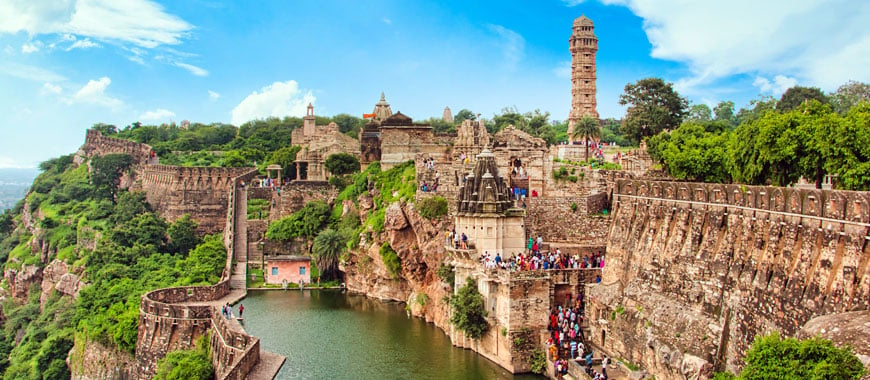

Chittorgarh Fort is best included as a major historical component within a Jaipur-Udaipur or Hadoti region circuit, rather than a brief transit stop. It serves as the definitive example of Rajput military architecture, offering immense scale, rugged fortifications, and a functional contrast to the refined urban palaces of Udaipur.
Most travellers include Chittorgarh as a dedicated half-day immersion while travelling between Jaipur and Udaipur, or as an overnight stay to ease an early morning entry.
How to Experience Chittorgarh Fort
A clear route helps you cover the fort without doubling back:
- Enter via Padan Pol:
Continuing through Bhairon Pol, Hanuman Pol, and Ram Pol in sequence - Stop briefly at Rana Kumbha Palace:
To explore courtyards and ruins - Move next to Meera Temple and Kalika Mata Temple
- Head to Vijay Stambh first, then Kirti Stambh
- Continue to Padmini Palace and the nearby water bodies
- End with a slow walk along the fort walls near Gaumukh Reservoir
This sequence helps you move steadily through the fort while keeping the experience relaxed.
Who Will Appreciate Chittorgarh Fort The Most?
1. Military History & Architecture Buffs
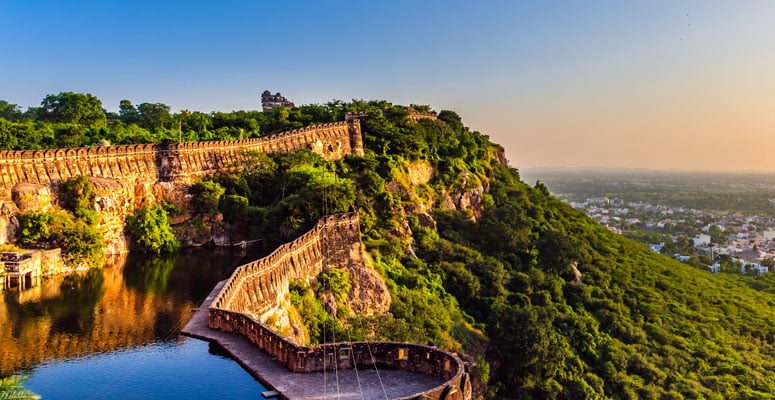
The fort offers a direct look at Rajput defensive strategy through seven distinct gateways (Pols). Travellers can observe the massive limestone walls and the placement of the Vijay Stambha (Victory Tower), which stands nine stories tall with detailed carvings of Hindu deities. Unlike smaller forts, the scale of the ramparts and the layout of the Mahasati area illustrate how the site functioned as a self-contained capital during sieges.
2. Photography Enthusiasts
The photographers can spot wide frames with open views of the surrounding plains and Chittorgarh town. The site allows photography of strong textures and fine carvings on structures like Kirti Stambha and Meera Temple, which add depth to your shots. At the Gaumukh Reservoir, the flowing water and carved outlet help you frame reflections of the nearby cliffs and temple structures.
3. Wildlife Enthusiasts
The fort covers a large area with patches of scrub forest and water bodies that attract animals and birds. Nilgai are often seen in quieter sections near Padmini Palace and along the outer edges. Egyptian Vultures and Peregrine Falcons prefer the rocky areas around the fort for nesting. Around the water reservoirs, you can spot Painted Storks and Egrets. Trees across the fort are home to grey langurs and peacocks.
4. For Slow Travellers
The fort’s large layout lets you move at your own pace. You can pause at places like Meera Temple and the Jain temples, or sit near viewpoints around Kirti Stambha and along the western ramparts. Moving between gates such as Ram Pol and Suraj Pol also gives you time to grasp the scale of the fort and its surroundings.
5. For Solo Travellers & Walkers
The fort covers a large area with both paved and unpaved paths, making it suitable for independent exploration. Crowds are lighter between the Tower of Fame and the quieter northern sections. The open layout and elevation give you clear views and steady air flow, which helps while walking longer distances.
6. For Families & Mixed-Age Groups
The fort is open and uncovered, making it easier to manoeuvre, unlike enclosed palace complexes. There is enough room near places like the Padmini Palace and the Victory Tower for children to walk around freely. You can also use a private vehicle to reach most of the main points, a convenient option for older travellers.
Where Does Chittorgarh Fort Fit in Your Rajasthan Itinerary?
You can fit Chittorgarh fort into your itinerary as a –
- Strategic Transit Stop: It serves as a practical midpoint on the drive between Jaipur and Udaipur, breaking up the six-hour journey with a major heritage site.
- Focused Mewar Extension: The fort works as a dedicated half-day trip from Udaipur for those wanting to see the region’s primary military stronghold.
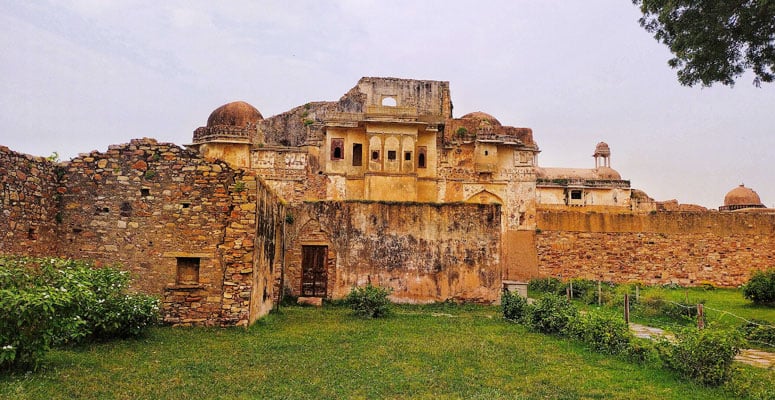
- Rugged Architecture Contrast: It provides a necessary balance to Rajasthan’s decorative palaces by focusing on massive fortifications and defensive scale.
- Quiet Overnight Base: Staying in the vicinity allows for an entry at first light, letting you navigate the main towers before the day-trip crowds arrive.
To place Chittorgarh Fort within a broader travel plan, refer to this Rajasthan Travel Guide for route ideas, key circuits, and itinerary options across the state’s major heritage regions.
Best Time To Visit Chittorgarh Fort
Autumn to Winter (10°C to 27°C | October to March)
The cool, stable weather provides the most practical conditions for exploring the massive 700-acre plateau. Low humidity ensures the best visibility for the surrounding landscape from the ramparts, while the moderate sun permits extended exploration across outdoor monuments like the Vijay Stambha.
Spring to Early Summer (22°C to 40°C | April to June)
Early morning starts are essential to avoid the intense heat. Using a vehicle to move between the sprawling sites is necessary during these months to minimise physical exertion in the fort’s open, unshaded areas.
Monsoon (24°C to 32°C | July to September)
Rainfall replenishes the ancient water management systems, filling the reservoirs and turning the scrub forest green. While the overcast conditions offer softer lighting for photography. Extra caution is needed on the stone steps around the Gaumukh Reservoir, which can become slick when wet.
Quick Planning Snapshot
- Recommended duration: Minimum 4 to 6 hours to cover the 700-acre perimeter and major monuments.
- When to go: Sunrise for the best lighting on the Victory Tower or late afternoon to include the sound and light show.
- Ideal for: Military history fans, photography enthusiasts, and solo travellers.
- How to include it: A primary half-day stop during the Jaipur-Udaipur transit or as a dedicated excursion from Udaipur.
- Skip if: If you prefer compact, air-conditioned museum spaces. Chittorgarh Fort is completely in the open.
Most travellers treat Chittorgarh Fort as a dedicated half-day experience rather than a quick stop, using its scale to build historical context before continuing toward Udaipur or deeper into the Mewar region.
Entry Information and Access
- Timings: 9:00 AM to 6:00 PM
- Entry Fee: ₹40 for Indians; ₹600 for Foreigners
- Camera Charges: No fee for still cameras; ₹25 for video cameras.
- Guide Charges: Approved guides are available at the main Padmini Palace or Kumbha Palace gates. Fees are standardised based on group size.
How much time should I spend at Chittorgarh Fort?
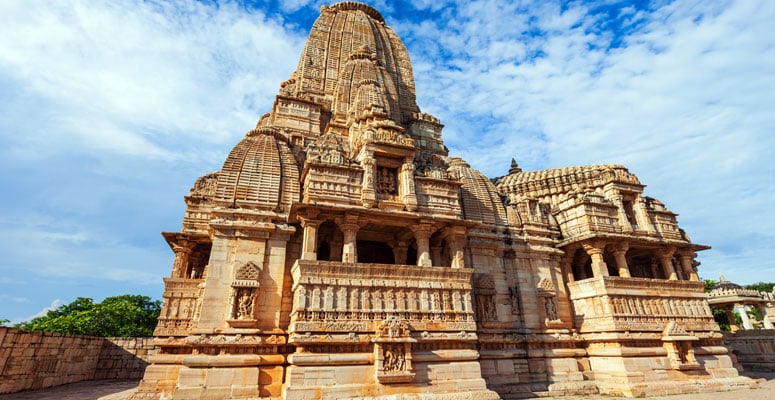
Set aside 2–3 hours to cover key sites like Kirti Stambha, Vijay Stambha, Rana Kumbha Palace, Meera Temple, and Padmini Palace. Add another hour if you plan to stop at Gaumukh Reservoir, walk along the ramparts, or explore smaller temples and gates.
What is the tourist crowd like?
Chittorgarh Fort sees steady visitors, especially around Vijay Stambha, Padmini Palace, and the main entry gates. Inner sections and outer walls remain quieter as you move away from these points. Footfall drops during peak summer months and stays moderate during monsoon, with short spikes on weekends and holidays.
Do you need to hire a guide?
A guide is optional. The main sites are easy to navigate by road, and you can cover them independently. Hire one if you want historical context around battles, palaces, and temples.
Plan Your Mewar & Rajasthan Fort Journey
Embark on an unforgettable journey through time with our customizable Chittorgarh tour packages. Explore massive fortresses and legendary heritage, or expand your adventure with tailored Rajasthan tour packages that capture the vibrant culture, majestic palaces, and timeless charm of India’s most iconic royal state.


