


Rani Padmini’s Palace fits into a Chittorgarh Fort itinerary as a narrative-driven stop that adds context to the fort’s history of siege and resistance, rather than just its architecture.
Most travellers explore Rani Padmini Palace while moving through key fort sections like Rana Kumbha’s area and the main gateways, using it to understand the story tied to the Jauhar tradition and the fort’s layered past.
Set around a reflective water pavilion, the structure is less about scale and more about positioning within the fort landscape, where its surroundings play as much a role as the building itself. Adding it to your Chittorgarh route helps you connect scattered monuments into a clearer historical sequence rather than viewing them in isolation.
This guide explains how to place Rani Padmini’s Palace within your fort circuit, what kind of historical context it adds, and how it fits into a well-planned Chittorgarh itinerary.
How to Experience Rani Padmini Palace
A reflective pace helps you connect with its history and setting –
- Enter through the courtyard and take in the simple structure against the fort backdrop
- Walk toward the central chamber where legends of Jauhar are often recalled
- Look outward through the openings to understand its position within Chittorgarh Fort
- Spend time near the surrounding water spaces, where reflections soften the heavy history
- Observe the ruins from different angles to sense how the structure blends into the fort landscape
- Exit slowly, allowing the silence of the space to linger rather than rushing out
Who Should Visit Rani Padmini’s Palace?
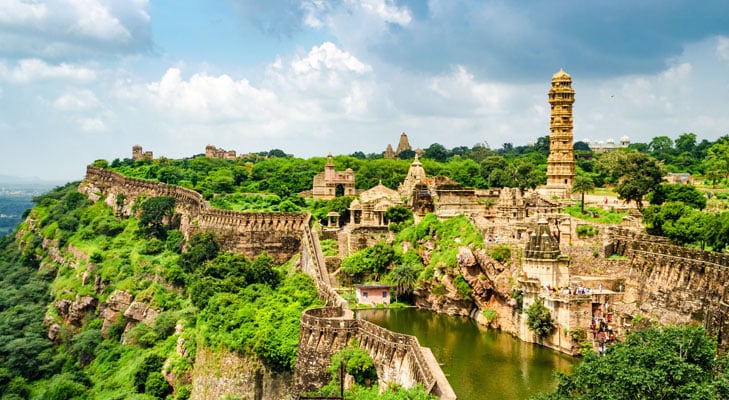
1. Architecture and Heritage-Focused Travellers
The palace’s water setting gives it a distinct visual identity within Chittorgarh Fort and may also have contributed to a cooler, more reflective environment around the structure. You can examine how the three-story stone structure is anchored in the centre of the lotus pool to create a natural cooling effect. The structure is better understood for its setting, reflection point, and narrative association within the larger fort complex than for elaborate palace interiors.
2. Visual and Reflection Photographers
When water levels and light conditions are suitable, the surrounding water can create strong reflection compositions around the palace. Photographers can look for reflections, stone-framed compositions, and wider fort-landscape views depending on the season and water level. The distance between the shore and the palace provides a clean, unobstructed frame for documenting the Mewar skyline.
3. Travellers Interested in Legends and Fort Narratives
The site is associated with the widely known legend of Rani Padmini, a story central to local narratives around Chittorgarh, siege, honour, and Jauhar. Local guides often point to the pavilion associated with the mirror-reflection episode from the Rani Padmini legend. It is a vital location for understanding the stories of royal courage and the history of Jauhar that define the spirit of this fort.
4. Independent Travellers
While the garden layout and the clearly defined paths across the water bridge make it easy to navigate independently. It offers a quiet, reflective environment to connect with the history of the Mewar queens without the noise of the main tourist gateways.
5. Nature and Wildlife Watchers
Seasonal birds and small local wildlife may be visible around the palace’s water body and gardens, especially during quieter hours.
6. Rajasthan Circuit Road-trippers
Rani Padmini’s Palace works well for travellers, including Chittorgarh within a Udaipur, Bundi, or wider Rajasthan heritage circuit. You can view the main highlights of the water palace and gardens in about 40 minutes. It is a convenient way to include one of Rajasthan’s best-known fort legends in your journey without needing a full-day commitment.
Want to explore the best of Rajasthan but are confused about how to plan your days? Use this Rajasthan Travel guide for drafting a hassle-free itinerary.
Where Rani Padmini’s Palace Fits in Your Chittorgarh Itinerary

Rani Padmini’s Palace fits within your Chittorgarh Fort visit as one of the later stops, since it lies slightly away from the main cluster of entry-side monuments.
- A follow-up stop after covering key entry landmarks like Vijay Stambh and Rana Kumbha Palace, continuing deeper into the fort circuit
- A closing segment of your fort route, placed toward the quieter end before you exit or loop back
- A short detour from the main internal route, added after completing the central monument cluster
- A late-afternoon stop, when the surrounding water body and open layout align better with changing light conditions inside the fort
Best Time To Visit
- October to March (10°C to 27°C) – Winter
Cool weather lets you walk around the palace complex and spend time near the water pavilion without discomfort. Clear skies also improve visibility, helping you understand the layout of the palace and its reflection point more easily.
- April to June (28°C to 42°C) – Summer
However, summer heat can make fort exploration tiring. Visit early in the day and keep this stop short.
- July to September (22°C to 30°C) – Monsoon
Rain refills the water body around the palace, restoring its island-like setting without covering the structure itself. The pavilion remains fully visible, but the higher water level changes how reflections form, giving you a closer sense of how the space was originally meant to be viewed.
Quick Planning Snapshot
- Time to Spend: 30 to 45 minutes as part of the larger fort exploration.
- Best time of day: Late afternoon for softer light, or morning during warmer months.
- Best Months to Visit: October to March
- Best for: History-focused travellers and those interested in Rajput legends and fort narratives.
- Skip if: You are expecting elaborate palace interiors or a standalone monument experience.
Entry Information and Ticketing Prices
Access to Rani Padmini’s Palace is included within the broader entry ticket for Chittorgarh Fort, with no separate fee required for this specific site. Tickets can be purchased at the main fort entrance.
Timings: 9:00 AM to 6:00 PM
Entry Fee Entry is generally covered under the Chittorgarh Fort ticket. Confirm current entry fees, camera charges, and timings before visiting.
Time Required to Explore
You can plan for 20 to 30 minutes at the palace itself. However, it is best approached as one of several key stops within a 2 to 4 hour exploration of Chittorgarh Fort, where the experience builds through multiple palaces and historic structures.
What is the tourist crowd like?
Rani Padmini’s Palace sees a steady but lighter flow compared to the more prominent sections of the fort. The area feels more open and less crowded than central landmarks, especially outside peak hours. Footfall dips noticeably in summer, while monsoon months keep numbers moderate, with occasional increases on weekends and public holidays.
Should You Take a Guide Along?
Going with a guide makes a noticeable difference here, as the palace by itself does not reveal much through architecture alone. What shapes the experience are the stories, historical references, and multiple versions of the Rani Padmini narrative. A local guide can help explain these versions and place the palace within Chittorgarh’s wider fort narrative.
Map Your Chittorgarh Exploration Alongside Rani Padmini’s Palace
Plan your Chittorgarh visit through structured routes that connect important landmarks like Rani Padmini’s Palace, forts, and vantage points that overlook the Mewar region. The itineraries below help you organise these stops into a coherent and well-paced experience.


