
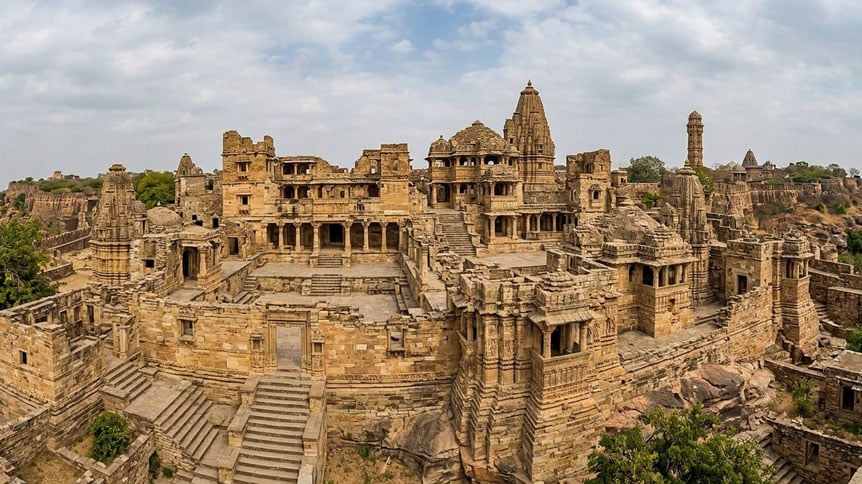

Rana Kumbha Palace is best experienced as a part of a Chittorgarh or wider Rajasthan heritage journey,where large fort landscapes are explored through layered storytelling and architectural remains. Within the Chittorgarh Fort circuit, it works as a structured pause where travellers slow down and engage more deeply with the narratives that define Mewar’s legacy.
Unlike standalone monuments, the palace serves as a narrative anchor within the fort, helping travellers connect multiple historical episodes into a cohesive experience.
Rana Kumbha Palace plays a critical role in Chittorgarh itineraries by anchoring the fort’s most significant stories within a single, walkable space, making it essential for understanding the broader site.
For Chittorgarh planners shaping heritage-first routes, the palace supports the rhythm of the day: a mid-fort halt that balances storytelling with movement and offers structured spaces ideal for guided narratives. With 34+ years of expertise, Indian Holiday continues to help travellers navigate these large hill-fort complexes with thoughtful pacing, dependable logistics, and curated heritage sequencing that keeps the journey engaging rather than overwhelming.
To plan your route more effectively across Chittorgarh Fort and its key landmarks, explore the Chittorgarh Travel Guide to structure a well-paced heritage itinerary.
Why Rana Kumbha Palace Appeals to Chittorgarh Planners
Within the extensive Chittorgarh Fort, Rana Kumbha Palace naturally becomes one of the first narrative points for planners building thematic heritage days. This is because:
- It is one of the oldest surviving structures in the fort, originally built by Bappa Rawal in the 8th century and later expanded by Maharana Kumbha.
- It anchors multiple legends from Rani Padmini’s Jauhar to the bravery of Panna Dhai and the spiritual journey of Meerabai.
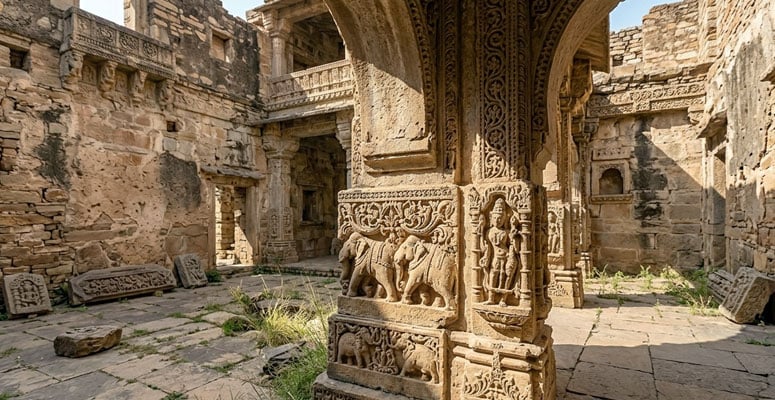
- Its architecture helps travellers visualise medieval Mewar through courtyards, gateways, temples, and royal sections.
For planners, this palace serves as the perfect historical “gateway” before routing guests toward sites like Vijay Stambh, Gaumukh Kund, Kirti Stambh, and Padmini Palace.
How to Experience Rana Kumbha Palace Within the Fort Circuit
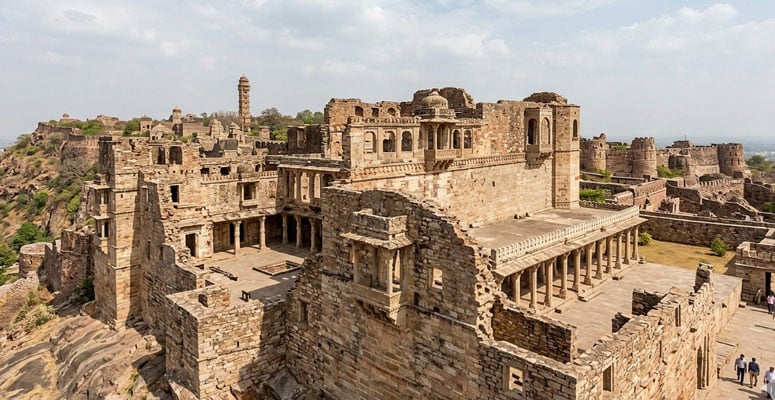
Rana Kumbha Palace is usually visited as part of a 2.5–3 hour guided exploration of Chittorgarh Fort. Planners commonly place it after the main entry gate (Ram Pol) and before the climb toward Vijay Stambh.
A typical palace walkthrough includes:
- Entering through the Tripolia Gate, which opens into a vast courtyard
- Exploring the Zanana Mahal, the palace’s residential wing
- Walking through the remains of stables, meeting halls, and corridors
- Viewing the Suraj Gokhra, a sun-facing structure
- Passing by the small Shiva Temple inside the palace zone
- Noting the Diwan-i-Aam, used historically for public gatherings
What makes the palace experiential engaging is not just its design but the stories attached to every corner, making it ideal for planners who prioritise cultural depth.
Traveller Insight: What Makes This Palace So Significant
Even in its ruined form, Rana Kumbha Palace carries the emotional memory of Chittorgarh. Here’s what most travellers take away from the visit:
1. The Legacy of Rani Padmini
This palace is deeply connected to the episode of Jauhar led by Rani Padmini. While the exact underground chambers have not been archaeologically traced, the association remains central to the fort’s identity.
2. The Roots of Mewar’s Royal Lineage
Originally built by Bappa Rawal in 734 AD, the palace marks the beginning of the Mewar dynasty’s architectural legacy.
3. Maharana Kumbha’s Contribution
The palace was extensively renovated and expanded during the reign of Maharana Kumbha, one of Mewar’s greatest rulers.
4. Meera Bai’s Connection
Princess Meerabai, the revered poet-saint, is believed to have lived here during her early years. This adds a spiritual dimension to the site.
5. Panna Dhai’s Courage
The story of Panna Dhai saving infant Udai Singh by sacrificing her own son is closely tied to this palace’s historical narrative.
This combination of political history, personal stories, and architectural fragments makes the palace essential for context-based itineraries.
Best Time to Visit Rana Kumbha Palace
Since the palace is an outdoor site within Chittorgarh Fort, planners usually recommend:
Best season:
November to February
Good season:
July to September
Avoid midday heat:
March to June (visit early morning or late afternoon)
The best time to visit Rana Kumbha Palace is during the cooler months from November to February, when the full Chittorgarh Fort circuit can be explored comfortably. During summer, early morning or late afternoon visits help avoid fatigue while navigating the fort’s open terrain.
Key Highlights of Rana Kumbha Palace
1. Tripolia Gate
The triple-arched gateway marks one of the most significant entry points into the palace complex.
2. Zanana Mahal
This section provides a glimpse into royal residential life, featuring living chambers around a central courtyard.
3. Kanwar Pada Palace
Believed to be the quarters of royal heirs, this structure adds another layer to understanding palace life.
4. Suraj Gokhra
A niche or elevated platform facing the rising sun is a characteristic architectural element of Rajput interiors.
5. Shiva Temple
A small shrine located near the palace area, significant for both travellers and heritage interpreters.
6. Diwan-i-Aam
The hall is traditionally used for public gatherings, discussions, and state announcements.
Even in ruin, these elements help planners frame the palace visit as both architectural and narrative.
Quick Planning Snapshot
- Location: Inside Chittorgarh Fort
- Built: 8th century (by Bappa Rawal), renovated under Maharana Kumbha
- Known for: Historical legends & Rajputana architectural remains
- Recommended visit duration: 30–45 minutes
- Best for: Heritage enthusiasts, culture-focused travellers, fort-circuit explorers
It is best treated as a short but high-value stop within the broader Chittorgarh Fort circuit rather than as a standalone visit.
Practical Planning Advice for Visitors
- Engage a local ASI-certified guide for accurate storytelling throughout the fort.
- Wear comfortable footwear, as the palace area involves stone steps and rough pathways.
- Combine this stop with Vijay Stambh, Gaumukh Reservoir, and Meera Temple for a fuller understanding of Mewar.
- Photography is unrestricted, and mornings offer the best natural light for the palace ruins.
- Allocate at least 2.5 hours for the entire Chittorgarh Fort circuit if incorporating this palace.
Essential Visitor Information
Timings:
9:00 AM – 5:00 PM (as per Chittorgarh Fort entry schedule)
Entry Fee:
- Indian travellers: ₹50
- Foreign travellers: ₹200
- Still camera: ₹25 (subject to ASI policy updates)
Accessibility:
The palace area has uneven terrain; those with mobility issues may need assistance.
Facilities:
Basic amenities are available at the fort; carry essentials with you.
Places to Visit Near Rana Kumbha Palace
Travel planners usually connect the palace with these nearby fort attractions:
- Vijay Stambh (Victory Tower) – One of Chittorgarh’s most iconic monuments
- Gaumukh Kund – A sacred water reservoir within the fort
- Padmini Palace – Associated with Rani Padmini’s story
- Meera Temple – Dedicated to Meerabai
- Fateh Prakash Palace Museum – A small but informative district museum
These stops create a seamless Chittorgarh heritage circuit for half-day or full-day sightseeing.
Explore Chittorgarh & Rajasthan Heritage Journeys
If you’re planning to include Rana Kumbha Palace in your trip, these curated itineraries help you experience Chittorgarh’s fort circuit within a well-structured Rajasthan journey:
These journeys position Rana Kumbha Palace as a key storytelling stop within a broader heritage itinerary.
Rana Kumbha Palace is best experienced as a narrative-rich stop within a thoughtfully planned Chittorgarh Fort itinerary rather than as a standalone attraction.


