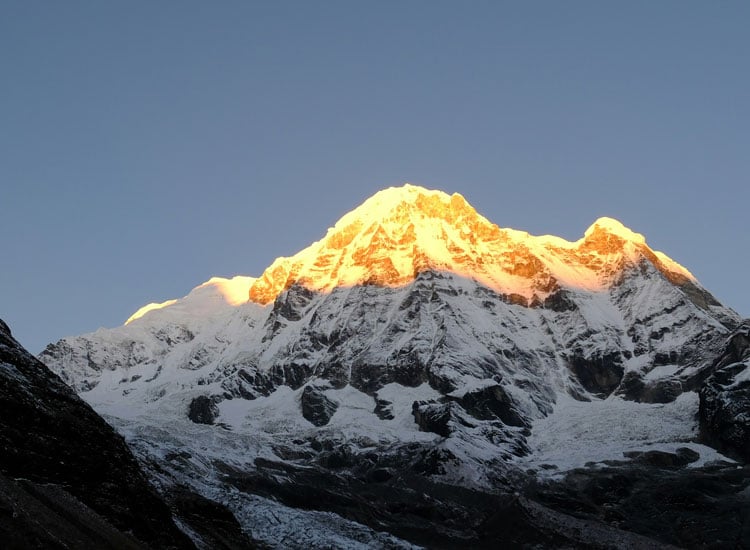
Intrigued by the awe-inspiring pictures of Mount Kailash?
Just thinking about standing there and getting surrounded by nature, silence, and spirituality gives you goosebumps, right?
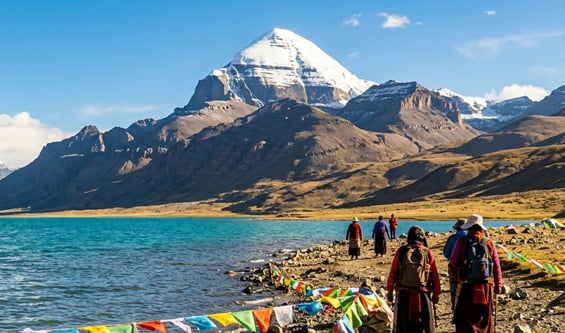
But entangled between the myths and truths?
No worries, you’ve landed at the right place!
Today, we’ll clarify all the misconceptions about Lord Shiva’s abode and the pristine Mansarovar Lake. Chances are, you’ve heard many myths, half-truths, or just plain “What! That can’t be real?” kinds of stories about the Yatra.
Let’s unravel the truth together and bust the Top 10 Misconceptions About Kailash Mansarovar Yatra, so you can plan with clarity and confidence.
1. Is Mount Kailash just another mountain peak?
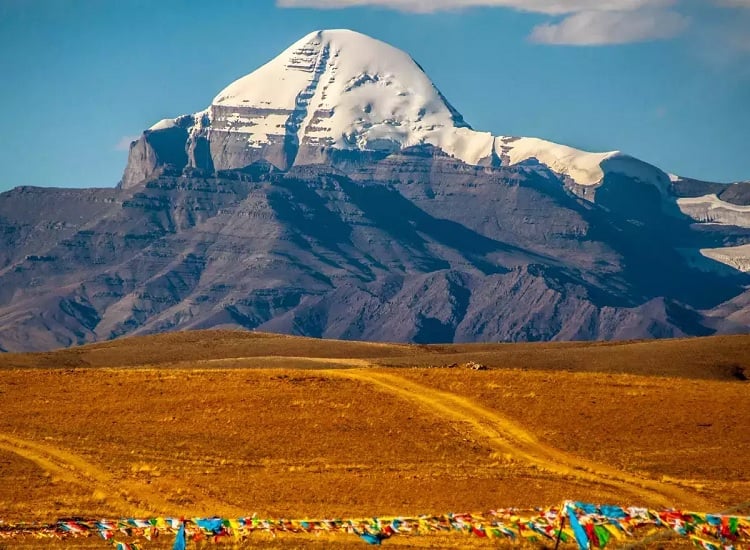 Most people mistakenly regard Mount Kailash as just another tall peak in the Himalayan range. In reality, Mount Kailash holds profound spiritual significance across multiple faiths and is considered the cosmic centre of the universe.
For Hindus, it’s the divine abode of Lord Shiva and his consort Parvati. Tibetan Buddhists revere it as “Kangri Rinpoche” or “Precious Jewel of Snow”, believing it to be the home of Demchok (Chakrasamvara).
While Jains consider it “Ashtapada”, where their first Tirthankara, Rishabhanatha, attained enlightenment. For followers of the ancient Bon religion, it’s a nine-storey swastika mountain and the seat of spiritual power.
Most people mistakenly regard Mount Kailash as just another tall peak in the Himalayan range. In reality, Mount Kailash holds profound spiritual significance across multiple faiths and is considered the cosmic centre of the universe.
For Hindus, it’s the divine abode of Lord Shiva and his consort Parvati. Tibetan Buddhists revere it as “Kangri Rinpoche” or “Precious Jewel of Snow”, believing it to be the home of Demchok (Chakrasamvara).
While Jains consider it “Ashtapada”, where their first Tirthankara, Rishabhanatha, attained enlightenment. For followers of the ancient Bon religion, it’s a nine-storey swastika mountain and the seat of spiritual power.
2. Can anyone climb Mount Kailash?
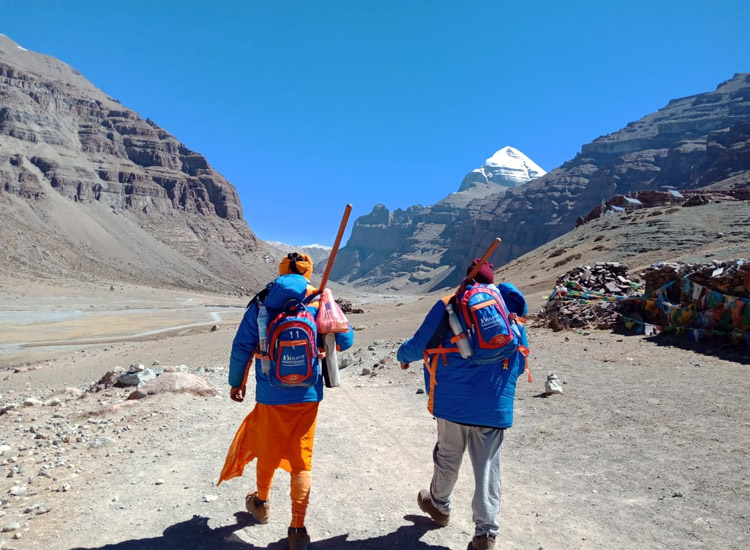 One of the most dangerous myths is that Mount Kailash can be conquered like other mountain peaks. In truth, climbing Mount Kailash is strictly prohibited and considered deeply disrespectful across all religions that hold it sacred.
Despite numerous climbing expeditions planned throughout history, Mount Kailash remains unconquered. Modern climbers who have attempted to scale the mountain report strange occurrences and setbacks. In the 1980s, a team of mountaineers abandoned their expedition after consulting with a Tibetan lama, and shockingly, four team members still died within the following year.
Book our 11 Days kailash mansarovar yatra tour package by helicopter
One of the most dangerous myths is that Mount Kailash can be conquered like other mountain peaks. In truth, climbing Mount Kailash is strictly prohibited and considered deeply disrespectful across all religions that hold it sacred.
Despite numerous climbing expeditions planned throughout history, Mount Kailash remains unconquered. Modern climbers who have attempted to scale the mountain report strange occurrences and setbacks. In the 1980s, a team of mountaineers abandoned their expedition after consulting with a Tibetan lama, and shockingly, four team members still died within the following year.
Book our 11 Days kailash mansarovar yatra tour package by helicopter
3. The Kailash Mansarovar Yatra Is Only for the Physically Elite
Don’t let this scare you off. Many potential pilgrims shy away from the Kailash Mansarovar Yatra, believing it’s only for the physically fit or elite athletes. You don’t need to be an Olympic athlete to complete the Yatra. But yes, a decent fitness level helps. Simple cardio, walking, and breathing exercises months ahead will go a long way. And remember, the journey is more about endurance and willpower than six-pack abs.4. Lake Mansarovar and Rakshas Tal are just ordinary lakes
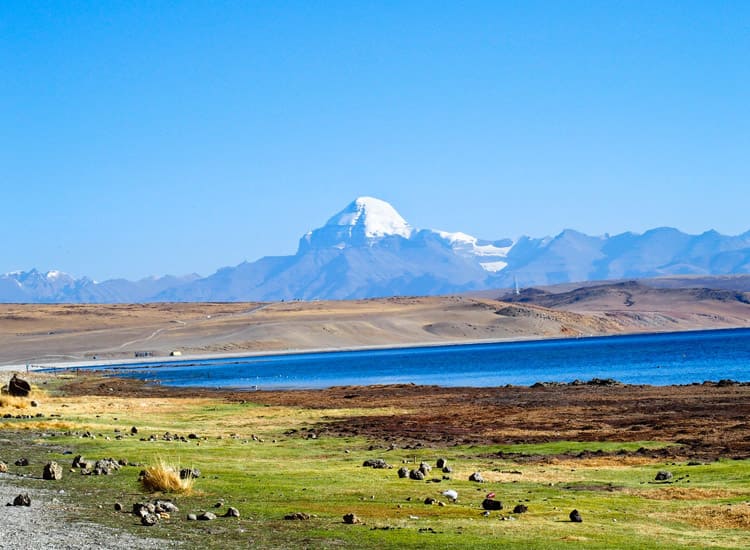 A common misconception is that Lake Mansarovar and the nearby Rakshas Tal are just scenic water bodies. In reality, these twin lakes embody profound spiritual symbolism and represent the cosmic principles of duality.
Lake Mansarovar is considered the lake created in Lord Brahma’s mind. It’s a freshwater lake representing purity, light, and goodness.
While Rakshas Tal (Demon’s Lake) is a saltwater body representing darkness and the material world. The two lakes, separated by a narrow isthmus, symbolise the cosmic balance between light and darkness, good and evil, and spiritual and material.
Book our 14 Days Kailash Mansarovar Tour Package by Road
A common misconception is that Lake Mansarovar and the nearby Rakshas Tal are just scenic water bodies. In reality, these twin lakes embody profound spiritual symbolism and represent the cosmic principles of duality.
Lake Mansarovar is considered the lake created in Lord Brahma’s mind. It’s a freshwater lake representing purity, light, and goodness.
While Rakshas Tal (Demon’s Lake) is a saltwater body representing darkness and the material world. The two lakes, separated by a narrow isthmus, symbolise the cosmic balance between light and darkness, good and evil, and spiritual and material.
Book our 14 Days Kailash Mansarovar Tour Package by Road
5. Mount Kailash’s pyramid shape is just a coincidence
Many dismiss Mount Kailash’s remarkable pyramid-like shape as a mere coincidence. However, this extraordinary geometric precision has captured the attention of researchers and scientists worldwide. Mount Kailash displays near-perfect symmetry with four distinct faces. Some researchers suggest it may be a man-made pyramid or an artificially modified natural formation. Russian scientists have noted that its shape appears too symmetrical to be entirely natural, resembling a vast cathedral or pyramid complex. As these theories remain scientifically unverified, the mountain’s extraordinary symmetry continues to inspire both spiritual awe and scientific curiosity.
6. Is Kailash Mansarovar Yatra just for Hindu pilgrims?
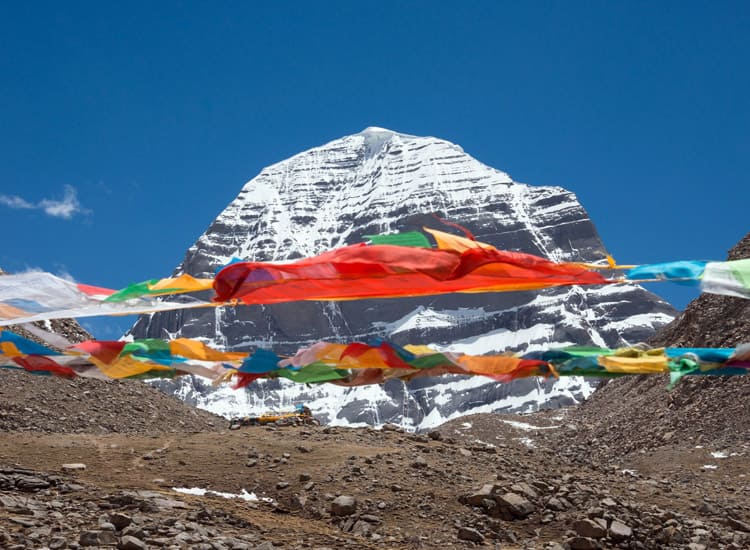 The actual truth is, it’s one of the world’s most diverse spiritual journeys, attracting devotees from multiple faiths who each bring their traditions and perspectives. Hinduism, Buddhism, Jainism, and the pre-Buddhist Bon religion consider Mount Kailash sacred for different reasons.
The Hindu pilgrims circumambulate the mountain clockwise, believing it to be Lord Shiva’s abode. Buddhists also circle clockwise, venerating it as the residence of Buddha Demchok. Jains commemorate it as the site where their first Tirthankara achieved liberation. Meanwhile, followers of the Bon religion uniquely circumambulate anticlockwise, adhering to their ancient traditions.
Also Read: Kailash Mansarovar Yatra Routes: A Comprehensive Guide for Pilgrims
The actual truth is, it’s one of the world’s most diverse spiritual journeys, attracting devotees from multiple faiths who each bring their traditions and perspectives. Hinduism, Buddhism, Jainism, and the pre-Buddhist Bon religion consider Mount Kailash sacred for different reasons.
The Hindu pilgrims circumambulate the mountain clockwise, believing it to be Lord Shiva’s abode. Buddhists also circle clockwise, venerating it as the residence of Buddha Demchok. Jains commemorate it as the site where their first Tirthankara achieved liberation. Meanwhile, followers of the Bon religion uniquely circumambulate anticlockwise, adhering to their ancient traditions.
Also Read: Kailash Mansarovar Yatra Routes: A Comprehensive Guide for Pilgrims
7. The Kailash region is inaccessible for most of the year
A misconception is that the Kailash Mansarovar region is inaccessible except for a brief window each year. While weather conditions do limit travel during certain months, the pilgrimage season is actually longer than most people realise. The optimal time for the Kailash Mansarovar Yatra typically extends from mid-May to early October, offering nearly five months of potential travel time. June through September generally provide the most favourable conditions, with July and August often considered ideal due to milder temperatures and clearer skies.8. You have to walk the entire way!
No, you don’t have to trek hundreds of kilometres from your doorstep! Most routes (via Nepal or China) involve travel by vehicle, helicopter, or even chartered flights up to a certain point. Sure, the Parikrama (Kora) around Mount Kailash is done on foot, but that’s the soul of the Yatra, and it’s usually a 3-day trek, not a month-long mission. Also Read: Essential Packing List for Kailash Mansarovar Yatra9. The “Accelerated Aging” Phenomenon at Mount Kailash
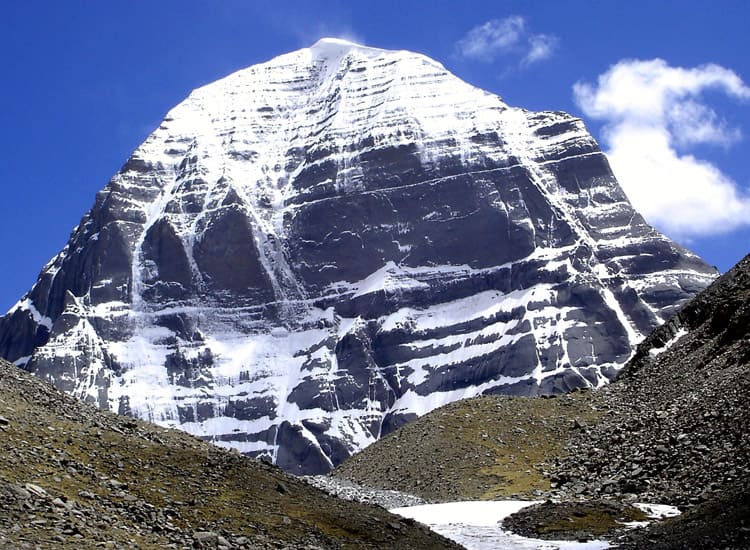 Many dismiss the stories of “accelerated ageing” near Mount Kailash as pure fiction or superstition. While scientific evidence remains limited, numerous consistent reports suggest unusual physiological effects that deserve serious consideration.
Visitors to the Kailash region have reported experiencing accelerated hair and fingernail growth during their stay. The growth is equivalent to what would typically occur over two weeks, happening within just 12 hours.
While these effects require further scientific study before definitive conclusions can be drawn, the consistency of these reports across different cultural backgrounds and periods suggests there may be more to these accounts than mere superstition.
Many dismiss the stories of “accelerated ageing” near Mount Kailash as pure fiction or superstition. While scientific evidence remains limited, numerous consistent reports suggest unusual physiological effects that deserve serious consideration.
Visitors to the Kailash region have reported experiencing accelerated hair and fingernail growth during their stay. The growth is equivalent to what would typically occur over two weeks, happening within just 12 hours.
While these effects require further scientific study before definitive conclusions can be drawn, the consistency of these reports across different cultural backgrounds and periods suggests there may be more to these accounts than mere superstition.
10. Completing one Kailash Parikrama is enough?
Many pilgrims believe that completing just one circuit around Mount Kailash fulfils the spiritual purpose of the journey. However, according to traditional beliefs, different numbers of parikramas serve different spiritual purposes. Traditional practices suggest that:- One parikrama cleanses the sins of one lifetime
- Three parikramas break the cycle of rebirth
- Nine parikramas lead to complete liberation within this lifetime
- 108 parikramas result in immediate enlightenment
Time to Drop the Myths and Embrace the Journey!
Now that we’ve cleared the fog around these common misconceptions, the path to Kailash Mansarovar Yatra looks a little clearer, doesn’t it? Still feeling overwhelmed? That’s completely natural, as it’s a once-in-a-lifetime journey, after all! Whether planning your pilgrimage or simply exploring the rich spiritual heritage of this remarkable place, remember that Mount Kailash and Lake Mansarovar represent a convergence point where diverse faiths find common ground in reverence and respect. So, are you thinking of the planning part?Checkout Kailash Mansarovar Yatra PackagesIndian Holiday is here to guide you through every step, from choosing the correct route to handling your documents and keeping you comfortable throughout the Yatra. Ready to take the first step on your spiritual adventure? Related Post
- Places to Visit In and Around Kailash Mansarovar
- Some Must-Know Facts About Kailash Mansarovar
- Travel Tips To Keep In Mind For Kailash Mansarovar Yatra 2025
- Kailash Mansarovar Yatra: A Sacred Journey of a Lifetime (2025 Guide)