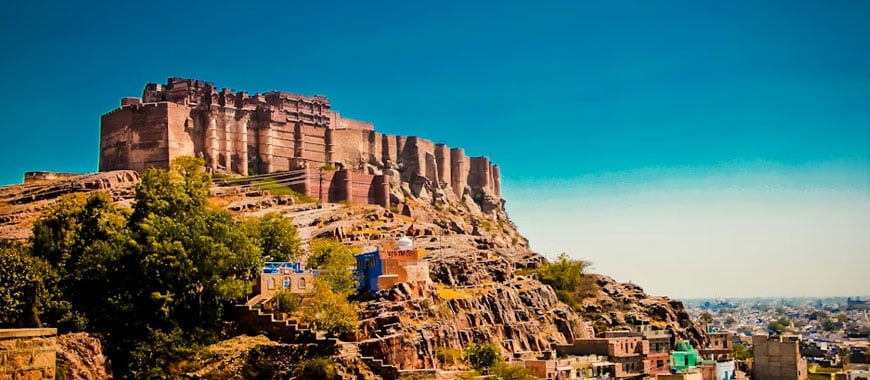

Rajasthan has far more to see than its famous forts.
The state's strongest attractions range from Jaipur's palaces and observatory to Jodhpur's Mehrangarh Fort, Udaipur's lakeside City Palace, the inhabited lanes of Jaisalmer Fort and the vast hill forts of Mewar. Ranthambore adds wildlife, Pushkar brings an important pilgrimage landscape, and Mount Abu's Dilwara Temples show a completely different style of marble architecture.
The challenge is deciding what deserves your time.
For a first Rajasthan journey, prioritise attractions that show different sides of the state rather than visiting a similar fort or palace in every city. The places below have been selected for their heritage, landscape, wildlife or religious significance and for the experience they add to a wider Rajasthan trip.
Which Rajasthan Tourist Attractions Should You Prioritise?
| What You Want to Experience | Best Choice |
|---|---|
| Jaipur's essential fort experience | Amber Fort |
| Iconic Jaipur architecture | Hawa Mahal |
| The strongest fort-and-museum visit in Jodhpur | Mehrangarh Fort |
| Palace architecture with lake views | City Palace, Udaipur |
| A living fort rather than a museum-only monument | Jaisalmer Fort |
| Large-scale Mewar history | Chittorgarh Fort |
| A remote hill fort and long defensive wall | Kumbhalgarh Fort |
| Wildlife safari | Ranthambore Tiger Reserve |
| Pilgrimage and sacred-lake atmosphere | Pushkar Lake & Brahma Temple |
| Detailed Jain marble carving | Dilwara Jain Temples |
| Thar Desert scenery | Sam Sand Dunes |
If time is limited, do not try to include every attraction. Choose the places that already fit your Jaipur, Jodhpur, Udaipur, Jaisalmer or wildlife route.
Amber Fort, Jaipur
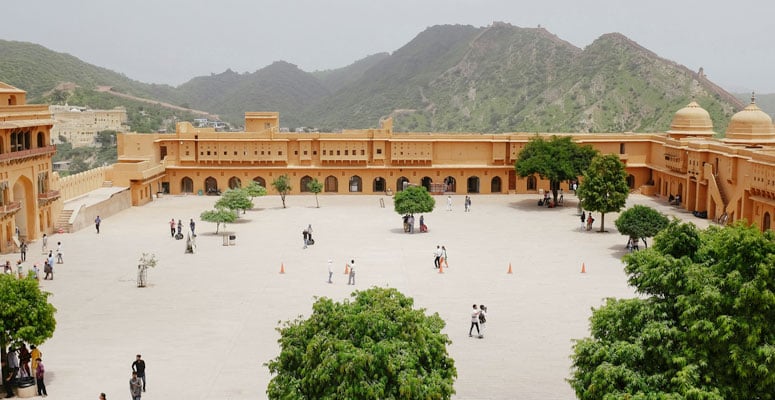
Amber Fort combines a defensive hill setting with palace courtyards, gardens and richly decorated interiors.
The main areas worth slowing down for are Jaleb Chowk, Diwan-i-Aam, Sukh Niwas and Sheesh Mahal. The restored tunnel connection towards Jaigarh also helps explain how the two forts worked together. Rajasthan Tourism identifies Amber as one of Jaipur's principal attractions and confirms the four-courtyard layout.
Time needed: Around 2.5–3 hours.
Timings: 8:00 AM–5:30 PM.
Current 2026 entry fee:
Indian visitor – ₹200
International visitor – ₹1,000.
Hawa Mahal, Jaipur
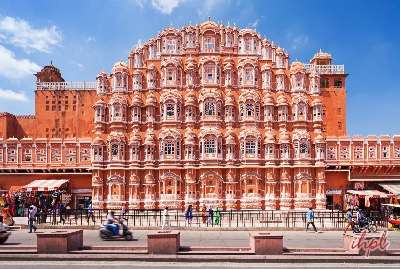
Hawa Mahal is one of Rajasthan's most recognisable façades, but the visit is more useful if you go beyond the street-level photograph.
Built in 1799, the five-storey structure allowed women of the royal household to observe street life and processions through screened jharokhas without being seen. Inside, ramps and narrow passages lead upwards to views across Jaipur's old city.
Time needed: Around 30–45 minutes.
Timings: 9:00 AM–4:30 PM.
Current 2026 entry fee:
Indian visitor – ₹100
International visitor – ₹600.
Best paired with: City Palace and Jantar Mantar.
Mehrangarh Fort, Jodhpur
Mehrangarh fort is the main attraction to prioritise in Jodhpur.
The fort rises above the old city and combines defensive gates and ramparts with a well-curated palace museum. Period rooms such as Moti Mahal, Phool Mahal, Sheesh Mahal and Takhat Vilas sit alongside galleries of palanquins, howdahs, paintings, textiles and arms.
Time needed: Around 2.5–3 hours.
Timings: 9:00 AM–5:00 PM, open daily.
Entry fee:
Domestic visitor – ₹200
International visitor – ₹800
One-way elevator – ₹50.
Please confirm the timings and fare before planning a visit.
City Palace, Udaipur
City Palace is the main heritage attraction in Udaipur and the best place to understand Mewar's royal history.
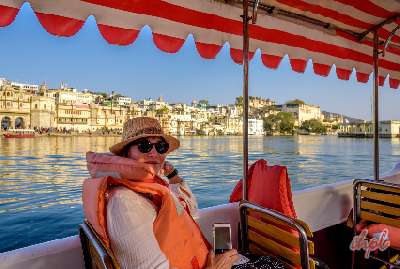
The complex overlooks Lake Pichola and brings together courtyards, balconies, rooms and museum galleries developed over several generations. Highlights include Zenana Mahal, Mor Chowk, Kanch Ki Burj and Badi Mahal.
Time needed: Around 2–3 hours.
Current live website timing: 9:00 AM–9:00 PM.
Entry fee: The City Palace Museum's official FAQ currently publishes a standard museum ticket of ₹400, with concession categories available. Because that tariff document predates the current live hours page, recheck the ticket selector before future publication updates.
Best paired with: Lake Pichola and Jag Mandir.
Jaisalmer Fort
Jaisalmer Fort differs from Rajasthan’s museum-style forts because people still live and work inside its walls.
The golden sandstone fort contains homes, temples, shops and narrow lanes alongside the former royal palace. The Palace Museum includes royal rooms, murals, armoury displays and rooftop views across Jaisalmer.
Time needed: Around 2–3 hours.
Public fort lanes: Free to enter.
Palace Museum: Current 2026 visitor verification reports approximately 10:00 AM–5:00 PM, with tickets around ₹200 Indian / ₹600 international. The official Jaisalmer Trust confirms the museum but does not clearly display the tariff in its public crawl, so reconfirm the live ticket price before planning your travels.
Kumbhalgarh Fort
Kumbhalgarh fort is worth the extra travel time when you want a hill-fort experience that feels more expansive than Rajasthan's city forts.
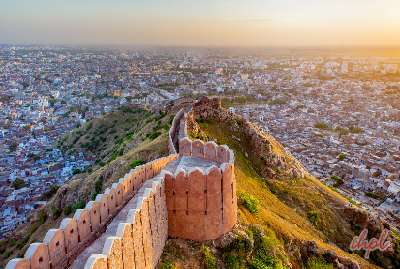
Built during the reign of Rana Kumbha, the fort has a 36 km defensive wall, multiple temples, large gateways and Badal Mahal above the main fortified area. It is also part of UNESCO's Hill Forts of Rajasthan.
Time needed: Around 2.5–3.5 hours.
Timings: 9:00 AM–6:00 PM.
Current 2026 visitor listings: Around ₹40 Indian / ₹600 international. Online ticket references are inconsistent, so confirm the final ASI tariff before planning your visit.
Chittorgarh Fort
Chittorgarh fort should be treated as one of Rajasthan's major attractions, not a lesser-known add-on.
The fort spreads across roughly 240 hectares on a hill above Chittorgarh. Its main sights include Vijay Stambh, Kirti Stambh, Rana Kumbha Palace, temples, reservoirs and other historic structures.
Time needed: Around 4–5 hours.
Visiting hours: Official national tourism guidance describes access from sunrise to sunset.
Current 2026 visitor listings: Approximately ₹40 Indian / ₹600 international for fort admission. Reconfirm at the current ASI counter/e-ticketing platform because published online tariffs are not fully consistent.
Ranthambore Tiger Reserve
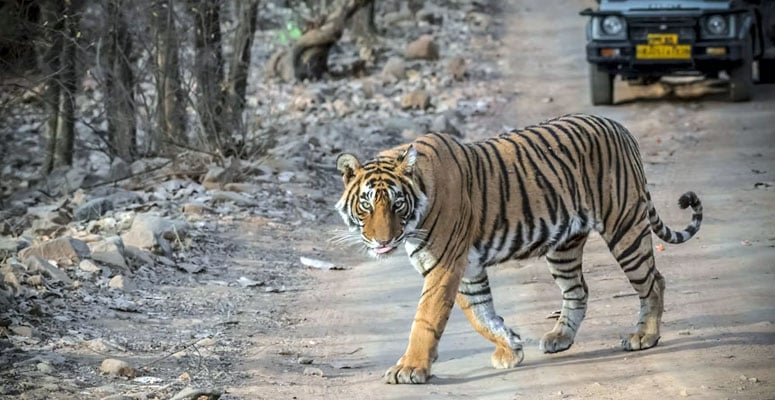
Ranthambore is the strongest wildlife attraction to include on a general Rajasthan attractions page.
Safaris move through dry forest, grassland, lakes and historic ruins within the Ranthambore tiger reserve landscape. Tigers are the main draw, but sightings are never guaranteed. A good safari should also be approached for the wider wildlife and landscape rather than judged only by whether a tiger appears.
Time needed: One safari shift usually takes around 3–3.5 hours.
Safari timings: Morning and afternoon shifts operate during the open season, but the exact times change by month. Use the time printed on the official permit rather than planning a fixed year-round schedule. Rajasthan Forest Department provides the official booking channel.
Pushkar Lake and Brahma Temple
Pushkar tourist attractions includes the combination of its sacred lake, ghats and Brahma Temple.
The lake is surrounded by 52 ghats, while the Brahma Temple is one of the best-known places of worship dedicated to Lord Brahma. The present temple structure is largely associated with later rebuilding and renovation.
Why visit: Pushkar adds a living pilgrimage setting to a Rajasthan trip that may otherwise be dominated by royal heritage.
Time needed: Around 1.5–2 hours for the temple and main ghats.
Brahma Temple timings:
Summer – 5:00 AM–1:30 PM and 3:00 PM–9:00 PM
Winter – 6:00 AM–1:30 PM and 3:00 PM–8:30 PM.
Entry fee: Free.
Dilwara Jain Temples, Mount Abu
Dilwara is one of the main tourist attractions in Mount abu for travellers interested in detailed stone craftsmanship.
The complex contains five Jain temples built over several centuries. The outer architecture is relatively restrained, but the interiors contain elaborate marble ceilings, pillars and domes. Vimal Vasahi and Luna Vasahi are especially important.
Time needed: Around 1–2 hours.
Tourist access: Generally 12:00 PM–5:00/6:00 PM. Morning hours are primarily for Jain worship.
Entry fee: Free.
Visitor note: Cameras, mobile phones and leather items are restricted inside. Dress modestly and follow temple instructions.
Sam Sand Dunes, Jaisalmer
Sam Sand Dunes is the most famous sand dunes in Jaisalmer.
The main reason to visit is the Thar landscape around late afternoon, when visitors can combine the dunes with separately operated camel rides, jeep experiences or evening programmes. Rajasthan Tourism confirms that camel experiences at Sam are run by local camel owners and camp/resort operators.
Time needed: Around 2–3 hours for a sunset visit; longer when adding a camp programme.
Opening/closing time: There is no single formal attraction gate with fixed monument hours.
Entry fee: General dune access does not have one standard monument ticket. Camel rides, jeep activities, camps and programmes are separately priced.
Rajasthan Tourist Places: Timings and Entry Fees
| Attraction | Current / Published Timing | Entry Fee |
|---|---|---|
| Amber Fort | 8:00 AM–5:30 PM | ₹200 Indian; ₹1,000 international |
| Hawa Mahal | 9:00 AM–4:30 PM | ₹100 Indian; ₹600 international |
| Mehrangarh Fort | 9:00 AM–5:00 PM | ₹200 domestic; ₹800 international |
| City Palace Museum, Udaipur | Current live site: 9:00 AM–9:00 PM | ₹400 standard museum ticket currently stated in official FAQ; reconfirm live tariff |
| Jaisalmer Fort | Living fort lanes do not have a closing time; Palace Museum approx. 10:00 AM–5:00 PM | Fort lanes free; museum currently reported around ₹200 Indian / ₹600 international—verify |
| Kumbhalgarh Fort | 9:00 AM–6:00 PM | Current 2026 listings approx. ₹40 Indian / ₹600 international—verify current ASI tariff |
| Chittorgarh Fort | Sunrise–sunset | Current 2026 listings approx. ₹40 Indian / ₹600 international—verify current ASI tariff |
| Ranthambore Tiger Reserve | Two seasonal safari shifts; exact timing varies | Protected-area component ₹215 Indian / ₹1,575 non-Indian; safari vehicle/guide costs extra |
| Brahma Temple, Pushkar | Summer: 5:00 AM–1:30 PM & 3:00–9:00 PM; Winter: 6:00 AM–1:30 PM & 3:00–8:30 PM | Free |
| Dilwara Jain Temples | Tourist access generally 12:00 PM–5:00/6:00 PM | Free |
| Sam Sand Dunes | No controlled monument-style hours | General dune access has no standard admission ticket; activities extra |
Rajasthan revised several monument and wildlife tariffs in 2026, while privately managed attractions and safari booking components can change independently.
Rajasthan Attractions That Work Well Together
Amber Fort + Jal Mahal + Jaipur Old City
Amber is the main attraction. Jal Mahal works as a short exterior-viewing stop on the route, while Hawa Mahal, City Palace and Jantar Mantar form a separate compact old-city cluster. Jal Mahal's interior is not normally open to the general public.
Mehrangarh Fort + Jaswant Thada
These are the strongest natural heritage pairing in Jodhpur. Give most of your time to Mehrangarh, then keep around 30–45 minutes for Jaswant Thada.
City Palace + Lake Pichola + Jag Mandir
City Palace should anchor the Udaipur sightseeing block. Add a Lake Pichola boat ride or Jag Mandir when you want more time on the lake rather than another museum.
Jaisalmer Fort + Patwon Ki Haveli
These show two different sides of Jaisalmer's sandstone heritage: royal and living-fort history at Jaisalmer Fort, and merchant architecture at Patwon Ki Haveli.
Kumbhalgarh + Ranakpur
These fit naturally together in the Mewar-Aravalli region, but both deserve real time. Avoid treating either as a short roadside photo stop.
Pushkar Lake + Brahma Temple
These should be experienced together because the temple and ghats form part of the same pilgrimage landscape.
Practical Tips for Visiting Rajasthan's Attractions
- Start large outdoor forts earlier in hot weather.
- Keep at least 2–3 hours for Amber, Mehrangarh and Jaisalmer Fort rather than treating them as quick photo stops.
- Give Chittorgarh longer because its major sights are spread across a large fortified area.
- Do not rely on a fixed Ranthambore safari time copied from an old page. Check the official permit for the season.
- Carry comfortable walking shoes for Kumbhalgarh, Chittorgarh and fort ramparts.
- Check mobility requirements before planning steep forts with senior family members.
- At active temples such as Dilwara and Brahma Temple, follow current footwear, photography and dress rules.
- Reconfirm ticket prices for ASI-managed and privately managed sites before future editorial updates.
- Do not try to visit every Rajasthan fort simply because it appears on a long list. Choose forts that add a genuinely different experience.
Continue Exploring Rajasthan
For a first Rajasthan journey, choose attractions that show different sides of the state.
Amber and Mehrangarh cover two very different fort experiences. Udaipur adds palace-and-lake architecture, while Jaisalmer Fort introduces living heritage. Chittorgarh and Kumbhalgarh are stronger choices when Mewar history is a priority. Ranthambore adds wildlife, Pushkar brings a pilgrimage setting, and Dilwara is worth the time for its marble craftsmanship.