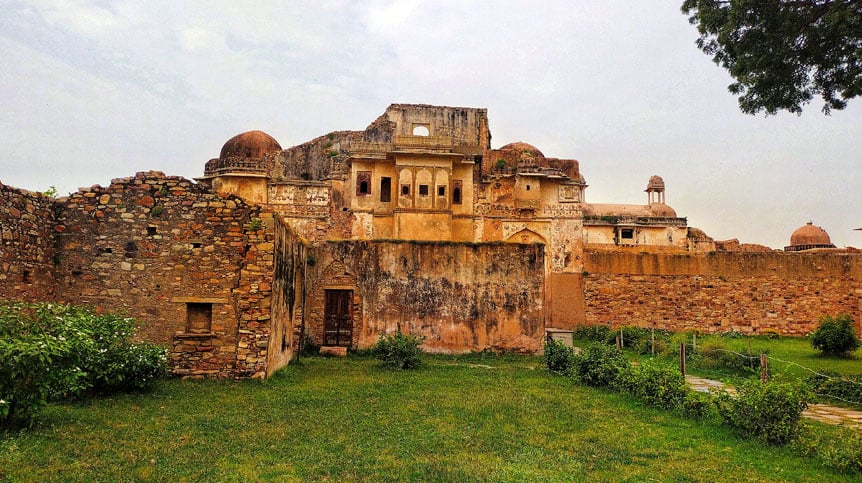

Rajasthan’s forts and palaces are the defining landmarks of the state – built as defensive strongholds and royal residences across centuries of Rajput civilisation, and today among the most visited heritage monuments in India. The major cities of Jaipur, Jodhpur, Udaipur, Jaisalmer, Bikaner, and Chittorgarh each anchor a distinct fort-and-palace tradition, with architectural styles that reflect the character of the dynasties that built them and the landscapes they commanded.
The question is not which fort is the most famous.
It is which forts are worth your time on the Rajasthan route you are actually taking.
Which Rajasthan Forts and Palaces Should You Prioritise?
| If You Want… | Choose | Why |
|---|---|---|
| A strong first fort experience | Amer Palace, Jaipur | Palace rooms, courtyards, views and easy Jaipur routing |
| The best museum-led fort visit | Mehrangarh Fort, Jodhpur | Excellent collections, interiors and Blue City views |
| A living historic fort | Jaisalmer Fort | Homes, temples, shops and lanes still exist inside |
| Deep Rajput history | Chittorgarh Fort | Huge fortified landscape with palaces, towers and temples |
| A remote hill-fort setting | Kumbhalgarh Fort | Long walls, hill views and a strong Mewar route |
| An easier fort with rich interiors | Junagarh Fort, Bikaner | No hill climb and well-preserved palace rooms |
| Jaipur skyline views | Nahargarh Fort | Better for views than deep museum content |
| Military architecture | Jaigarh Fort | Defensive design and the Jaivana cannon |
| Wildlife plus heritage | Ranthambore Fort | Works naturally with a Ranthambore stay |
| A quieter UNESCO fort | Gagron Fort | Unusual water-and-hill setting away from classic routes |
| A palace-focused experience | City Palace, Udaipur | Museum collections, courtyards and lake-city setting |
Rajasthan Forts and Palaces: Timings and Entry Fees
| Fort / Palace | Opening/closing Hours | Indian Adult | International Adult |
|---|---|---|---|
| Amer Palace | 8:00 AM–5:30 PM | ₹200 | ₹1,000 |
| Jaigarh Fort | 9:00 AM–6:30 PM; last entry around 6:00 PM | ₹200 | Around ₹700 |
| Nahargarh Fort | 10:00 AM–5:30 PM | ₹100 | ₹600 |
| Mehrangarh Fort & Museum | 9:00 AM–5:00 PM | ₹200 | ₹800 |
| Jaisalmer Fort | Living fort areas are accessible throughout the day | Free for the public fort area | Free for the public fort area |
| Chittorgarh Fort | Around 9:00 AM–6:00 PM / daylight hours | ₹40 | ₹600 |
| Kumbhalgarh Fort | 9:00 AM–6:00 PM | ₹40 | ₹600 |
| Junagarh Fort | 10:00 AM–4:30 PM | ₹50 | ₹300 |
| Ranthambore Fort | Around 6:00 AM–6:00 PM | Free | Free |
| Gagron Fort | Around 9:00 AM–5:00 PM | ₹55 | ₹250 |
| City Palace Museum, Udaipur | 9:00 AM–9:00 PM; ticket sales close earlier | ₹400 adult | ₹400 adult |
Major Forts and Palaces of Rajasthan
Amer Palace, Jaipur
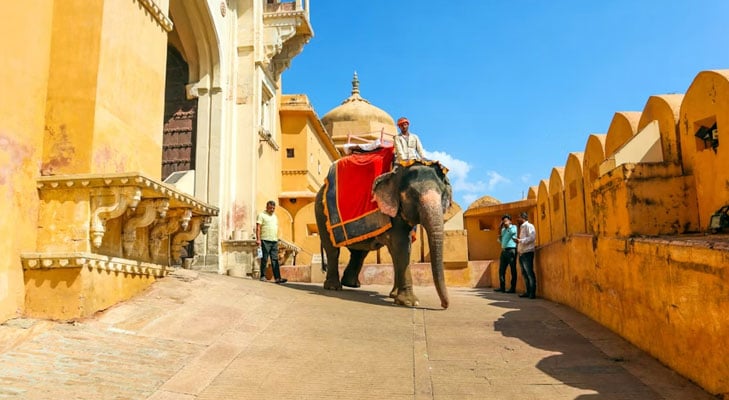
One of the most magnificent forts in Rajasthan and a UNESCO World Heritage Site. Perched on a hilltop adjacent to the Amber Palace overlooking the Aravalli Ranges, Amer Fort was built by the Kachhawa Rajputs and reflects a stunning blend of Hindu and Mughal architectural styles. The Sheesh Mahal (Hall of Mirrors), Ganesh Pol gate, Diwan-i-Aam, and Diwan-i-Khas are the primary attractions within the complex. Elephant rides to the fort entrance and panoramic views of Maota Lake below are the defining visitor experiences.
Best For: First-time visitors, families, architecture lovers and travellers beginning Rajasthan through Jaipur.
Time needed: 2 – 2.5 hours
Guide Value: High. A guide helps explain how the public courts, royal rooms and women’s quarters fit together.
Access and Effort: There is an uphill approach, followed by stairs and walking inside. Jeep access is available on the approach.
Timing and Fee: 8:00 AM–5:30 PM. ₹200 for Indian adults / ₹1,000 for international adults
Pair with: Jaigarh is the easiest fort to pair with Amer because the two occupy the same wider hill system.
Jaigarh Fort, Jaipur
Situated on the promontory called the Cheel ka Teela, Jaigarh fort feels more military than Amer. Visit for walls, watchtowers, defensive structures and the Jaivana cannon, rather than elaborate palace rooms. The fort was famous for housing the Jaivana Cannon, which was the world’s largest cannon on wheels when it was cast in 1720.
Best For: Travellers interested in military history, fort engineering and viewpoints.
Time Needed: Around 1 – 1.5 hours
Guide Value: Moderate. A guide is useful if military design interests you, but it is less essential than at Amer or Chittorgarh.
Access and Effort: Much of the site is easier to move through than a rough ruin, but walking is involved between fort sections.
Timing and Fee: 9:00 AM – 6:30 PM; last entry around 6:00 PM. ₹200 for Indian adults and ₹700 for international adults.
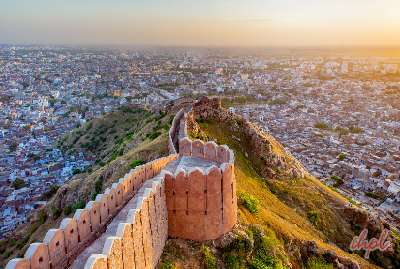
Nahargarh Fort, Jaipur
Built in 1734 by Maharaja Sawai Jai Singh II on the Aravalli Hills overlooking Jaipur, Nahargarh Fort – “abode of tigers” – was part of the defensive ring protecting Jaipur alongside Amer Fort and Jaigarh Fort. Most famous for its panoramic views of Jaipur city, particularly at sunset and after dark when the city lights spread below the ramparts. The Madhavendra Bhawan palace inside features 12 identical suites for the king’s queens. A wax museum and Padao café are within the fort complex. Nahargarh is more about location and Jaipur views than a deep museum experience.
Best For: Views, photography and travellers with additional time in Jaipur.
Time Needed: Around 1 – 1.5 hours
Guide Value: Low to moderate. You do not need a full guided tour if the main reason for visiting is the setting.
Access and Effort: Road access makes Nahargarh relatively easy to reach. But the fort does involve walking, and late afternoons could become busier because many visitors come for the view.
Timing and Fee: 10:00 AM – 5:30 PM. ₹100 for Indian adults / ₹600 for international adults
Mehrangarh Fort, Jodhpur
One of India’s greatest forts. Commissioned by Rao Jodha in 1460, Mehrangarh fort towers 400 feet above Jodhpur on a rocky outcrop, its red sandstone walls visible from across the Blue City. Seven grand entrances lead to a complex of palace museums, the Moti Mahal, Phool Mahal, Sheesh Mahal, armoury, and ramparts with unobstructed views over the blue-washed old city. One of the best-curated museum complexes in Rajasthan. Flying Fox zipline operates over the fort’s moats and battlements.
Best For: Cultural travellers, museum lovers, photographers and first-time Rajasthan visitors.
Time needed: Allow 2.5 to 3 hours.
Guide Value: High, although the museum can be explored independently.
Access and Effort: Expect slopes, stairs and long periods on your feet.
An elevator is available for part of the ascent and currently costs ₹50 one way. This can be useful for senior travellers, though it does not remove all walking inside.
Timing and Fee: 9:00 AM – 5:00 PM. ₹200 for domestic adults / ₹800 for international adults.
Pair with: Pair it with Jaswant Thada rather than another large fort. It is close by and offers a lighter architectural stop after the scale of Mehrangarh.
Jaisalmer Fort (Sonar Quila – Golden Fort)
Built by King Rawal Jaisal in 1156 AD, Jaisalmer Fort is one of the largest forts in India and one of the few living forts in the world — approximately 3,000 people still reside within its walls. Perched on Trikuta Hill and visible from every corner of Jaisalmer city, the fort’s yellow sandstone glows golden at sunrise and sunset, giving it the name Sonar Quila. A UNESCO World Heritage Site. Inside: Raj Mahal, Laxminath Shrine, merchant havelis, and ornate Jain temples with extraordinary marble carvings.
Best For: First-time Jaisalmer visitors, architecture, old-city atmosphere and travellers interested in living heritage.
Time needed: Allow at least 2–3 hours.
Guide Value: Moderate to high. A local guide can help explain the fort’s history while also making it easier to navigate the lanes.
Access and Effort: Much of the exploration is on foot. There are slopes, narrow lanes and uneven surfaces, so be mindful.
Timing and Fee: Public fort areas have no general entrance fee; and they are accessible throughout the day.
Chittorgarh Fort
The largest fort in India by area, and one of the most historically significant. Chittorgarh Fort was the seat of the Mewar kingdom and the site of three legendary Jauhars – making it one of the most emotionally resonant heritage sites in Rajasthan. The fort houses multiple palaces, temples, towers, and reservoirs spread across a 700-acre hilltop. A UNESCO world heritage site, the Vijay Stambha (Victory Tower) and Kirti Stambha (Tower of Fame) are the defining monuments within the complex.
Best For: Travellers interested in Mewar history, fort landscapes and Rajput heritage.
Time needed: Allow 3 – 5 hours for the main monuments. A full day makes sense for travellers who want temples, the museum and quieter parts of the fort as well.
Guide Value: High. A guide is especially useful because many palace structures survive mainly as ruins.
Access and Effort: The fort is quite extensive and expansive. It is advisable to use a vehicle between distant sections.
Timing and Fee: Plan for approximately 9:00 AM – 6:00 PM. ₹40 Indian visitor / ₹600 international visitor.
Pair with: If you want more museum context, Fateh Prakash Palace Government Museum fits naturally into a longer fort visit.
Kumbhalgarh Fort
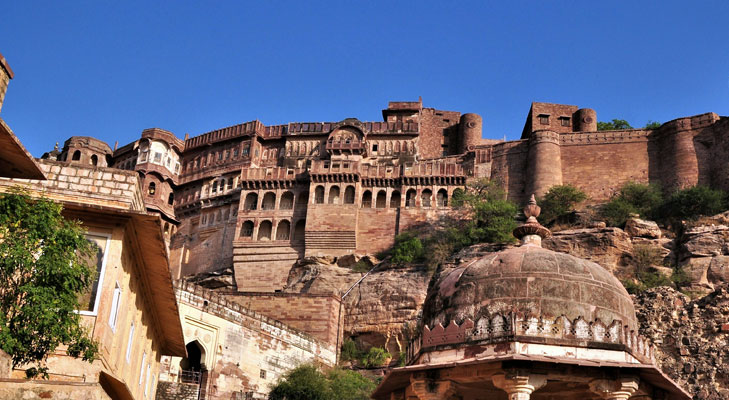
Located in the Aravalli Hills between Jodhpur and Udaipur, Kumbhalgarh Fort has the second-longest wall in the world after the Great Wall of China – 36 km of walls enclosing 360 temples and the birthplace of Maharana Pratap. The fort’s remote hilltop location gives it a dramatically isolated character unlike any other fort in Rajasthan. Built by Maharana Kumbha in the 15th century, its a UNESCO World Heritage Site.
Best For: Landscape, fort architecture, Mewar history and travellers staying around Udaipur or the Aravalli region.
Time needed: Around 2 – 3 hours.
Guide Value: Moderate to high. A guide makes the scattered fort structures easier to understand.
Access and Effort: The fort involves uphill walking.
Timing and Fees: 9:00 AM–6:00 PM. ₹40 Indian for adults / ₹600 for international visitors.
Junagarh Fort, Bikaner
Junagarh Fort is one of Rajasthan’s strongest palace-fort experiences and differs from the hill forts because it sits within Bikaner city rather than on a high defensive ridge. Its interiors, courtyards, and painted palace rooms make it especially rewarding for travellers interested in royal lifestyle, museum-style heritage, and architecture rather than rugged hill-fort scale.
Its palace rooms, courtyards, carved balconies and decorative interiors show a glimpse of the bygone era and how different periods were added within the same royal complex.
Best For: Families, senior travellers, interior architecture and anyone already including Bikaner.
Time needed: Around 1.5–2 hours.
Guide Value: High. A guided visit will help you grasp the history of the palace in a much better way.
Access and Effort: It is physically easier than Rajasthan’s hill forts.
Timing and Fee: 10:00 AM – 4:30 PM. ₹50 For Indian adult/ ₹300 for international visitor.
Pair with: Continue into Bikaner’s old city for the Rampuria Havelis.
Ranthambore Fort
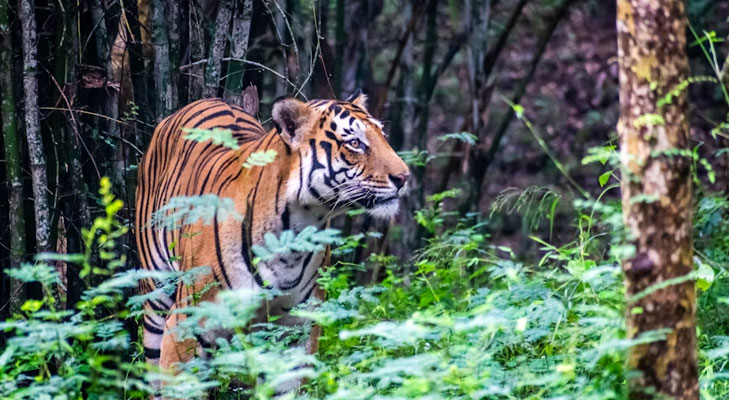
A UNESCO World Heritage Site located within Ranthambore National Park, one of the few forts in India where wildlife roams freely within the fort’s boundaries. You can spot leopards and sloth bears on the fort premises. The Ranthambore fort was built in 944 AD; it predates the Mughal period and houses temples to Lord Ganesh, Lord Shiva, and Ramlallaji within its walls. The approach through the tiger reserve gives it an extraordinary character.
Best For: Travellers already staying in Ranthambore, families interested in history, and visitors who want something beyond safari drives.
Time needed: Around 1.5–2.5 hours.
Guide Value: Moderate. A guided context helps you, but one can explore independently too.
Access and Effort: There are a significant number of steps here, so be mindful if you have children and elderly people in your travel group.
Timing and Fee: Around 6:00 AM – 6:00 PM. Fort entry is free.
Gagron Fort, Jhalawar
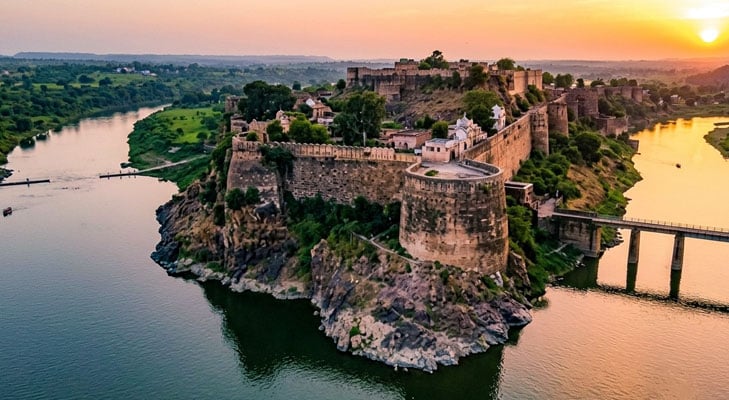
Gagron Fort is one of Rajasthan’s most unusual UNESCO-listed forts because it is both a hill fort and a water fort, protected by river and hill terrain near Jhalawar. Unlike Amer or Mehrangarh, its value lies less in palace interiors and more in defensive geography, isolation, and Hadoti-region heritage.
Best For: Repeat Rajasthan visitors, UNESCO-focused travellers and anyone exploring the Hadoti or Jhalawar region.
Time needed: Around 1 – 1.5 hours.
Guide Value: Useful.
Access and Effort: Exploring the fort requires some effort. Be mindful while planning.
Timing and Fee: Around 9:00 AM – 5:00 PM. ₹55 for Indian adults and ₹250 for foreign adults.
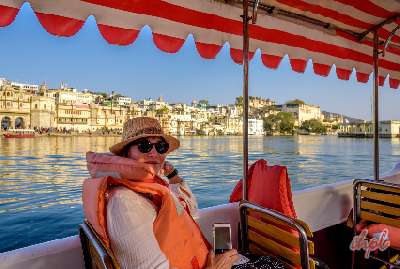
City Palace Museum, Udaipur
Best for travellers who want Rajasthan’s strongest lake-facing palace experience. It pairs naturally with Lake Pichola, Jagdish Temple, and the old city.
Courtyards, balconies, royal rooms and museum galleries rise above Lake Pichola with a fantastic view.
Best For: First-time Udaipur visitors, families, palace architecture and travellers who prefer detailed interiors.
Time needed: Allow 1.5–2.5 hours.
Guide Value: High. There are many connected sections in the palace. A guided context will enhance your experience.
Access and Effort: There are stairs and narrow passages. Senior travellers and children should take the most comfortable route before starting their tour.
Timing and Fee: 9:00 AM – 9:00 PM, with ticket sales closing earlier. ₹400 per adult, for both Indian and international visitors.
Sightseeing Experiences Worth Adding at Rajasthan’s Forts
- Give time to the museum galleries at Mehrangarh, Junagarh and Udaipur rather than treating them just as photo stops. You will get valuable context about the bygone era.
- At Jaisalmer, walking through the living lanes is part of the fort experience itself.
- At Kumbhalgarh and Nahargarh, spend time on the setting and viewpoints rather than trying to create a long list of activities.
- Some forts have light-and-sound programmes in the evenings, so look out for those. Check the current day’s programme instead of building the entire itinerary around an old published timing.
Forts and Nearby Attractions That Work Well Together
- Amer Palace + Jaigarh Fort work well together as both are situated in the same wider Jaipur heritage area. You can add Nahargarh if you have enough time and are interested in the city view.
- Mehrangarh Fort + Jaswant Thada give a balanced approach to a half-day excursion without visiting a large monument.
- Chittorgarh Fort + Fateh Prakash Government Museum works for visitors who are looking for more historical context from their visits.
- Junagarh Fort + Rampuria Havelis combine Bikaner’s royal architecture with merchant heritage.
- For Udaipur, City Palace + Lake Pichola works more naturally than trying to leave town for another fort on the same day.
Secondary Forts and Heritage Stays for Longer Rajasthan Routes
These forts are best for repeat travellers, heritage-stay itineraries, or regional circuits. They should not be given the same weight as Amer, Mehrangarh, Jaisalmer, Chittorgarh, Kumbhalgarh, or Ranthambore.
- Khimsar Fort — Nagaur: Best as a desert-facing heritage stay between Jodhpur, Nagaur, and the Thar region. IndianHoliday positions it as a pause point in a wider Rajasthan journey rather than a conventional sightseeing monument.
- Badnore Fort — Bhilwara: Best for offbeat Mewar/Hadoti heritage travellers; not a short-stay priority.
- Mandalgarh Fort — Bhilwara: Add for historically inclined travellers exploring Bhilwara; IndianHoliday identifies it as a historically significant fort in the district.
- Dundlod Fort — Shekhawati: Best paired with Mandawa/Nawalgarh havelis, not as a standalone fort trip.
- Laxmangarh Fort — Shekhawati: Best for photography and the Shekhawati route depth.
- Madhogarh Fort — Near Jaipur: Best as a countryside heritage-stay option.
- Deogarh Mahal — Mewar: Best for slow heritage stays near Udaipur.
- Khimsar Fort — Nagaur: Best for desert stay and Nagaur-fair routing.
Planning Notes
- October to March is the strongest window across all forts.
- Chittorgarh requires a full day — plan accordingly.
- Kumbhalgarh is best combined with Ranakpur Jain Temples.
- Ranthambore Fort is accessed via jungle safari — book safari permits well in advance during peak season.
- The UNESCO Hill Forts of Rajasthan circuit requires a minimum of 10–14 days to cover all six properly.