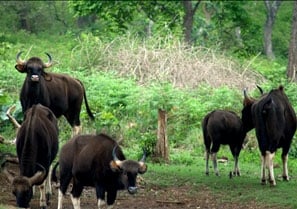







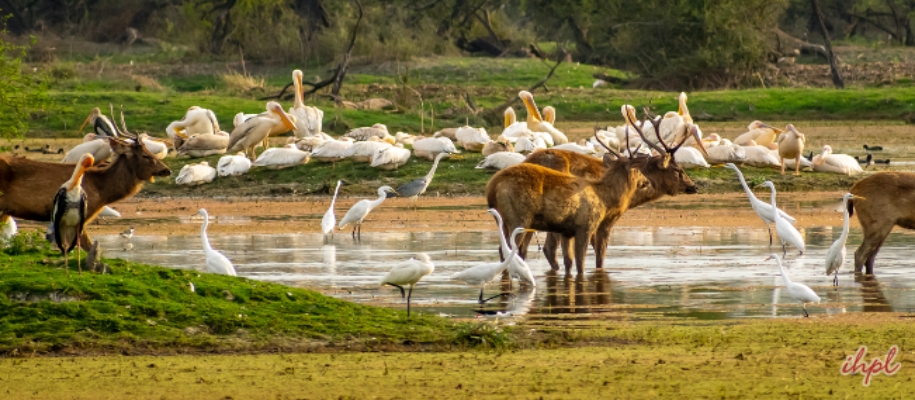

Keoladeo National Park, popularly known as the ‘Bird Paradise’, hosts an impressive diversity of wildlife. Located in the Gangetic Plain, this UNESCO World Heritage Site serves as a critical habitat for resident species and migratory birds alike.
Avian Diversity
Waterfowl
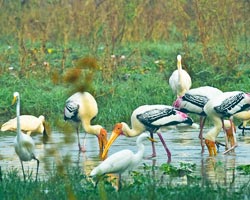 The park serves as an exceptional breeding ground for waterfowl due to its strategic location in the Gangetic Plain. During winter, it hosts numerous migratory duck species, making it a premier wintering area. Common waterfowl include:
- Asian open-billed stork
- Painted stork
- Little and great cormorants
- Indian shag
- White spoonbill
- Darter
- Various duck species (shoveler, tufted duck, gadwall, cotton teal)
- Multiple sandpiper species (common, wood, green)
The endangered Siberian crane also makes this wetland its customary wintering ground. During breeding season, visitors can witness the spectacular courtship dance of the Sarus crane.
Land Birds
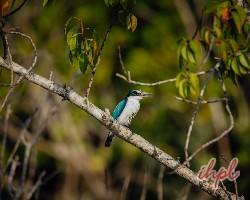 The park hosts an impressive collection of land birds attracted by the abundant insect population. Notable species include:
- Bee-eaters
- Warblers
- Quails
- Bulbuls
- Partridges
- Buntings
- Chats
- Marshall’s iora
- Indian grey hornbill
Birds of Prey
Keoladeo supports numerous raptor species:
- Pallas’ sea eagle
- Crested serpent eagle
- Osprey
- Peregrine falcon
- Spotted eagle
- Tawny eagle
- Imperial eagle
- Short-toed eagle
The park recently gained significance as a breeding ground for the greater spotted eagle, marking an important advancement for raptor conservation in India.
Mammals
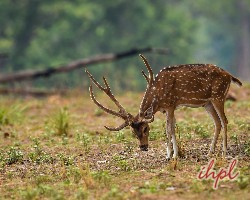 The park has documented 27 mammalian species:
Common Ungulates:
- Sambar deer
- Chital (spotted deer)
- Nilgai
- Feral cattle
- Blackbuck
- Hog deer
- Wild boar
Carnivores:
- Striped hyena
- Jackal
- Fishing cat
- Jungle cat
- Smooth-coated otter
- Indian grey mongoose
- Small Indian mongoose
- Small Indian civet
- Common palm civet
- Bengal fox
Other Mammals:
- Indian porcupine (often spotted in crop fields)
- Indian hare
- Various species of rats, mice, gerbils, and bats
- Primates including langurs and Rhesus Macaques
Aquatic Species
Fish
 Fish diversity plays a crucial role in the park’s ecology, serving as food for many bird species. The park hosts:
- 43 fish species total
- 37 species enter via water streams from Ajan Bund
- 6 species are breeding residents
- During monsoon months, approximately 65 million fingerlings and fish fry enter the park
Macro Invertebrates
Insects, worms, and mollusks thrive in the park’s aquatic habitats, forming a vital component of the ecosystem and food chain. They serve as primary food sources for numerous birds, mammals, and fish species.
Reptiles and Amphibians
Keoladeo boasts a diverse herpetofauna:
- 7 of Rajasthan’s 10 turtle species
- 13 snake species (including pythons, Russell’s viper, cobra, and krait)
- 5 lizard species (including common monitor lizard)
- 7 amphibian species
During the rainy season, visitors may spot pythons sunbathing. Their burrows often house other species like Indian porcupine, monitor lizards, and bi-colored leaf-nose bats. The wetlands are home to skipper frogs and bullfrogs.
Keoladeo National Park’s ecological significance stems from its remarkable biodiversity and role as a critical habitat for migratory birds. The park’s wetland ecosystem supports complex food webs where each species plays a vital role in maintaining the ecological balance.