








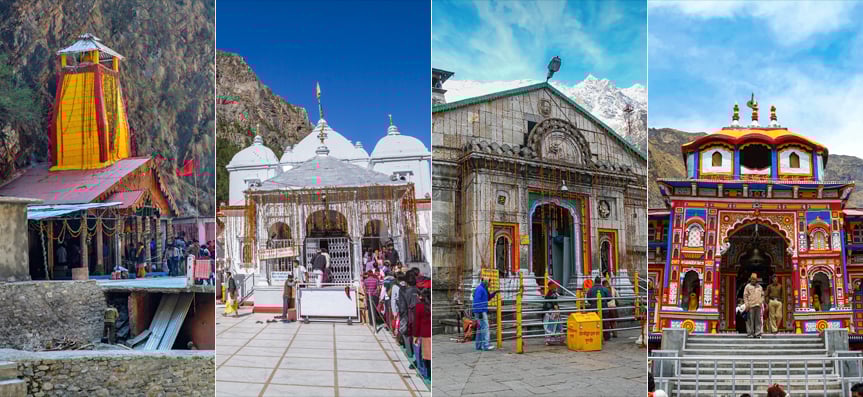

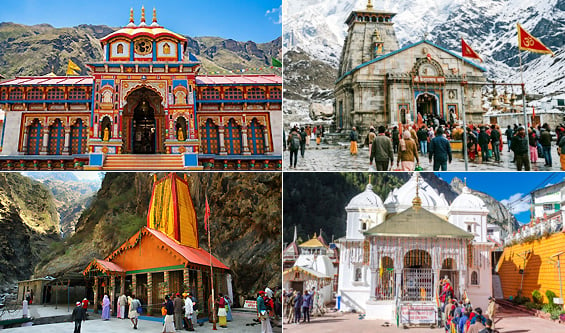
Planning the Char Dham Yatra route is not just about marking four shrines on a map. The journey traverses mountain roads, valley towns, access points, overnight halts, and weather-related stops. Most pilgrims begin through Haridwar, Rishikesh, or Dehradun, but the better starting point depends on how you are arriving, who is travelling, and how much comfort you want built into the journey.
The usual route follows Yamunotri, Gangotri, Kedarnath, and Badrinath. This order keeps the movement practical across Garhwal and helps avoid unnecessary backtracking.
How the Journey Usually Moves
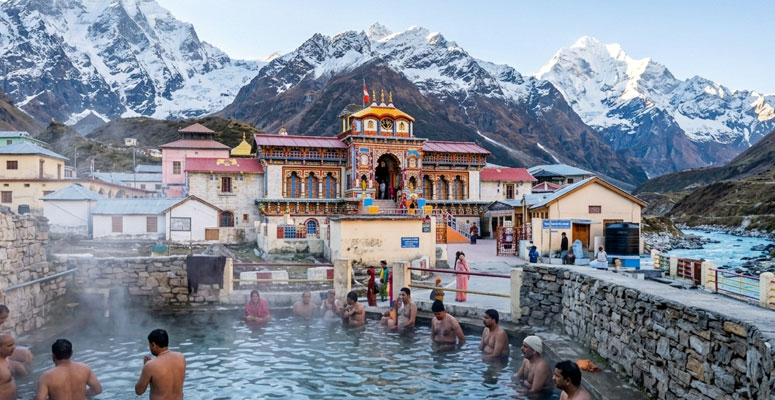
The standard Char Dham Yatra route is:
Yamunotri → Gangotri → Kedarnath → Badrinath
This sequence is commonly followed because it moves from the western side of Garhwal towards the higher eastern route. It also gives the journey a clearer rhythm, especially for first-time pilgrims, families, and senior citizens.
However, the route is not planned by distance alone. In the mountains, a short distance on the map can still take several hours because of curves, traffic movement, road conditions, weather, and local controls during the yatra season.
- Yamunotri involves road travel up to the access side and then a final approach.
- Gangotri is more road-led but still requires a long mountain drive.
- Kedarnath needs the most careful planning because the final access is different.
- Badrinath is road-connected, but weather and road timing still matter.
This is why most Char Dham journeys are planned with proper overnight halts rather than treated as a simple point-to-point drive.
Main Starting Points for Char Dham Yatra
1. Starting from Haridwar
Haridwar is the most traditional starting point for Char Dham Yatra. It works well for pilgrims arriving by train or for those who want to begin their journey in a familiar religious setting before entering the higher Garhwal route.
It is also a practical choice for families and senior travellers who prefer a steady beginning rather than a rushed transfer from Delhi or the airport.
Haridwar works best if:
- You are arriving by train.
- You want a traditional pilgrimage start.
- Your group includes elders who need a slower pace on the first day.
- You want to combine the yatra with Haridwar before moving into the hills.
2. Starting from Rishikesh
Rishikesh is a more route-focused starting point. It sits closer to the hill road network and works well for travellers who want to move into Garhwal without spending too much time in the plains.
For many road-based yatras, Rishikesh serves as the practical gateway before the journey continues towards Barkot, Uttarkashi, Guptkashi, and Badrinath.
3. Rishikesh works best if:
- You are already in Uttarakhand.
- You want quicker access to the mountain route.
- You prefer a quieter start than Haridwar.
- Your main concern is road movement rather than a traditional beginning.
4. Starting from Dehradun
Dehradun is often better for travellers arriving by flight. Jolly Grant Airport provides convenient access to Dehradun, Rishikesh, and Haridwar, making it useful for families, senior citizens, and time-constrained travellers.
Starting from Dehradun does not make the mountain route short, but it can reduce fatigue at the beginning. This matters if the group has flown in from another city or is not comfortable with a long Delhi-to-Uttarakhand road transfer.
Dehradun works best if:
- You are flying into Uttarakhand.
- Your group includes senior citizens.
- You want a more comfortable arrival plan.
- You have limited travel days and want to avoid a long access leg from Delhi.
5. Starting from Delhi
Delhi is usually the arrival city, not the actual start of the Char Dham mountain route. Many pilgrims reach Delhi first, then continue to Haridwar, Rishikesh, or Dehradun.
For families and elders, it is better not to combine a long arrival into Delhi with an immediate hill-road journey. A break before entering the mountains can make the yatra more comfortable.
Delhi works best if:
- Your flight or train connectivity is better through Delhi.
- Your group is assembling from different cities.
- You are planning a longer journey with an overnight stop before heading to Uttarakhand.
Char Dham Yatra Road Route
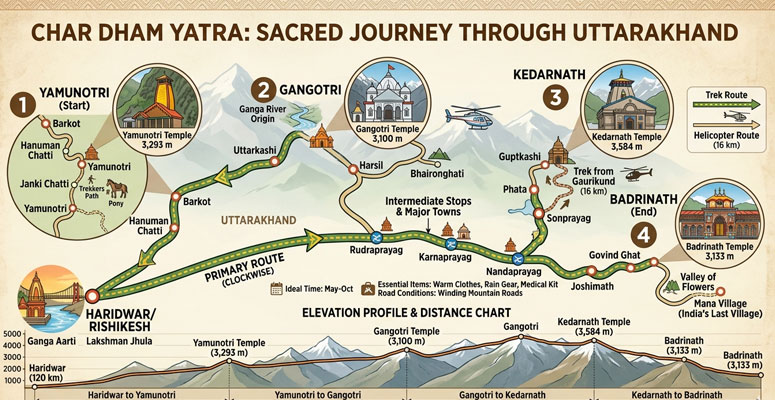
Haridwar / Rishikesh / Dehradun → Barkot / Janki Chatti → Yamunotri → Uttarkashi → Gangotri → Guptkashi / Sonprayag → Kedarnath → Joshimath / Badrinath → Rudraprayag / Rishikesh / Haridwar
This route line shows the usual flow, but each stretch needs to be understood differently.
• Haridwar / Rishikesh / Dehradun to Barkot or Janki Chatti
This is the first major movement into the Yamunotri side of the route. Most travellers use this stretch to settle into mountain-road travel.
The focus here should be on a comfortable departure, not speed. For families and senior citizens, this first leg of the road often sets the pace for the rest of the yatra.
• Yamunotri Access
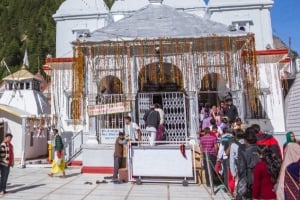
Yamunotri is not simply a road-arrival shrine. The road leads pilgrims to the access side, usually around Janki Chatti, after which the final approach requires separate planning.
Depending on current local arrangements and availability, travellers may need to consider walking, pony, palki, or assisted options.
This stretch needs extra attention if:
- Seniors are travelling.
- The group has concerns about knee, breathing, or mobility.
- You are travelling during a busy yatra period.
- You want assistance arranged in advance.
• Uttarkashi to Gangotri
Gangotri is more road-based than Yamunotri. The journey usually passes through Uttarkashi and then continues towards Gangotri along a long mountain stretch.
The road movement can feel simpler because there is no major final trek like Kedarnath, but the drive still needs an early start and sensible pacing.
This stretch suits travellers who prefer a more direct shrine-access experience, but it should still be treated as mountain travel rather than a quick sightseeing drive.
• Guptkashi/Sonprayag to Kedarnath
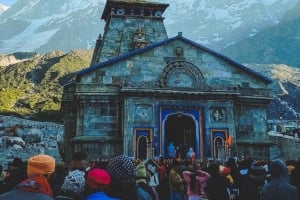
Kedarnath requires the most route planning of any destination in the entire Char Dham circuit. Road travel takes pilgrims towards the base-side region, commonly around Guptkashi, Sonprayag, or Gaurikund depending on current arrangements.
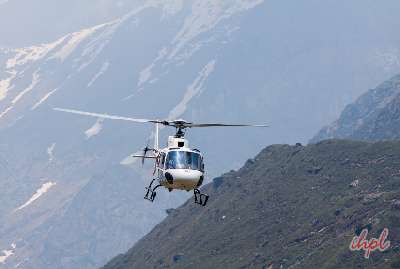
From there, the final access differs from that of the other dhams. Travellers may need to plan for the trek, helicopter option, pony, or palki arrangements as permitted during the current season.
For Kedarnath, check carefully:
- Current registration and verification rules.
- Trek access and local transport arrangements.
- Official helicopter booking availability, if required.
- Weather conditions close to the travel date.
- Extra buffer time for delays or route changes.
• Kedarnath to Badrinath
After Kedarnath, the route usually moves towards the Badrinath side through the Garhwal road network. Joshimath or nearby areas may serve as practical halts, depending on the route plan.
Badrinath is road-connected, so access is easier than at Kedarnath. Still, it remains a high-altitude mountain route. Weather, road timing, traffic controls, and pilgrim movement can affect the day’s travel.
The return usually moves back through Rudraprayag, Rishikesh, or Haridwar.
Route Map by Air and Train
1. By Air
Dehradun’s Jolly Grant Airport is the most practical airport access for Char Dham Yatra. From the airport, travellers continue by road towards Rishikesh, Haridwar, or directly onto the planned route, depending on the itinerary.
Flying into Dehradun is useful when comfort matters more than the traditional start point. It is especially practical for:
- Senior citizens.
- Families with children.
- Travellers with limited time.
- Pilgrims who want to avoid the long Delhi-to-Uttarakhand road transfer.
Helicopter services, especially for Kedarnath, should only be booked through official, up-to-date booking channels. Avoid relying on unofficial links, social media claims, or guaranteed-seat promises from unknown sources.
2. By Train
Haridwar, Rishikesh, and Dehradun are the main railside entry points for the Char Dham Yatra.
Use the railway station choice as a planning decision, not just a transport detail.
- Haridwar suits traditional pilgrimage starts and train arrivals.
- Rishikesh suits road-focused movement into Garhwal.
- Dehradun suits travellers who want a slightly more comfort-led start.
There is no need to build the page around train names or changing schedules. The more important question is what happens after arrival: where the group rests, when the road journey begins, and whether the first hill halt is realistic.
Which route option works best for different travellers?
| Traveller type | Better starting point | Why it works |
|---|---|---|
| Senior citizens | Dehradun or Haridwar | Easier arrival, better halt planning, less first-day strain |
| Families with children | Haridwar, Rishikesh, or Dehradun | Depends on arrival mode and need for breaks |
| First-time pilgrims | Haridwar or Rishikesh | Clearer traditional route flow and better yatra familiarity |
| Time-limited travellers | Dehradun | Saves access time before the road journey begins |
| Pilgrims arriving by train | Haridwar or Rishikesh | Practical rail entry into the yatra corridor |
| Pilgrims arriving by flight | Dehradun | Most useful airport gateway for onward road movement |
Important Route Notes Before Planning Char Dham Yatra
1. Map distance can be misleading
A short mountain road stretch can take several hours. Curves, traffic, pilgrim movement, road work, rain, and landslide-prone patches can all slow the journey.
2. Night driving is not advisable
Night driving in the hills may not be suitable and can be restricted depending on local conditions. Even when movement is allowed, it is not ideal for tired drivers, senior citizens, children, or first-time hill travellers.
3. Registration and advisories matter
Char Dham Yatra registration, verification, health advisories, road updates, and local movement rules should be checked close to the travel date. These are seasonal and can change based on crowd levels, weather, and administration guidelines.
4. Kedarnath needs separate planning
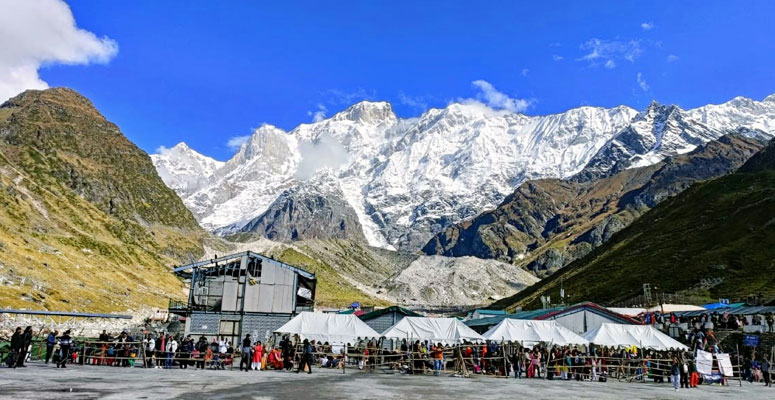
Kedarnath should not be treated like the other road-connected dhams. The final access involves trek or assisted movement options, and helicopter services depend on official booking, weather, and operational permissions.
5. Buffer days are useful
A tight Char Dham route can become stressful if there is rain, road delays, crowd control, or health fatigue. Buffer days are especially useful for:
- Senior citizens.
- Multi-generational families.
- Travellers with return flights or trains.
- Pilgrims planning Kedarnath by helicopter.
- Groups travelling during peak yatra weeks.
Char Dham Route and Onward Planning
Once the route is clear, the next step is to understand each dham properly and match the journey to your travel month, comfort level, and group needs.
Start with the main Char Dham Yatra guide for an overview of the pilgrimage. For shrine-specific planning, read more about Yamunotri, Gangotri, Kedarnath, and Badrinath.

 Valley of Flowers
 Bungee Jumping
 Nainital Lake
 Rock Climbing
 Roopkund Trek
 Cliff jumping